


washer repair specialists
Clean in one wash.
We’ll bring
the fix.
Practical help for the washer your household leans on.
Tell us what the last cycle did. We’ll take care of the repair.
- Leaks and drain trouble
- Pumps, motors and bearings
- Front-load and top-load
What to expect
Experienced technicians
More than 12 years in appliance repair
Upfront pricing
The cost of the repair in writing, before any work begins
OEM parts on order
Original manufacturer parts ordered against your model number, never third-party substitutes
Warranty on our workmanship
Every repair is backed by a warranty on the work we performed
Your next step
to a working washer.
A few details now.
A little less to worry about.
Describe the problem
Pick the appliance and tell us what the washer is doing wrong.
Pick a time slot
Choose the date and the arrival window that suit your week.
Leave your details
Enter the address and a phone number we can reach you on before we arrive.
The make and model number are printed on a sticker, often around the door opening or under the lid. They tell us which washer we are coming to repair.
or call (844) 398-5711
Loading appointment form…
The appointment form couldn’t load. Please try again.
Four steps,
and no surprises.
The three steps in the form are how you book. These four are what actually happens once a technician is standing in your laundry room.
Watch it run first
The technician runs a short cycle and watches the fill, the drain and the spin, and checks the hoses, the filter and the level of the machine before blaming any part.
You hear the cost first
You are told which repair it needs and what it costs before any work begins. If replacing the washer makes more sense, you hear that too.
Parts on the van
Pumps, lid switches and common valves are carried on the van. A part built for a single model is ordered by its number, so giving it when you book can spare a second visit.
Fixed, then run
After the repair the washer goes through a fill, drain and spin while the technician watches for leaks and listens to the drum, rather than taking it on trust.
Not every washer
breaks the same way.
A front-loader seals its door with a rubber boot and locks it for the whole cycle, a top-loader turns its clothes with an agitator or an impeller, and a stacked or compact unit has to be worked on in a tight space. Find the one in your home.
All washer types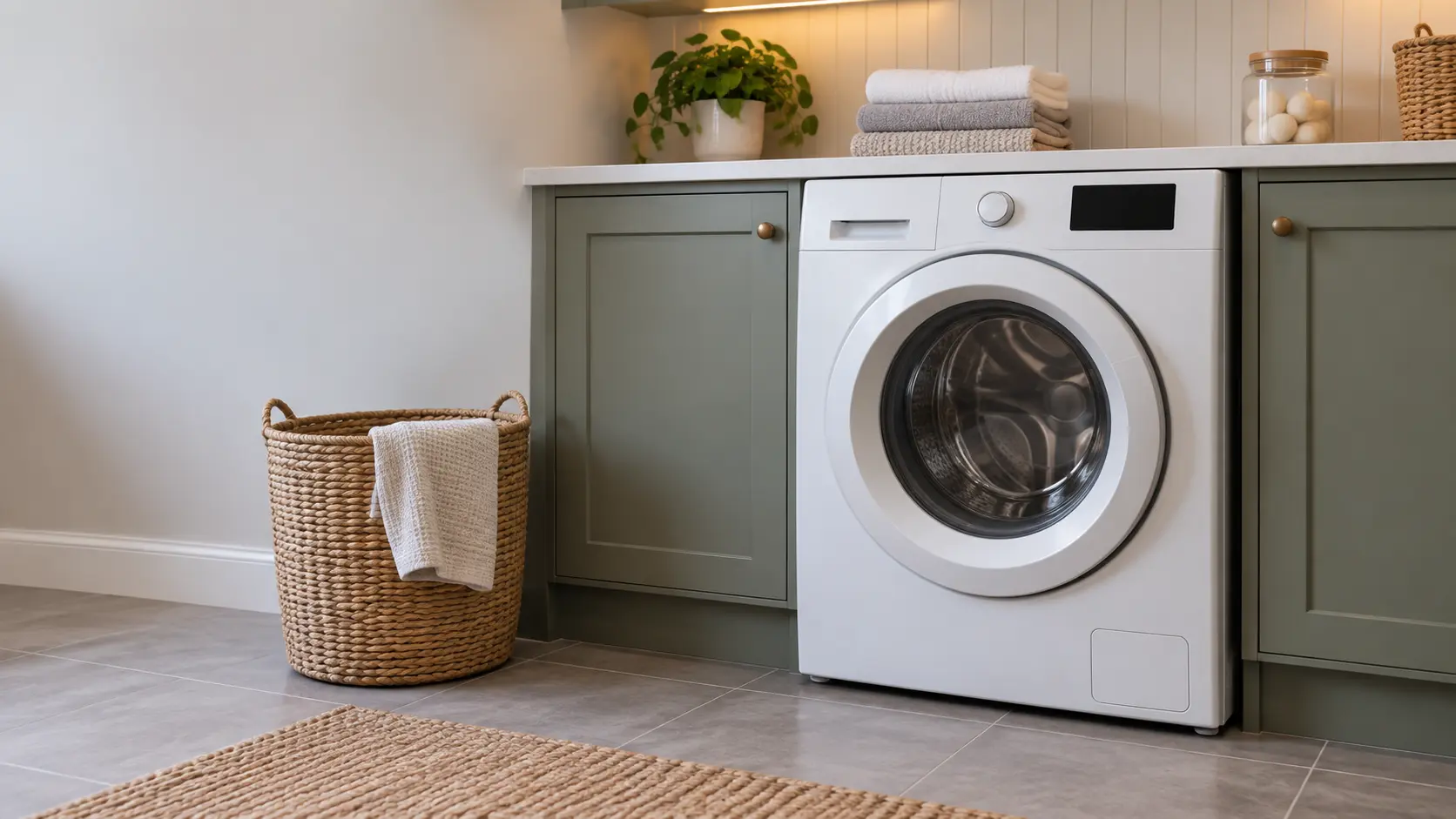
Front-load washer
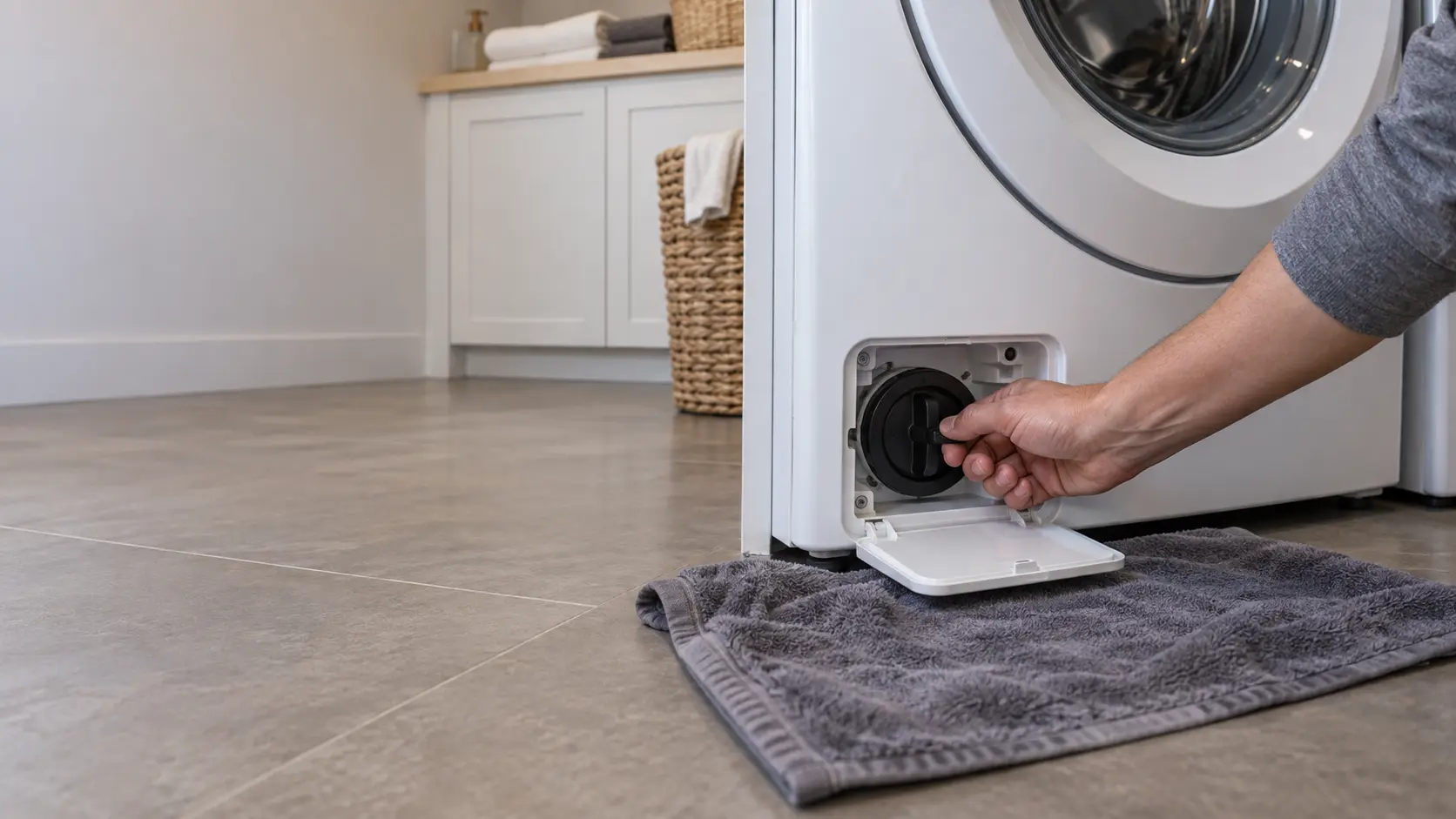
A horizontal drum behind a sealed glass door, a rubber boot, a locking latch and a pump with a filter you can reach from the front.

Top-load washer
The upright washer with a lid on top, moving clothes either with a tall central agitator or with a low impeller plate in the bottom of the basket.
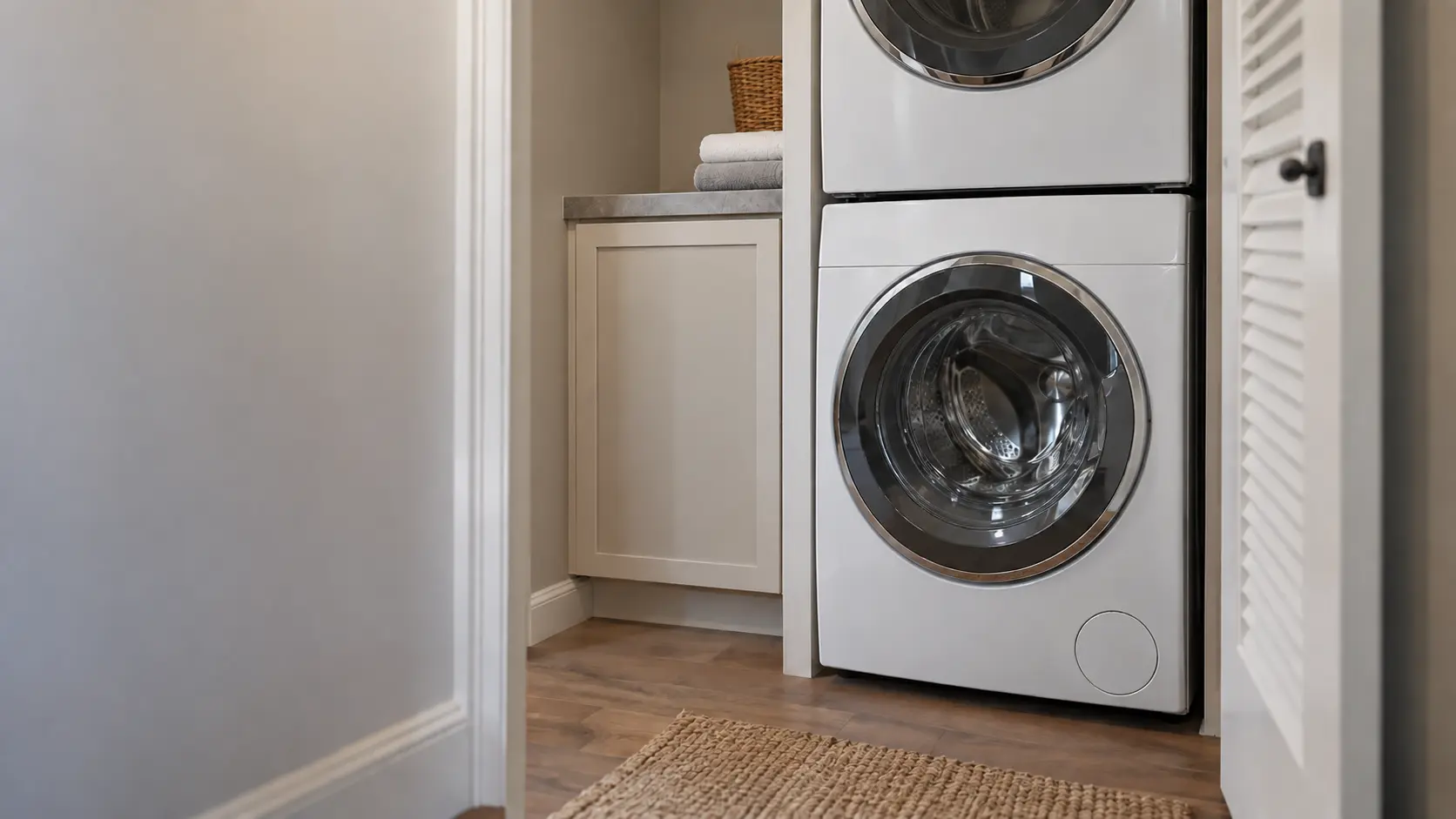
Stackable washer
The washer at the bottom of a stacked pair or a single-frame laundry center, repaired inside the closet or recess it was sized for.
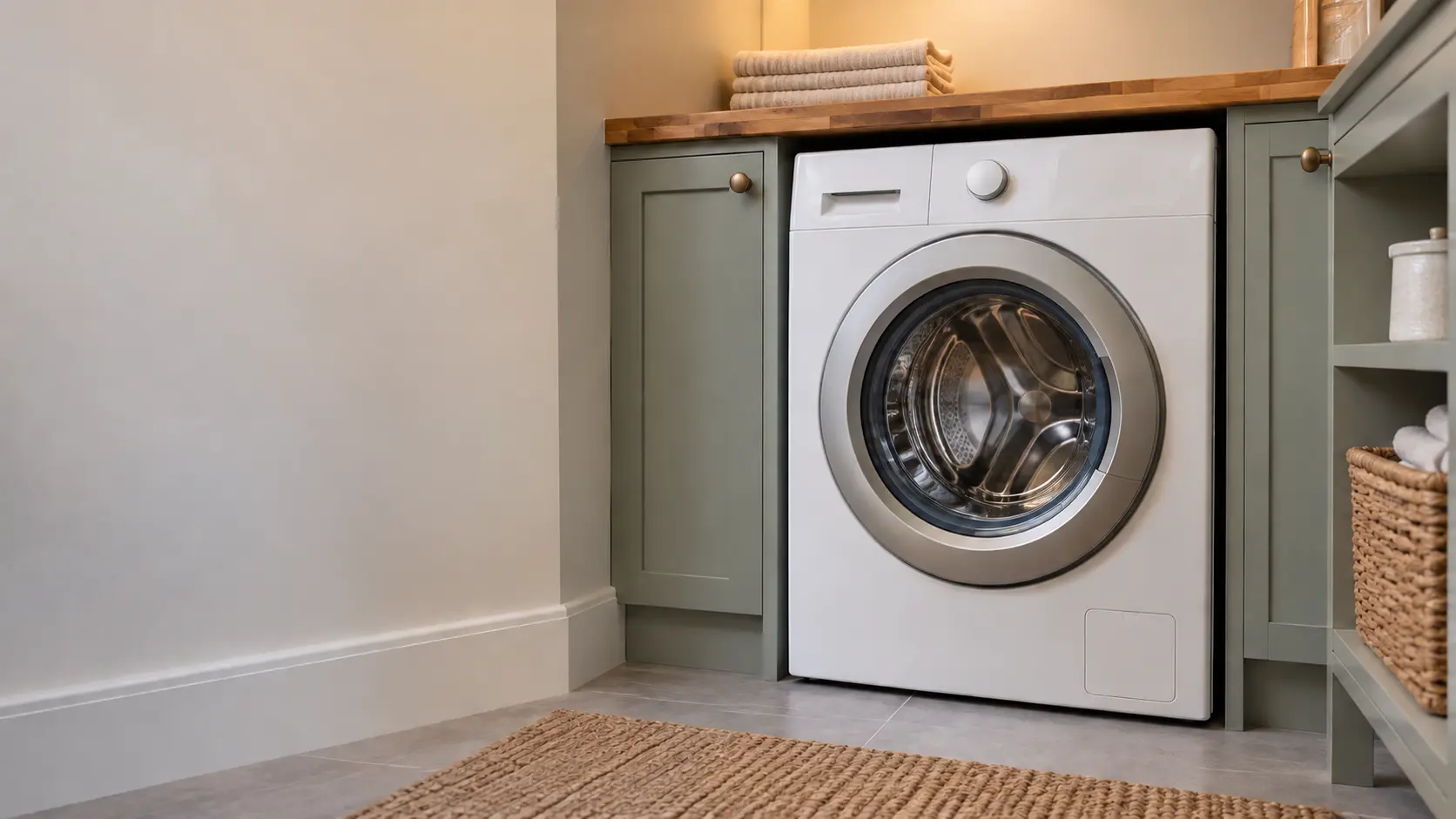
Compact washer
The 24-inch front-loaders and all-in-one washer-dryers found in apartments, condos and under counters, repaired on their washing side.
Every kind we serviceAll washers, side by side
The archive puts the 4 types against each other: how to tell which you own, what fails on each, and which manufacturers build them.
How to tell yoursWhat fails on eachWho makes them Open the type archiveA washer that drains.
A laundry room floor that stays dry.
From a tub still full of gray water to a drum that will not spin, start with what the machine did on its last cycle. Each page explains what that most often means before it mentions a visit.
 All 17 problems
Washer Leaking
Water shows up on the laundry room floor under or beside the washer, during a fill, a wash or the spin.
Washer Overflowing
The washer keeps filling past the normal level, and water spills over the tub, out of the door or onto the floor.
Washer Burning Smell
A hot rubber, scorched or electrical smell rises from the washer during a wash or a spin.
Washer Tripping Breaker
The breaker or the outlet's reset button cuts power when the washer starts, fills or spins.
Washer Not Draining
Water stays in the tub after the cycle ends, or the washer stops before the spin with the drum still full.
Washer Not Spinning
The wash finishes but the drum barely turns at the end, and the clothes come out dripping wet.
Familiar brands. Expert care.
For the brands
in your laundry room.
Independent repair service. Not affiliated with, authorized or endorsed by any manufacturer. Brand names and model numbers are the property of their respective owners and are used here for identification only, to describe the appliances we service.
What a repair
usually costs.
A practical yardstick: set the repair next to the price of a new washer that fits the same spot and hookups. A basic full-size top-loader is easy to replace, so a bearing job on a tired one rarely makes sense. A stacked pair sized to its closet, a compact under a counter or a premium front-loader is harder to match, and that keeps most repairs on them worth doing.
| Repair | Relative cost | Notes |
|---|---|---|
| Door boot, dispenser and odor cleanup | lowest | A torn seal or a mildewed fold is a small part and a short job, and it often ends a drip at the door as well. |
| Door lock, lid switch or striker | low | The most common reason a washer ignores the start button or quits before the spin, and a part the van usually carries. |
| Drain pump, filter or drain hose | low | Clearing the filter costs least; a new pump sits a step above it, and both end most standing-water calls. |
| Water inlet valve and fill hoses | low | No fill, a slow fill or one missing temperature. New hoses are sensibly fitted at the same visit if the old ones are aging. |
| Shocks, springs or suspension rods | low | Priced as a set, since the parts wear together, and checked alongside the feet and the level of the washer. |
| Drive belt, motor coupling or drive motor | moderate | A belt or a coupling is modest; a direct-drive motor or its motor control is what lifts this row to the middle of the scale. |
| Control board, water level or temperature sensor | moderate | The sensors and harness are tested first, because a split pressure hose or a loose plug can look exactly like a dead board. |
| Clutch, shift actuator or transmission | moderate to highest | A top-load repair. An actuator or clutch stays in the middle; a whole transmission or gearcase reaches toward the top. |
| Drum bearing and tub seal | highest | Long labor with the tub out of the cabinet, and on welded tubs the bearing comes only with a new outer tub. |
9 metros,
one appliance.
The building around a washer changes how it ages: how hard the water is, what floor it stands on, where the drain goes. These notes are about washing in each place, not about the place in general.
All service areasTampa BayFL · 31 areas
Tampa Bay's hard water and warm, humid air shape most washer problems here: scale in inlet valves and heaters, mildew in front-loader boots, and sand from beach towels in the pump. Storm season adds power surges and ground-floor laundry rooms that take on water.
OrlandoFL · 30 areas
Orlando's newer houses often keep the washer in the garage or an interior laundry room on the slab, supplied with hard aquifer water that scales valves over time. Short-term rentals near the parks cycle through piles of towels at turnover and then stand empty, time enough for a door boot to sour.
Miami / South FloridaFL · 47 areas
Two things drive washer calls across South Florida: humidity, which keeps boots and sumps damp between loads, and towers, where a leak in one apartment becomes a stain in another. Most laundry here is a stacked pair or a front-loader in a closet, and hard municipal water scales valves over time.
New York MetroNY · 75 areas
Owning a washer at all is a negotiation in much of this city. Lots of buildings ban in-unit machines or accept only compacts on strict terms, while outer-borough houses keep full-size washers downstairs. The city's soft water is kind to valves; the buildings are what shape the repair.
HoustonTX · 36 areas
Gulf moisture hangs in Houston laundry rooms most months, and front-loader boots and sumps turn musty fast. Storms that cut power or send water into ground-floor laundry rooms leave washers needing a careful check before the next load.
ChicagoIL · 50 areas
Chicago washers live mostly in basements, beside floor drains and laundry tubs, fed with water that runs very cold in winter. Basements that flood in heavy storms add their own hazard: a washer whose base sat in water gets its motor and wiring checked before the next load.
Los AngelesCA · 95 areas
Across Los Angeles the washer very often lives in the garage, on concrete that slopes toward the door, beside hard-water supply lines. That setup is easy to reach for service, but dust, heat and an unlevel floor all work on the machine faster than an indoor laundry room would.
San DiegoCA · 31 areas
San Diego washers often sit in garages or hallway closets, and the region's hard imported water leaves scale in valves, dispensers and seals. Near the coast, sandy loads and damp air are hard on pumps and boots, while newer inland houses often carry the laundry upstairs, over finished rooms.
San Francisco Bay AreaCA · 74 areas
Across the Bay Area, washers range from basement top-loaders in older houses to compact front-loaders squeezed into flats that were never built with laundry in mind. Soft water is easy on valves and seals here, while old drains and wood-framed upper floors are what most often shape a washer repair.

Answers before
you book.
How quickly can a technician see my washer?
Do you repair my make of washer?
What is useful to have ready for the visit?
How much will the repair be?
Is my washer worth fixing?
My washer leaves water in the drum. Is that serious?
Work out what
you are dealing with.
Split by what you are trying to find out rather than by what part of the appliance it concerns.
All 18 guides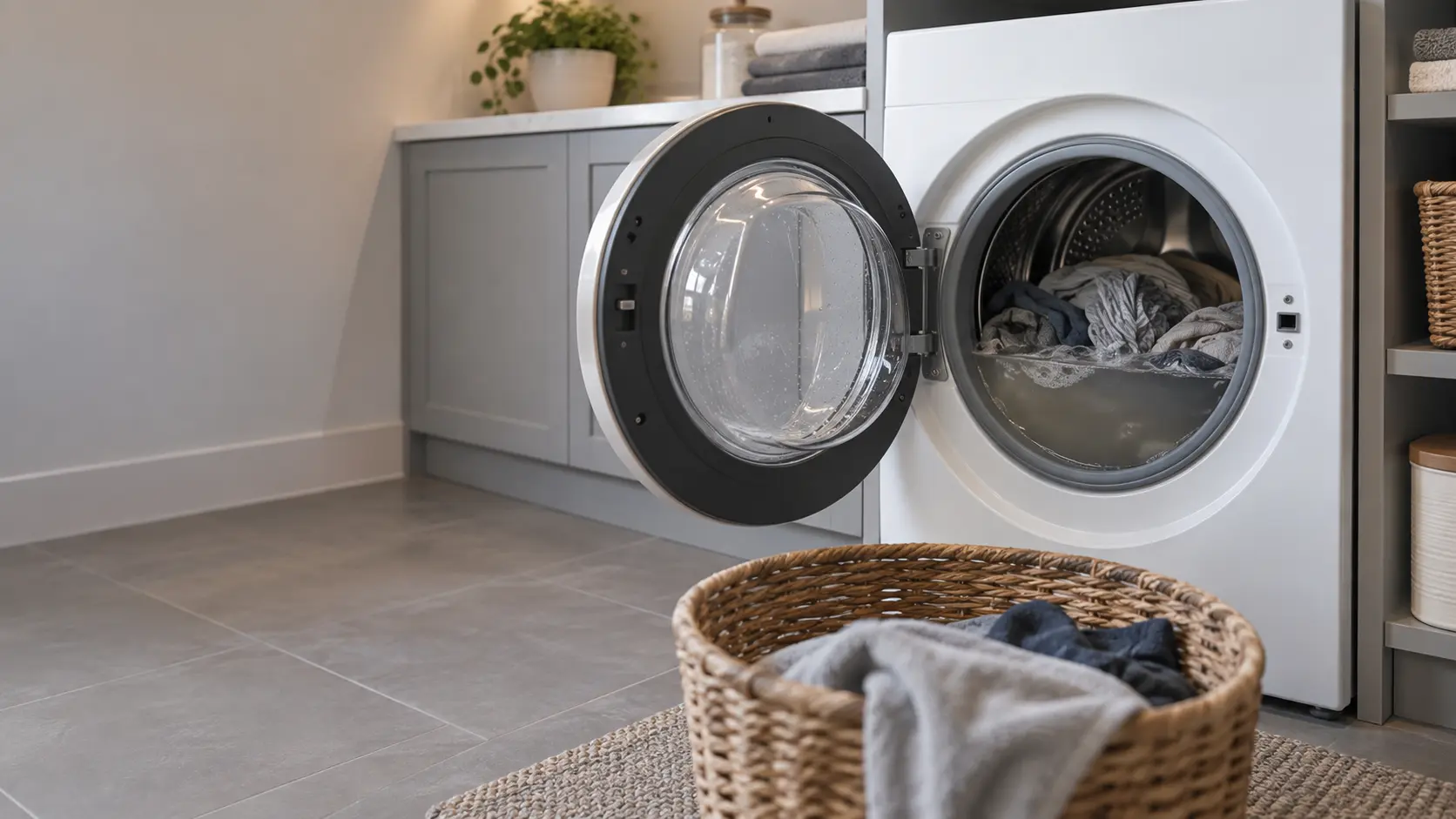


Wondering what a repair runs? That question has its own page, not a section here, since no one can quote a fair number before a technician has looked inside the washer — washer repair cost.
Back to your everyday
Let’s get your washer working again.
Three short steps, a window that suits you, and a price for the actual repair before any work starts.