
What the number opens up
A brand builds a single washer design in many versions over its life, changing a pump, a control board or a door lock partway through production. The name on the front, the capacity and the color do not reveal which version is in your laundry room. The washer model number does, and with it the use and care manual, the installation sheet, the wiring diagram tucked inside the cabinet and the exact list of parts.
It also saves time when you book. A technician who knows the model before arriving can check which parts tend to wear on that build and bring the likely ones, instead of spending the first visit identifying the machine.
Keep in mind that the washer and the dryer beside it have separate numbers even when they were sold as a matched set. Mixing them up is one of the most common reasons a part arrives that does not fit.
Where to look on each washer type
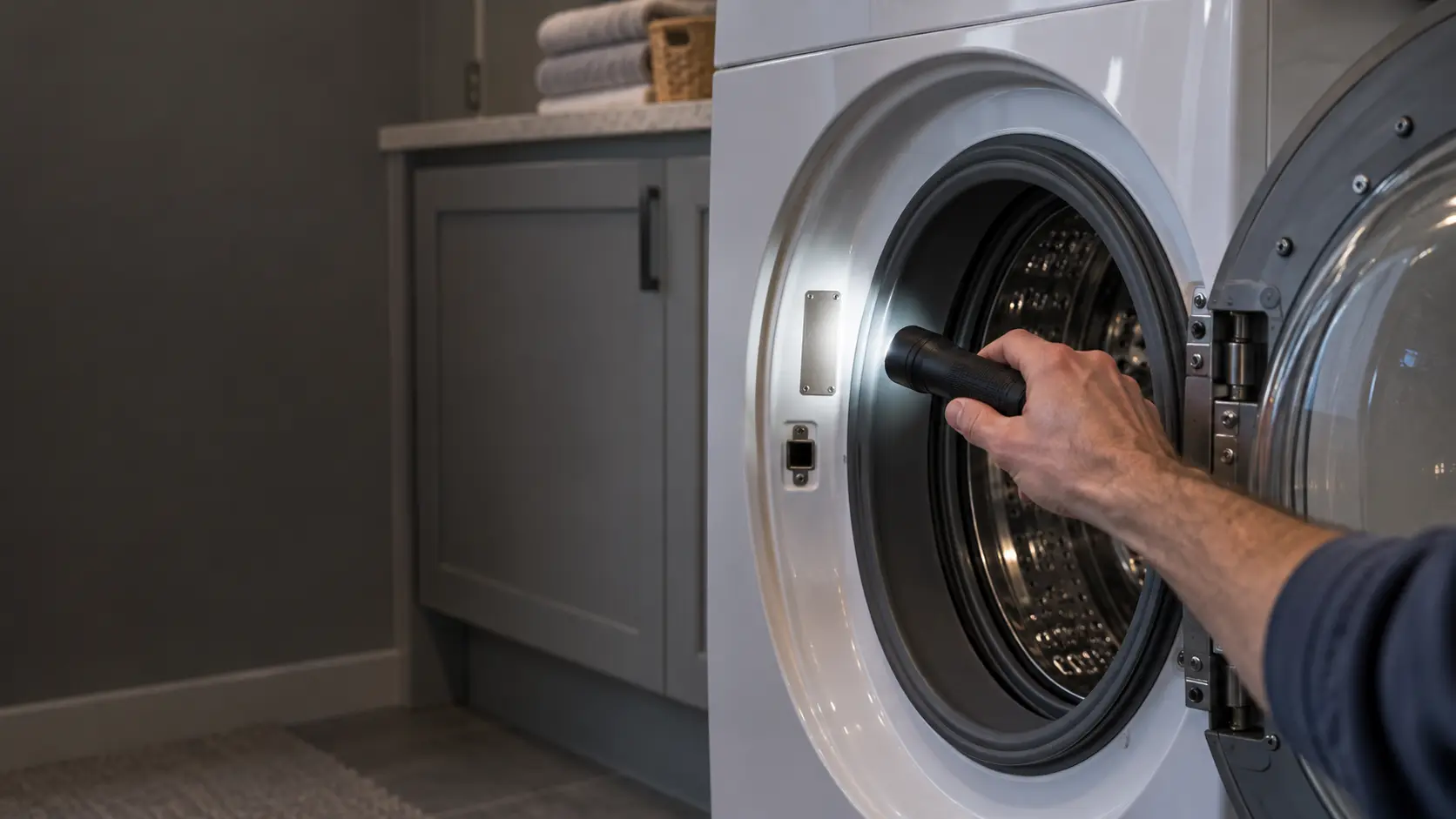
Makers put the tag where it will not get wet or scuffed but where a person with the door open can read it. Whirlpool and GE publish their locations, and the same handful of places is worth checking on any brand: a flashlight and a slow look around them nearly always turns it up.
- Rim or frame of the door opening
- Under the lid, near a hinge
- Back of the control console
- Cabinet side, lower front corner
- Rear panel near the hose connections
Front-loaders
Whirlpool places it inside the door on the rim of the opening. GE lists the inside of the door panel on the wash compartment face and, as a second spot, the lower front corner of the right side of the cabinet.
Top-loaders
Whirlpool puts it beneath the lid on the tub rim. GE's first spot is under the lid near the right hinge, followed by the back of the control panel, the bottom left corner of the cabinet and the back near the water inlets.
Laundry centers, stacked pairs and all-in-ones
A stacked pair is two machines with two tags, so read the one on the washer, not the dryer above it. On a one-piece laundry center, Whirlpool puts the tag inside the dryer door, and on an all-in-one washer-dryer it is on the door frame just inside the door. A pedestal carries its own tag on the storage drawer.

Reading the tag without mixing up the lines
The tag carries several numbers, and the one to copy is marked Model, Model No. or MOD. The serial number sits just below it and identifies the single machine, including when it was built; it matters for recalls and service history, so copy it too. GE notes that its model numbers always begin and end with a letter, which makes a quick sanity check.
Small characters cause most mistakes. When a character could be either one, write it the way it looks and add a photo, rather than guessing:
- The letter O and the digit 0
- The letter I, the letter L and the digit 1
- The letter S and the digit 5
- A trailing dash with extra characters, which is part of the number
Source: GE Appliances — Model and serial number locator, front-load washers — Inside door panel on the wash compartment face, or lower front corner of the right side; model numbers begin and end with a letter; newer tags carry QR codes
When the tag is worn, painted over or missing
Tags near the door rim fade from detergent and bleach, and tags on the back get scraped against the wall. Try the other locations above before giving up, since some washers carry a second tag. Newer tags may also carry a QR code; GE says scanning one opens a page for that exact product.
If nothing is readable, look at the paperwork: the use and care manual, the receipt, a delivery or installation invoice, the product registration card, or the maker's app if the washer was ever connected to Wi-Fi. A technician can often identify the model from the parts inside, but that takes part of the visit.
Source: GE Appliances — Model and serial number locator, front-load washers — Inside door panel on the wash compartment face, or lower front corner of the right side; model numbers begin and end with a letter; newer tags carry QR codes
Using the number: manuals, parts and recalls
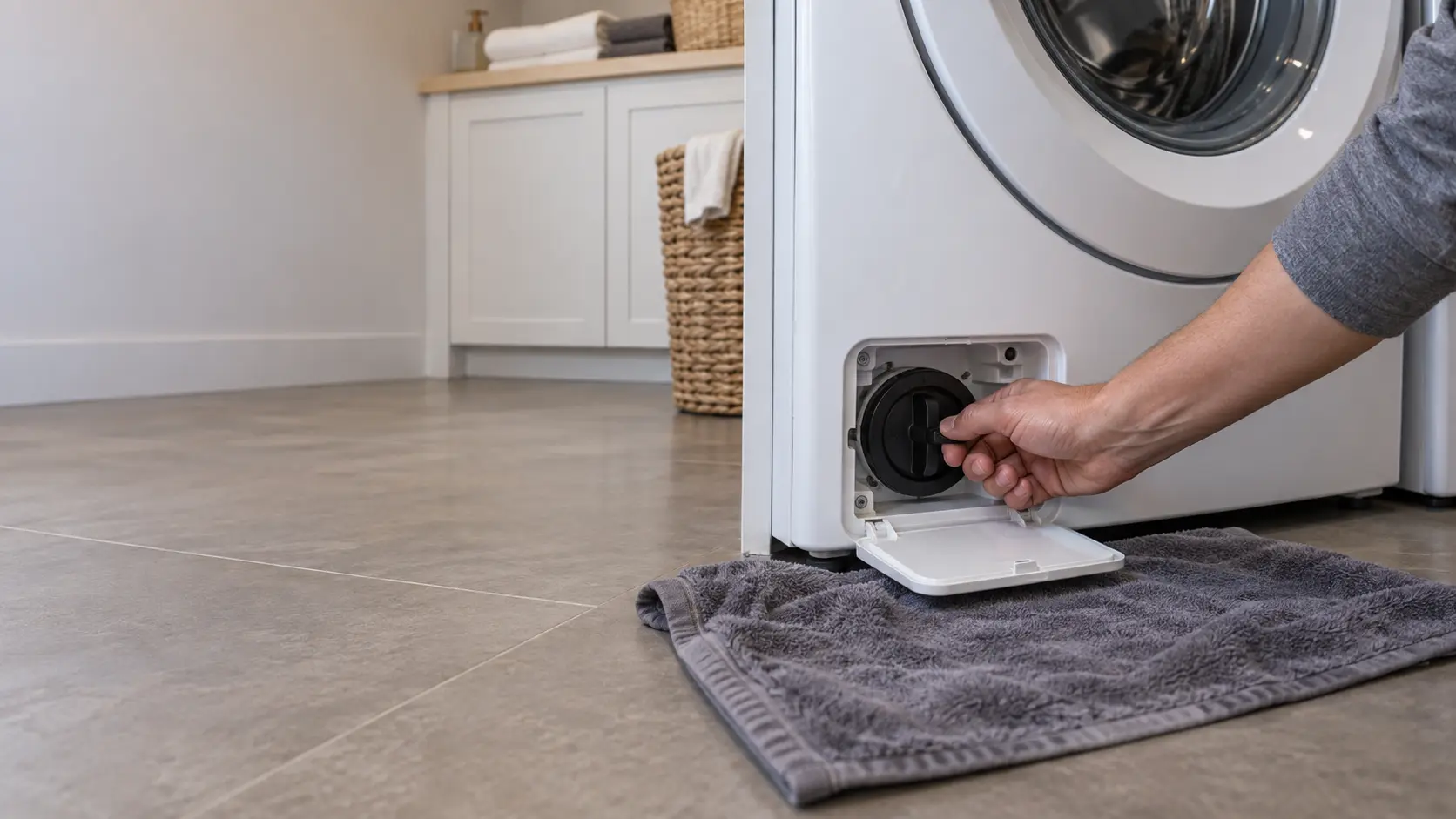
With the number in hand, the maker's own support site will usually return the manual and installation instructions for it. Keep the manual somewhere you can find it, or save the file on your phone, because the pump filter, the leveling feet and the error display all differ by model.
It is also how you check for a recall. The U.S. Consumer Product Safety Commission keeps a searchable list of recalls and product safety warnings, and a recall notice names the models it covers. Compare yours character for character, and follow the maker's recall instructions rather than a repair if it appears.
Source: CPSC — Recalls and product safety warnings — CPSC publishes a searchable list of recalls and product safety warnings