No spin, or a spin too weak to wring the clothes
When a washer won't spin, start with what the drum did at the end of the cycle. Some machines never reach speed at all; others rise, stumble, slow down and try again several times before giving up. The first often points at a drain, a lock or a part; the second is the washer sensing imbalance and protecting itself.
It also helps to feel the clothes. Towels that are damp and heavy but not dripping may simply have been spun at a gentle speed; towels that pour water when lifted never saw a real spin at all. The difference separates a setting from a problem.
Three quick observations sort most cases:
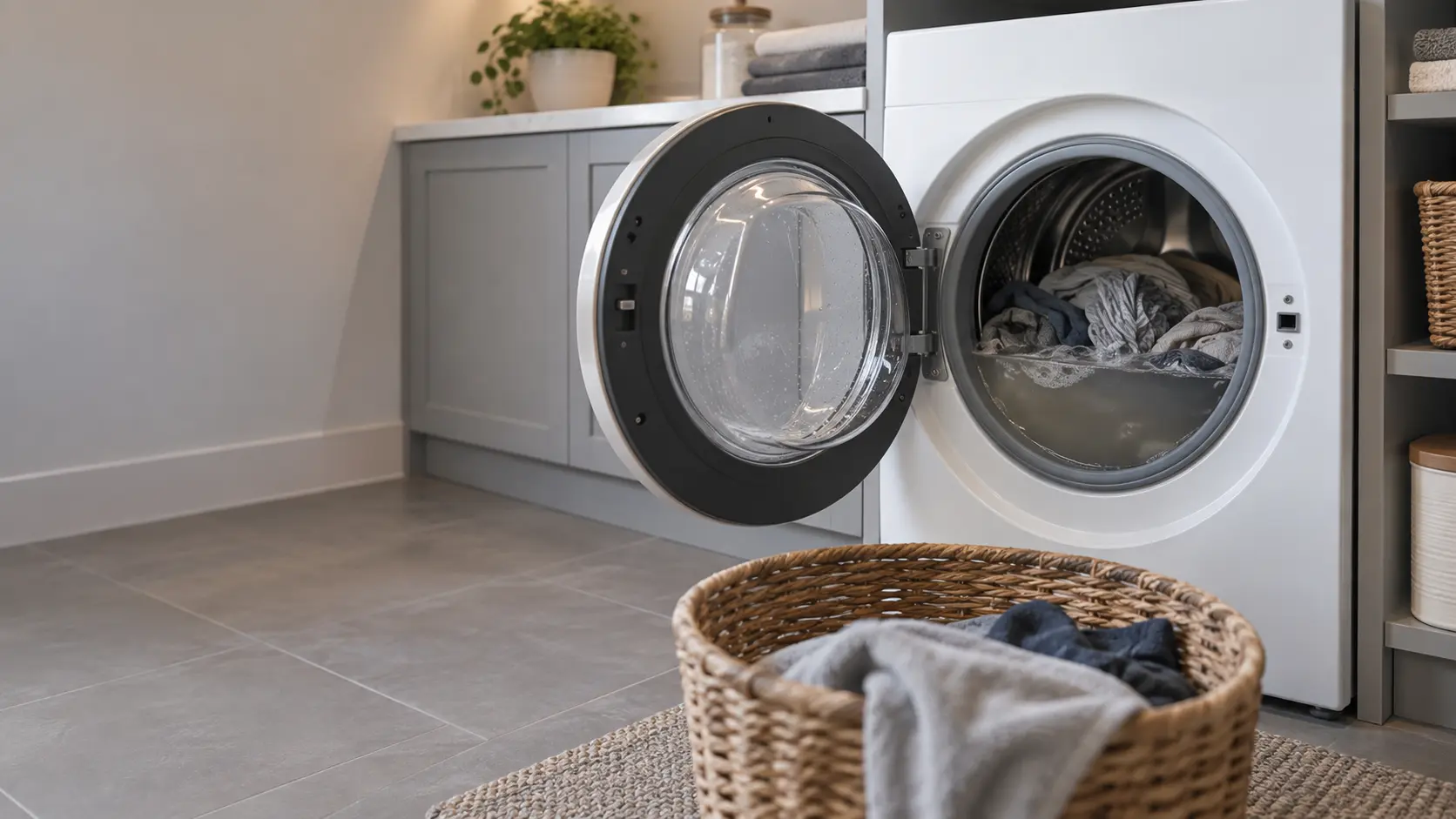
- Water still visible in the tub: the spin was skipped because the drain did not finish.
- Drum turning slowly with a thump on every revolution: the load is lopsided.
- Motor audible while the drum barely moves: a belt, coupling or clutch may be slipping.
An off-balance load, and why the washer gives up
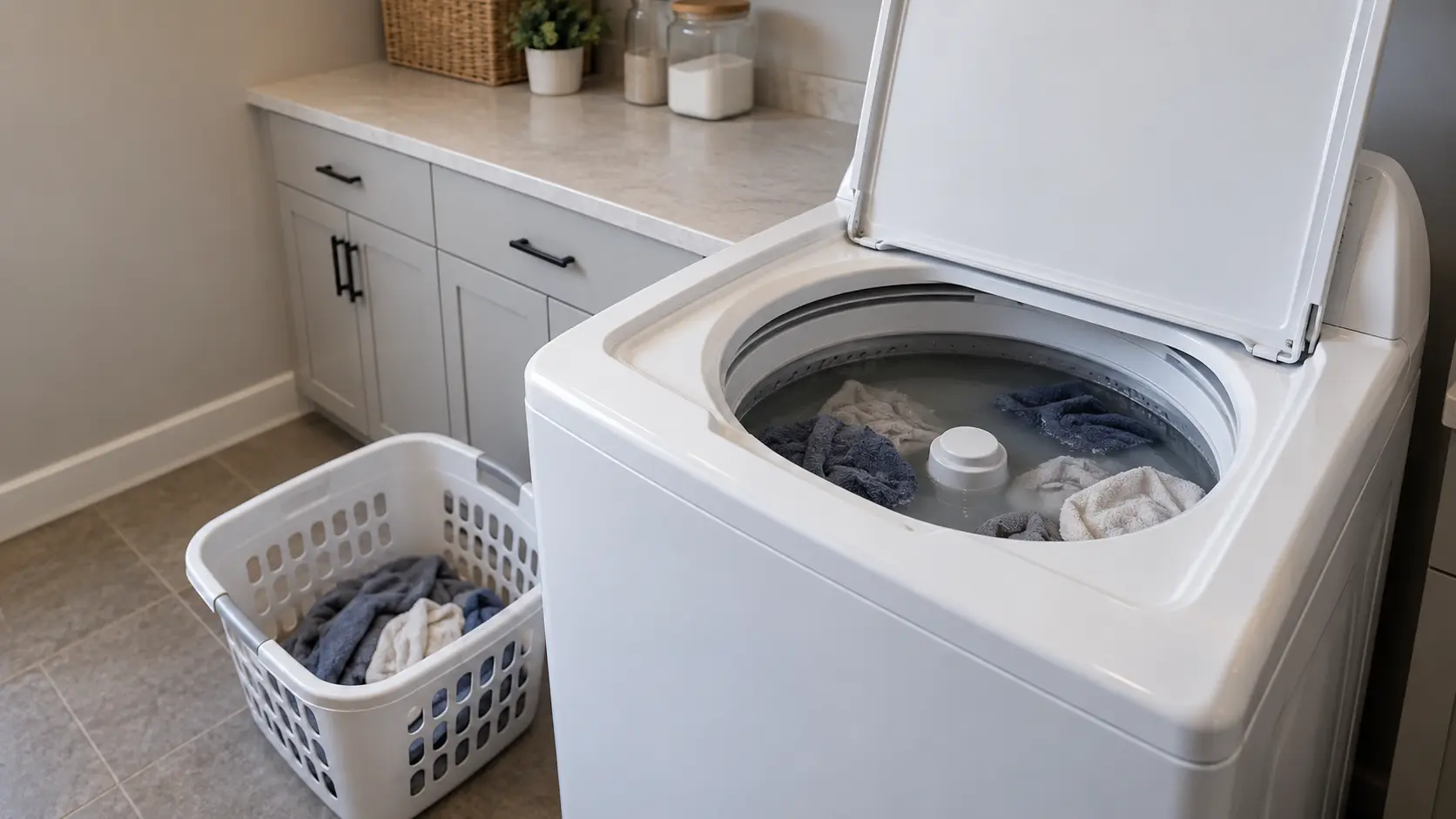
Whirlpool describes what a top-loader does when it senses a lopsided basket: it refills and gently rocks the load back and forth to spread it out, and if that does not work it stops and shows an error. Loud noise, heavy shaking and wet clothes at the end are the signs it lists. Most modern washers, front or top, follow similar logic even when the display says nothing.
Open the washer, pull the load apart and spread it evenly around the drum, then choose a drain and spin setting on its own. If it spins now, the washer is fine and the loading needs to change.
The single heavy item
A bath mat, a king comforter or a lone pair of jeans soaks up water and sits on one side. Add two or three towels to balance a heavy item, and use the bulky or bedding cycle the manual names for comforters instead of a normal or quick program.
Top-loaders and the wrapped-up sheet
In an agitator top-loader, a fitted sheet can swallow smaller pieces and roll into one heavy knot. Wash sheets with a few mixed items, not on their own with a pile of pillowcases, and pull the knot apart before restarting the spin.
Source: Whirlpool — Not spinning, top-load washer — Off-balance loads trigger a refill-and-rock self-correction, then an error; low or no spin, late Add a Garment pauses and power failures limit spin speed; use the bulky or bedding cycle

Settings, pauses and suds that hold the speed down
Before blaming the machine, check that the program asked for a real spin. Delicate, hand-wash and wool cycles use a gentle spin by design, and a low or no-spin option chosen once may still be set on the next load. Whirlpool also notes that pausing late in a cycle to add a garment can keep the washer from reaching full speed, and so can a short power interruption during the spin.
Foam is the other quiet cause. Too much detergent, or one that is not labeled HE, cushions the drum, and the washer spins slower to cope with it.
- Spin speed option set to low or none
- A delicate or wool program chosen by habit
- Pause pressed late in the cycle
- A power blink while the washer was spinning
- Heavy suds visible in the glass or the dispenser
Source: Whirlpool — Not spinning, top-load washer — Off-balance loads trigger a refill-and-rock self-correction, then an error; low or no spin, late Add a Garment pauses and power failures limit spin speed; use the bulky or bedding cycle; Whirlpool — Not draining, top-load washer — Non-HE or excess detergent causes suds that make the washer run at reduced spin speed; ENERGY STAR — Clothes washers — Choosing a high or extended spin reduces the moisture left in clothes and shortens drying time
A washer that is not level, or not free to move
All four feet should rest firmly on the floor with the cabinet level side to side and front to back. A washer that rocks when pressed at opposite corners turns every spin into an unbalanced one, and it walks across the floor as the speed rises. Adjust the feet and lock their nuts against the cabinet, then check with a level on the top.
A soft wood floor over joists can bounce enough to confuse the balance sensing even with the feet set correctly. Moving the washer closer to a wall, where the floor is stiffer, sometimes helps more than any adjustment.
Shipping bolts on a new front-loader
Front-loaders arrive with long bolts through the back panel that hold the tub still in transit. Whirlpool's help page for a walking front-loader asks first whether they were removed at installation. If the washer is new and the spin feels violent from the first load, look at the rear panel for bolt heads or plastic spacers.
Source: Whirlpool — Washer walking or vibrating, front-load washer — Checks for a walking front-loader: shipping bolts removed, all four feet on the floor, washer level
When a part inside the cabinet is the cause
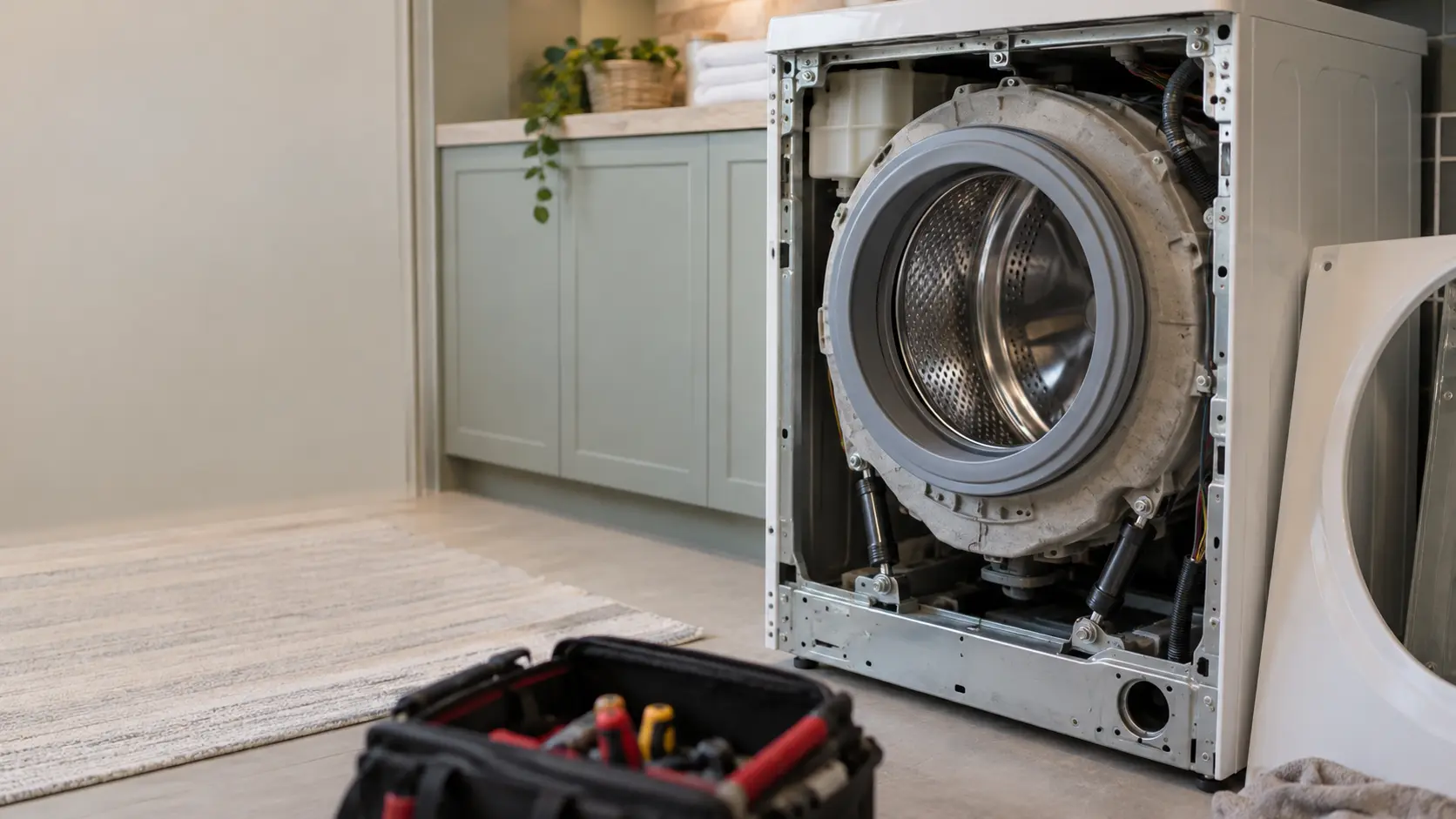
If the tub is empty, the load is balanced and the washer is level, the spin itself has a problem. On front-loaders the drum hangs on springs and dampers; when those wear, the drum swings too far, knocks the cabinet, and the washer keeps aborting. A door lock that never confirms it is latched stops the spin before it starts.
Top-loaders with an agitator shift from washing to spinning through a clutch or transmission, and a direct-drive or belt-driven motor turns it. A worn clutch lets the basket drift while the motor runs; a belt that slips squeals or smells of hot rubber. These are diagnosis jobs with the washer unplugged and its cabinet open.
Signs that point past the owner checks
Any of these, after the loading and leveling checks, is worth booking rather than retrying:
- A drum that moves freely by hand and bangs the cabinet when pushed
- A hot, rubbery smell during the spin
- The spin failing on every load, including small balanced ones
- A lid or door lock light that flashes and never stays on