Three designs, not two
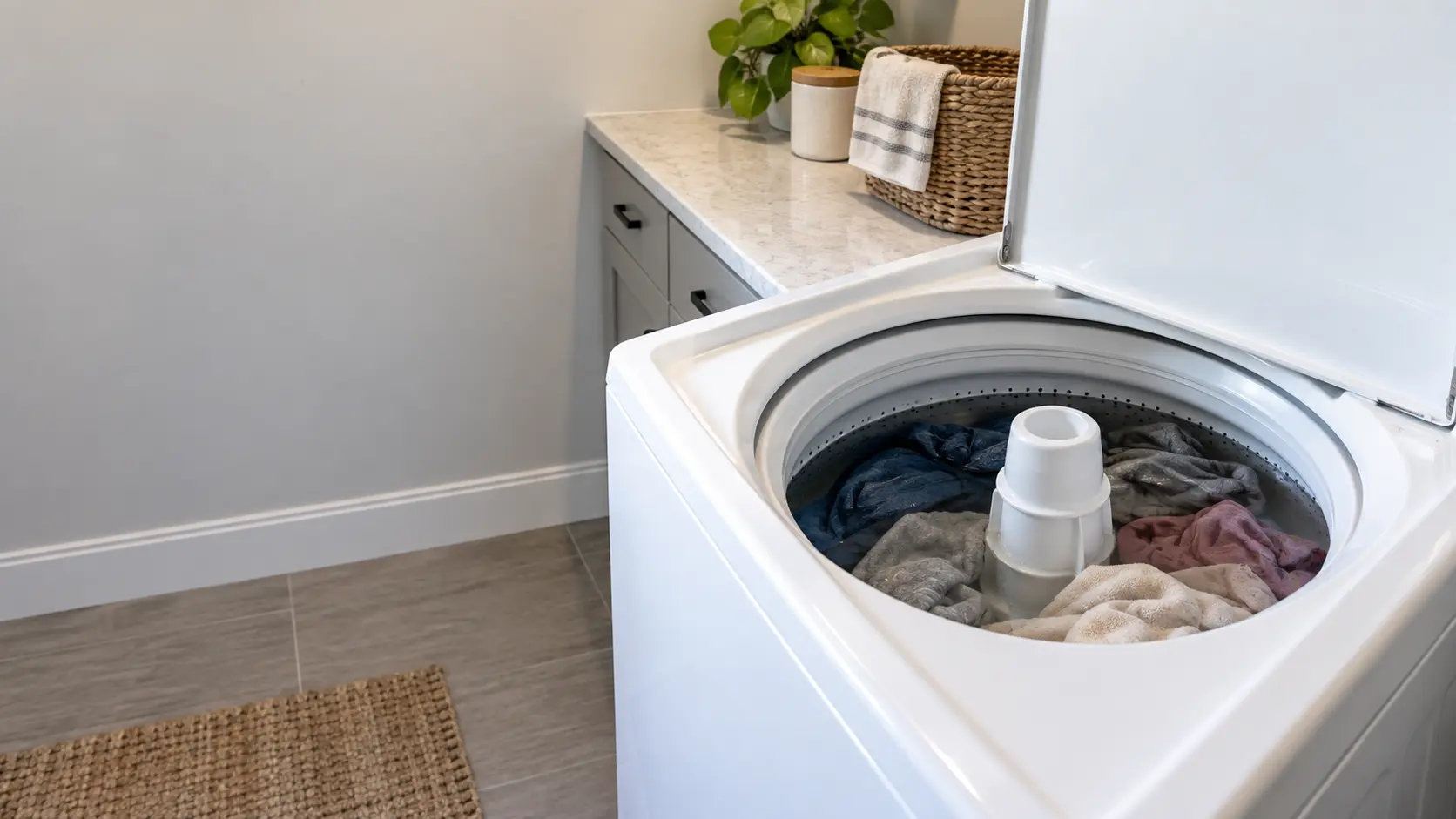
The front-load or top-load washer question hides a third option. Top-loaders now come in two very different forms, and one of them behaves more like a front-loader than like the machine most people grew up with.
Front-load
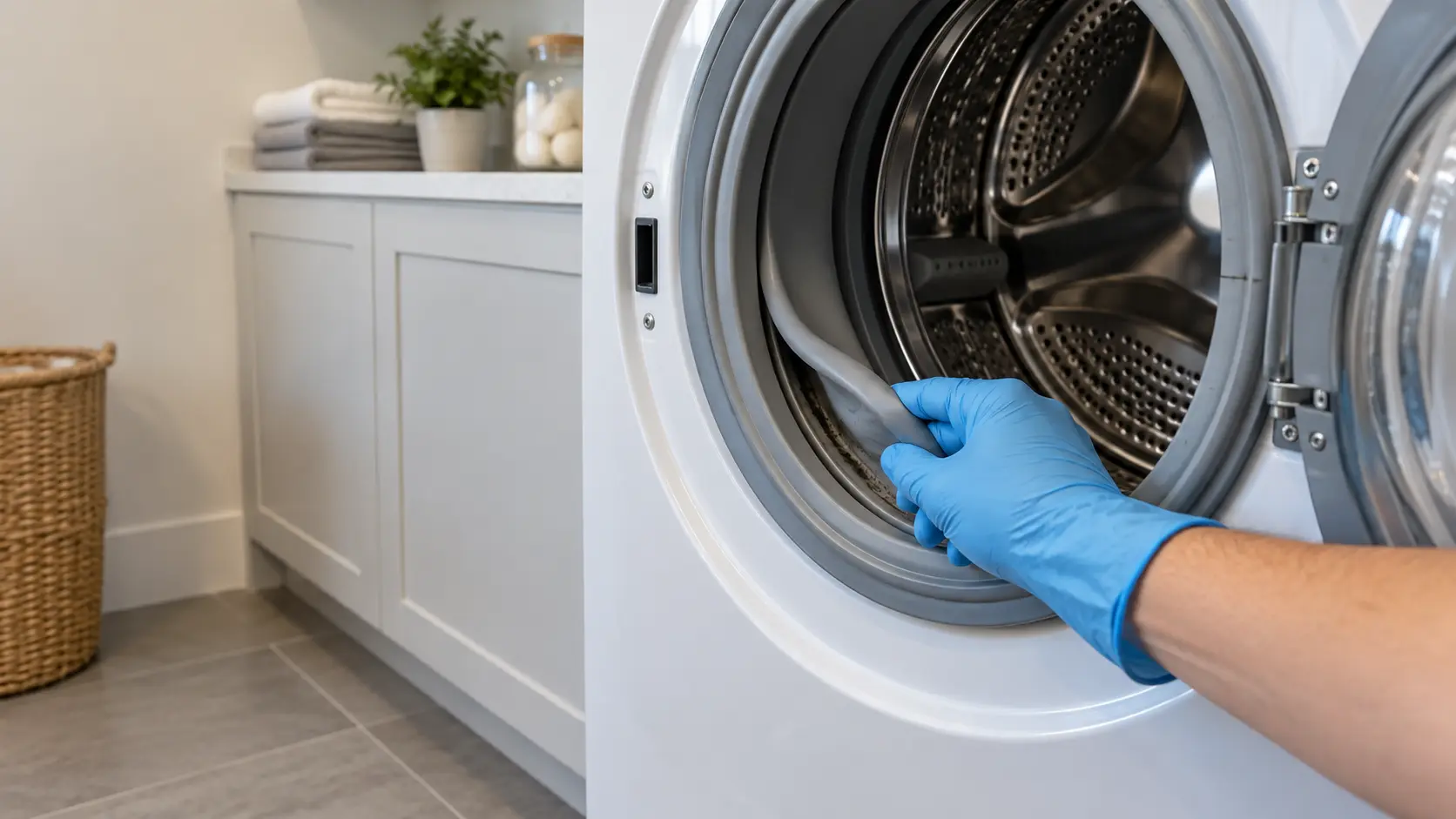
The drum lies on its side behind a sealed glass door. Paddles inside lift the clothes and drop them through a few inches of water, so the load does the scrubbing against itself. Because the drum turns on a horizontal axis, a front-loader can spin fast and send clothes to the dryer with less water left in them.
Top-load with an agitator
A tall post in the center of the basket twists back and forth while the clothes float in a full tub of water. It is the most forgiving design with ordinary detergent and heavy mud, and the least efficient. The post also takes up room, which makes comforters and bulky bedding harder to fit.
Top-load with an impeller
A low cone or disc at the bottom of the basket replaces the post. The machine senses the load, adds only as much water as it needs and rolls the clothes over each other. Owners moving from an agitator model are often surprised by how little water they see, which is how the design is meant to work.
Source: ENERGY STAR — Clothes washers — Certified front-load washers use about 50% less energy and water than top-load agitator washers and about 25% less than top-load impeller washers; higher IMEF and lower IWF mean a more efficient model
Water and energy, by the numbers
ENERGY STAR states that its certified front-load washers use about half the energy and water of a top-load agitator washer, and are still about 25 percent more efficient than a top-load impeller washer. It rates models by the Integrated Modified Energy Factor, where higher is better, and the Integrated Water Factor, gallons per cubic foot of capacity, where lower is better.
Those two figures appear for every certified model in the ENERGY STAR product finder, which makes them the fairest way to compare a front-loader and a top-loader of similar size. The yellow EnergyGuide label on the machine shows the estimated yearly energy use for a direct side-by-side check in the store.
Source: ENERGY STAR — Clothes washers — Certified front-load washers use about 50% less energy and water than top-load agitator washers and about 25% less than top-load impeller washers; higher IMEF and lower IWF mean a more efficient model

What each one is like to live with
Efficiency on a label is only half the choice. The rest is daily routine, and here the designs differ in ways that matter more to some households than to others.
- Loading height: a top-loader is loaded standing; a front-loader needs bending unless it sits on a pedestal, and Whirlpool advises against a pedestal under a top-loader because it puts the bottom of the basket out of reach.
- Cycle length: tumbling in little water takes time, so normal cycles on a front-loader and on many impeller top-loaders run longer than on an agitator model.
- Odor control: a front-loader's rubber boot holds moisture, so leaving the door ajar and pulling wet clothes out promptly are part of owning one.
- Detergent: front-loaders and impeller top-loaders need HE detergent in measured doses; an agitator model tolerates more variation.
- Water in the clothes: faster spins on front-loaders usually mean shorter drying times afterward.
Source: Whirlpool Product Help — Pedestal questions for front-load washers and dryers — A pedestal should not be used with a top-load washer
Where each one fits in the house
A front-loader is the only full-size washer that can carry a dryer stacked on top of it, which makes it the default for closets and narrow alcoves. Its controls sit on the front, so a counter can run over a pair of them. It does need clear space in front for the door to swing open fully.
A top-loader needs headroom instead. The lid rises straight up, so a shelf or cabinet above the machine has to clear it. In a basement with a low joist or a closet with a fixed shelf, measure the lid height with the lid open, not the cabinet height on the spec sheet. A one-piece laundry center is the exception here: a small top-loading washer with a dryer built above it, sharing one frame.
Before choosing, take four measurements in the space itself:
- The width of the opening and of every door and hallway on the way in.
- The depth from the wall to the front edge of the space, with room behind for the hoses to curve without kinking.
- The height available with a top-loader's lid fully raised, or with a dryer stacked on a front-loader.
- The swing of a front-loader's door, which on most models needs close to its full width of clear floor.
What wears out on each design
From the repair side, the two designs age differently. Knowing where each one tends to fail helps you judge a model years before anything goes wrong.
| Part | Front-load | Top-load |
|---|---|---|
| Door or lid lock | Door lock on every cycle | Lid lock or switch, simpler |
| Seal | Rubber door boot, cleaned by hand | No door seal to maintain |
| Suspension | Shock absorbers under the tub | Suspension rods hanging from the corners |
| Drive | Direct-drive motor or belt, rear bearings | Motor with gearcase, clutch or transmission |
| Drain | Pump with an owner-cleanable filter on most models | Pump, usually reached from the back or underneath |
Front-load wear points
The door boot tears or grows mildew, the door lock wears from thousands of cycles, and the drain pump filter collects whatever was left in pockets. The costly one is the bearing set behind the drum, which carries the whole load during high-speed spins.