Why front-loaders are the ones that smell
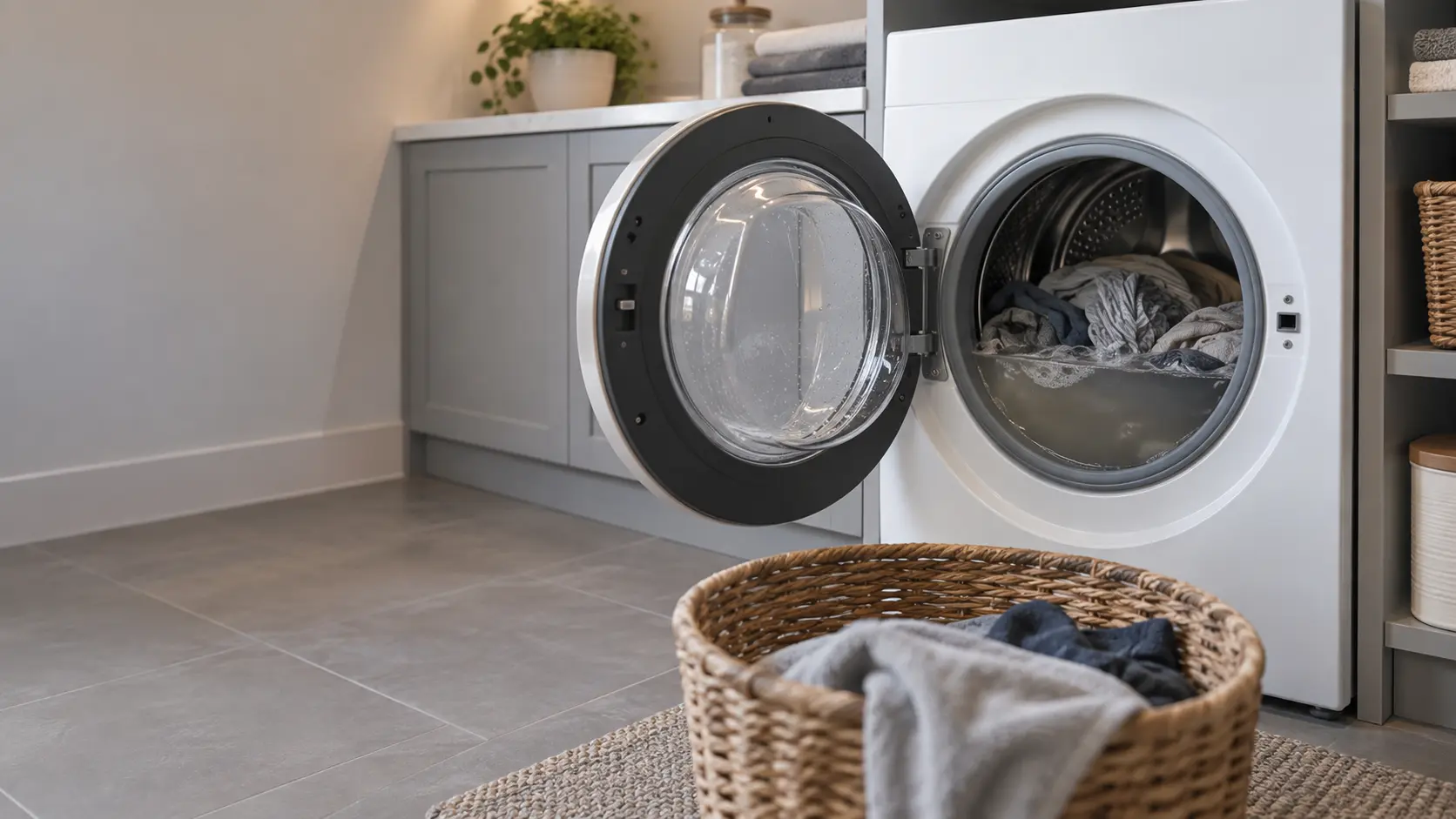
ENERGY STAR explains the mechanism plainly: front-loading washers seal their doors airtight so water stays in during the wash, and when the machine sits unused that same seal can trap moisture and lead to mold. A top-loader with its lid up breathes; a front-loader with its door closed stays humid for days.
Low water use adds to it. A front-loader rinses with a fraction of the water an old top-loader used, so any extra detergent or fabric softener has less water to carry it away. What stays behind coats the outer tub and the rubber boot in a thin gray film, and that film is what bacteria and mildew feed on.
Source: ENERGY STAR — Clothes washers — Airtight front-loader seals can trap moisture and lead to mold; leave the door ajar an hour or two and keep children out of the drum
Where the smell actually lives
The drum you can see is stainless steel and rarely the source. The front load washer smell nearly always comes from four places the water reaches but the air does not.
- Door boot folds, especially at the bottom
- Drain pump filter and its housing
- Dispenser drawer and the cavity behind it
- The back of the outer tub, which only a cleaning cycle reaches
The folds of the door boot
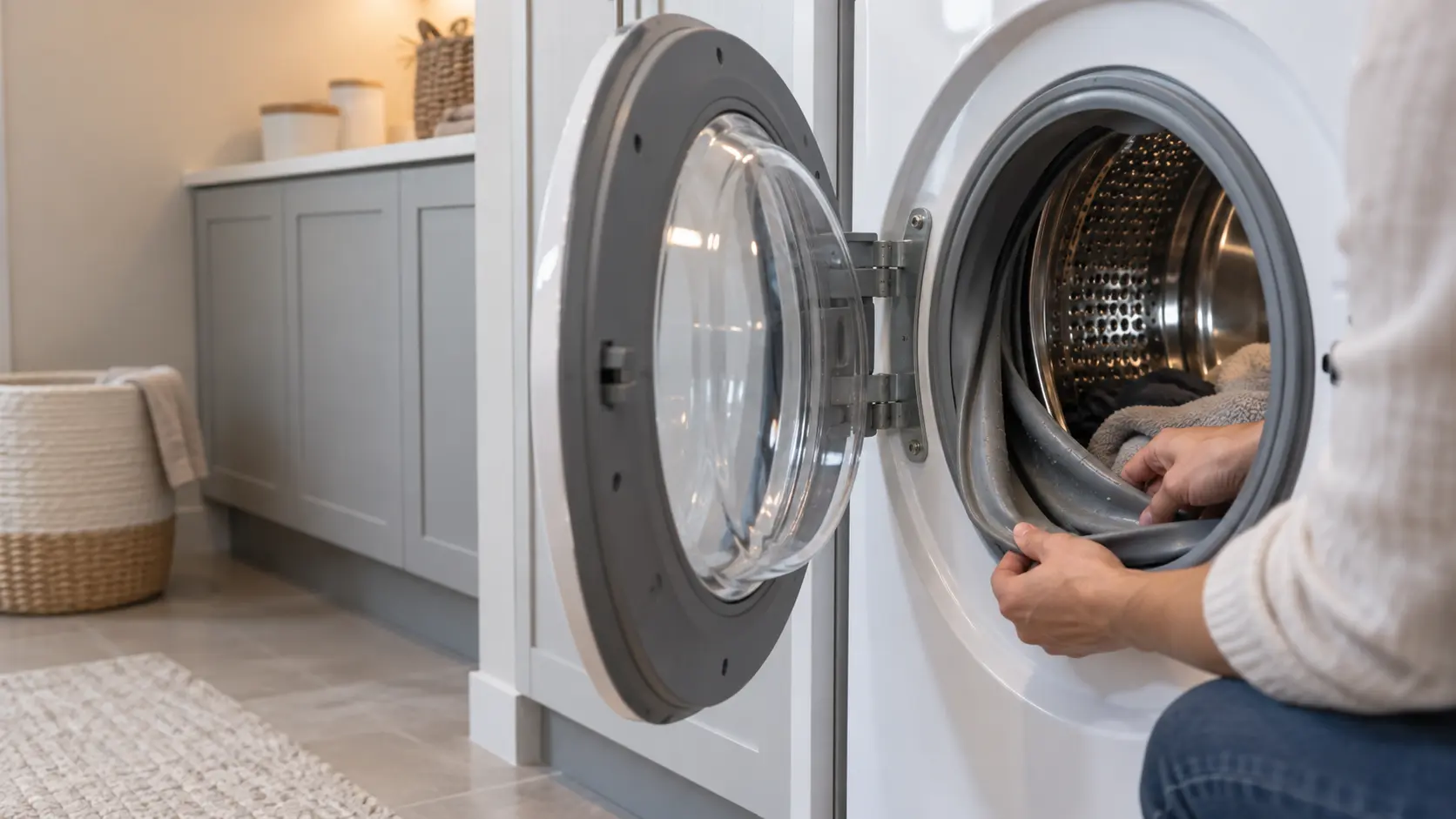
Pull the lower part of the rubber boot toward you and look inside the fold. Standing water, lint, hair and black specks there are the most common find, and a sock or a hair tie is often tucked in the back of it.
The drain pump filter
The filter at the lower front holds a small pool of water and whatever it has caught, sometimes for weeks. Samsung counts odor among the reasons to clean it and suggests doing so at least monthly.
The dispenser drawer and its cavity
Softener and liquid detergent leave a sticky layer in the drawer compartments and in the housing behind them. Slide the drawer out fully and look at the roof of the opening with a flashlight; slime there drips into every load.

Habits that feed the odor
Most smelly front-loaders are used exactly as they were sold, with a few habits that happen to suit bacteria. None of them is wrong in itself; together they leave residue behind faster than rinsing removes it.
Whirlpool's advice lines up with this list: use only HE detergent, measure it, take clothes out soon after the cycle ends, and leave the door open between loads.
Detergent pods are not exempt. A pod sized for a large, heavily soiled load leaves the same film behind when it goes into a half load of lightly worn shirts, so match the dose to the load rather than using one every time.
- Pouring detergent to the top of the cap instead of the line
- Liquid softener in every load
- Cold water on every cycle, month after month
- Wet laundry left in the drum overnight
- The door closed tight as soon as the load comes out
Source: Whirlpool — Removing odors, front-load washer — Door open between loads, monthly Clean Washer cycle with affresh or liquid chlorine bleach (not thickened bleach), HE detergent only, remove clothes promptly, clean the dispenser drawer
Clearing a smell that is already there
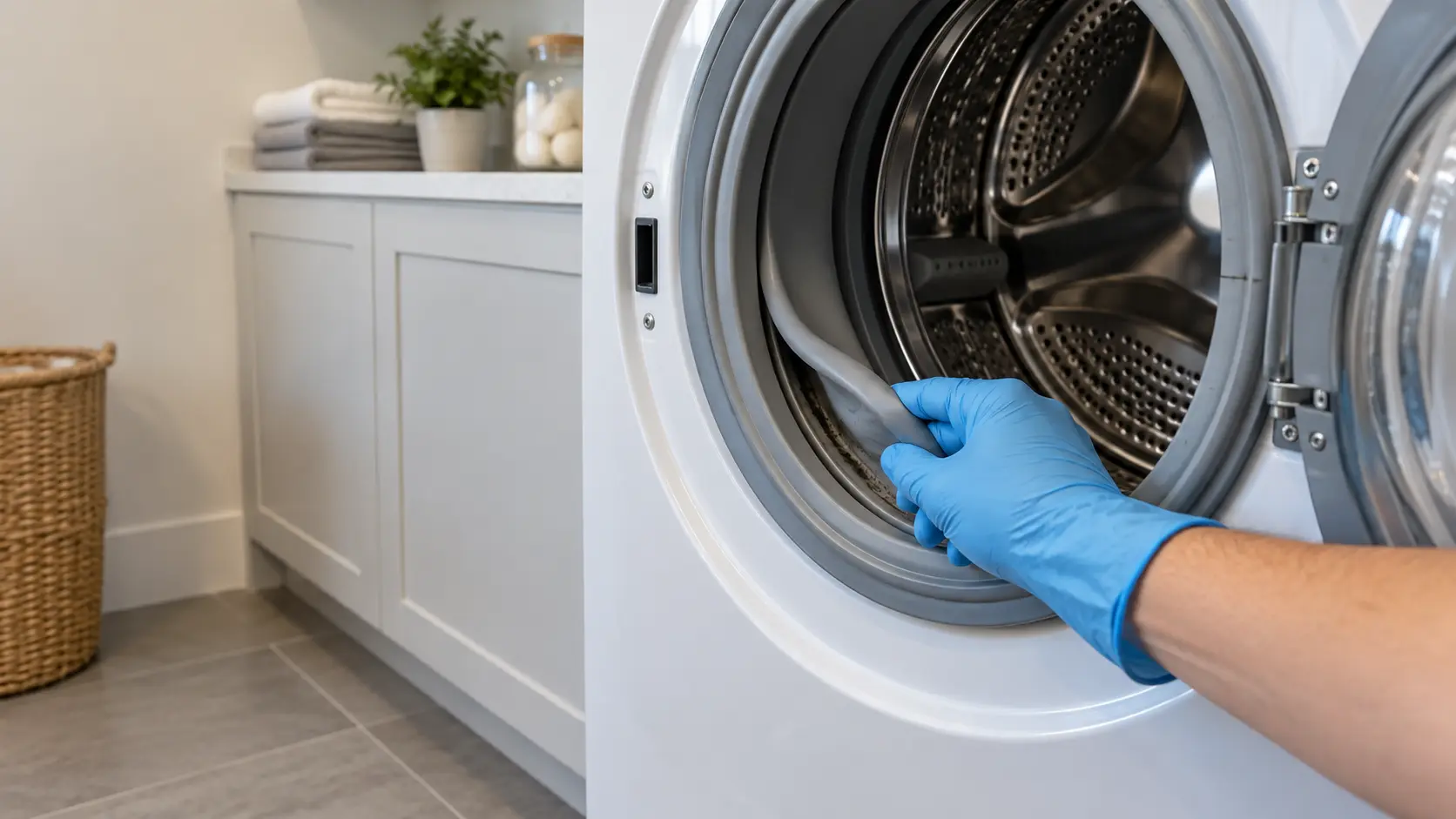
Work from the places you can reach toward the ones you cannot. Start by wiping the door boot: Whirlpool's recipe is 3/4 cup of liquid chlorine bleach in a gallon of warm water, wiped on with a damp cloth, left five minutes, then dried, with rubber gloves on. Clean the pump filter and wash the dispenser drawer in the sink.
Then run the washer's cleaning program empty. Whirlpool pairs its Clean Washer cycle with an affresh tablet or liquid chlorine bleach and warns against thickened or no-splash bleach, which foams. Samsung's Self Clean takes about four hours on its front-loaders. When it ends, leave the door open so the inside dries.
Source: Whirlpool — Removing odors, front-load washer — Door open between loads, monthly Clean Washer cycle with affresh or liquid chlorine bleach (not thickened bleach), HE detergent only, remove clothes promptly, clean the dispenser drawer; Whirlpool — Cleaning the door seal, front-load washer — 3/4 cup liquid chlorine bleach per gallon of warm water, wipe, stand 5 minutes, dry, rubber gloves; Samsung — How to clean your Samsung washer — Clean the pump filter at least monthly or about every 40 washes to help prevent odors; Self Clean takes about four hours on a front-loader
When the smell survives a full cleaning
A smell that returns within days of a thorough clean usually means water is being left behind. A drain that is slow, a pump filter that stays full or a washer that is not level toward the front can keep a pool in the tub between loads. Check the drain path before cleaning again.
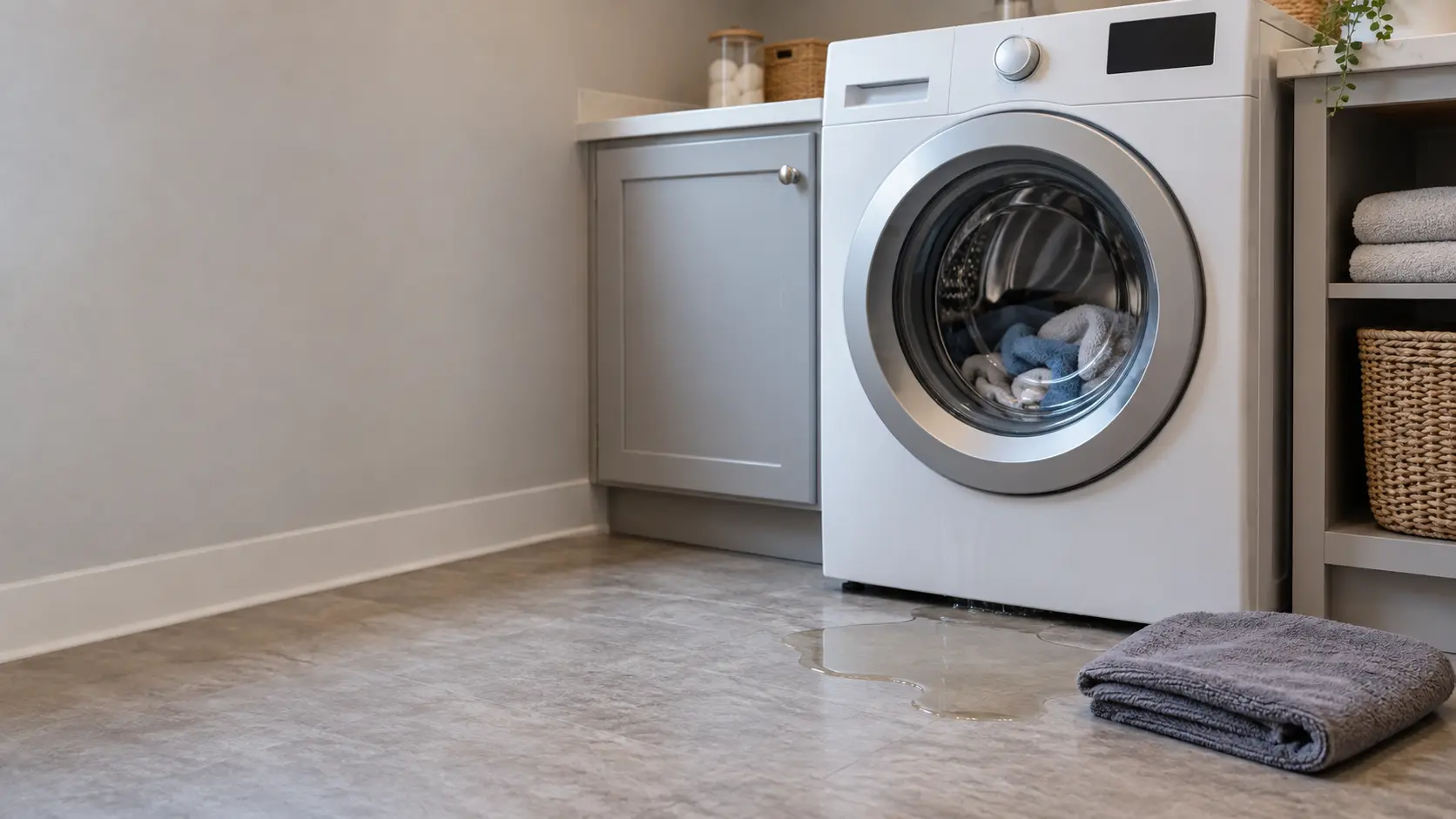
A door boot that is split, hardened or stained black deep in the rubber cannot be cleaned back to fresh and is a part to replace. Water marks on the floor under the washer, along with the smell, suggest a leak inside the cabinet that keeps insulation or the base wet.
A sewer smell is a different problem
A rotten-egg or sewer odor that is strongest behind the washer, near the standpipe, usually comes from the house drain rather than the machine. A standpipe needs a working trap to block sewer gas, and that plumbing belongs to a plumber. A hot or burning smell is not a cleaning issue at all: stop the washer and unplug it.