


Why the cycle ended like that
Common problems
guides.
What a washer is telling you when water stays in the drum, the spin never starts, the machine shakes or the clothes come out dirty.
Mon–Sat, 8am–8pm
- Three guides
- Read before you book
- Says where to stop
Book a visit
Three short steps, about a minute.
or call (844) 398-5711
Loading appointment form…
The appointment form couldn’t load. Please try again.
Common problems,
guide by guide.
This section starts from what the washer did wrong on the last load: water still standing in the drum, towels that come out soaked, a drum that barely turns at the end, or a sour odor every time the door opens. Each guide explains how the machine decides to drain, spin or stop, so the symptom can be read as a clue rather than a verdict.
All 18 guides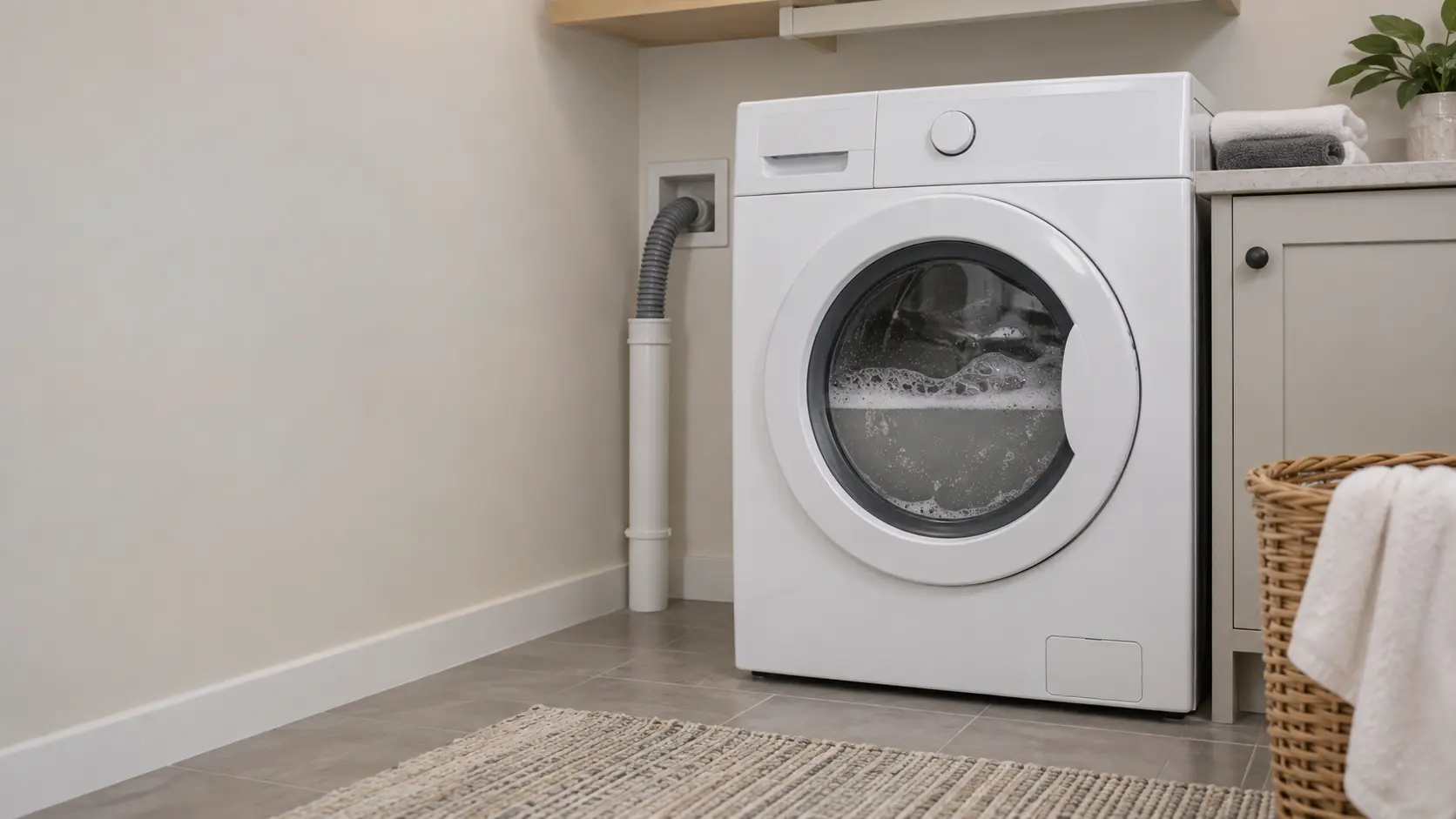
Why a washer won't drain, and where the water is stuck


Why the cycle ended like that.
The guides move from the causes an owner can confirm in a few minutes, such as a folded drain hose, a lopsided load or a door boot full of residue, toward the parts that need the cabinet opened. They also say which symptoms belong to each washer type, since a front-loader, an agitator top-loader and the washing half of a laundry center do not fail in the same ways.
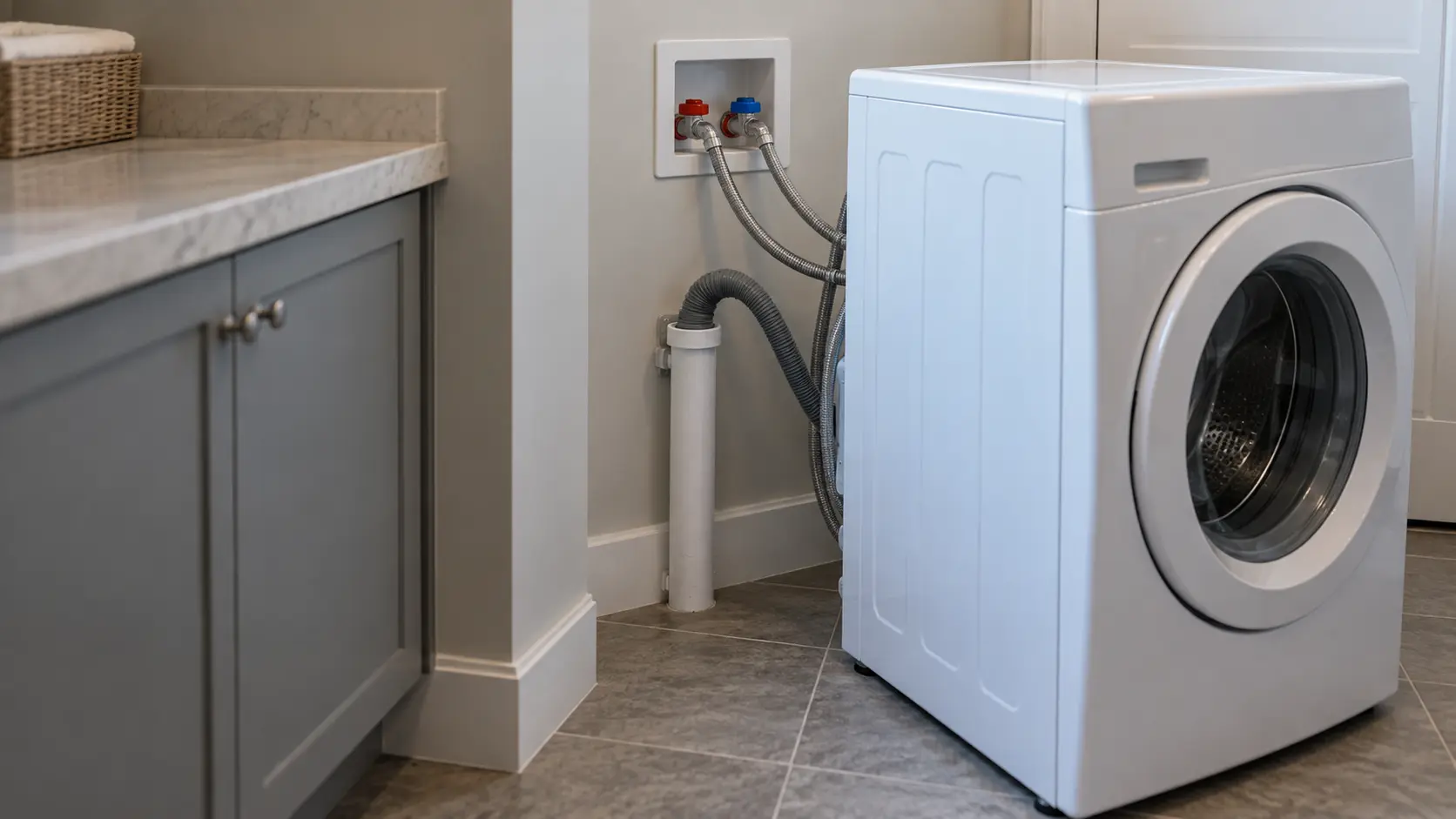
Anything involving water on the floor, a burning smell or a breaker that trips is not a common problem to puzzle over: stop the cycle, unplug the washer and close its supply valves, then read the water and electrical safety section.
Not sure where to start?The short answerWhy a washer won't drain, and where the water is stuck
When a washer won't drain, the water is stuck at one of four points: a pump filter packed with lint and pocket debris, a kinked or badly placed drain hose, a clogged standpipe, or oversudsing from too much detergent.
The short answerWhy a washer won't spin, or spins too slowly to wring clothes
A washer won't spin, or spins too weakly to wring clothes out, most often because the load is off balance, water or suds are still in the tub, a low-spin setting was chosen, or the machine is not level.
The short answerWhy front-loaders smell, and how to get the drum fresh again
A front load washer smell comes from moisture and residue left where air cannot dry them: the folds of the door boot, the drain pump filter, the dispenser drawer and the outer tub.
When reading
is not enough.
If the checks in these guides did not settle it, the visit picks up from there, stop by stop.
What repairs cost- 01Watch it run first
- 02You hear the cost first
- 03Parts on the van
- 04Fixed, then run
The problems
these answer.
Each has a page of its own, with the causes in the order worth checking.
All 17 problems


Questions about
common problems.
Which washer problem do you see most often?
Are front-loaders more trouble than top-loaders?
Should I keep using the washer while I work out the problem?
The other
sections.
Split by what you are trying to find out rather than by which part of the appliance it concerns.
All guides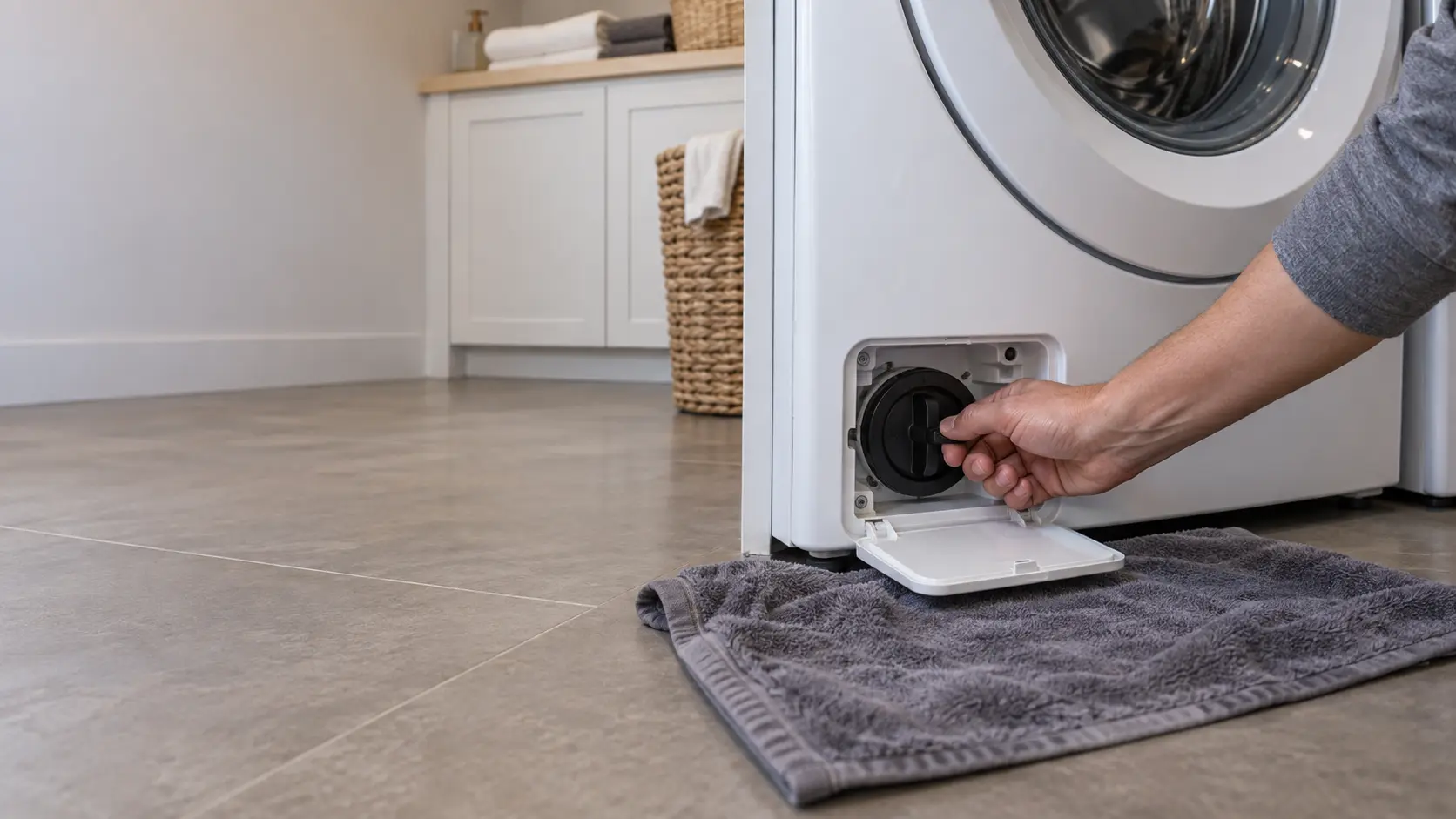


Back to your everyday
Let’s get your washer working again.
Three short steps online, or one call. Tell us what you are seeing and pick a window that works.