
Stop, unplug, then look
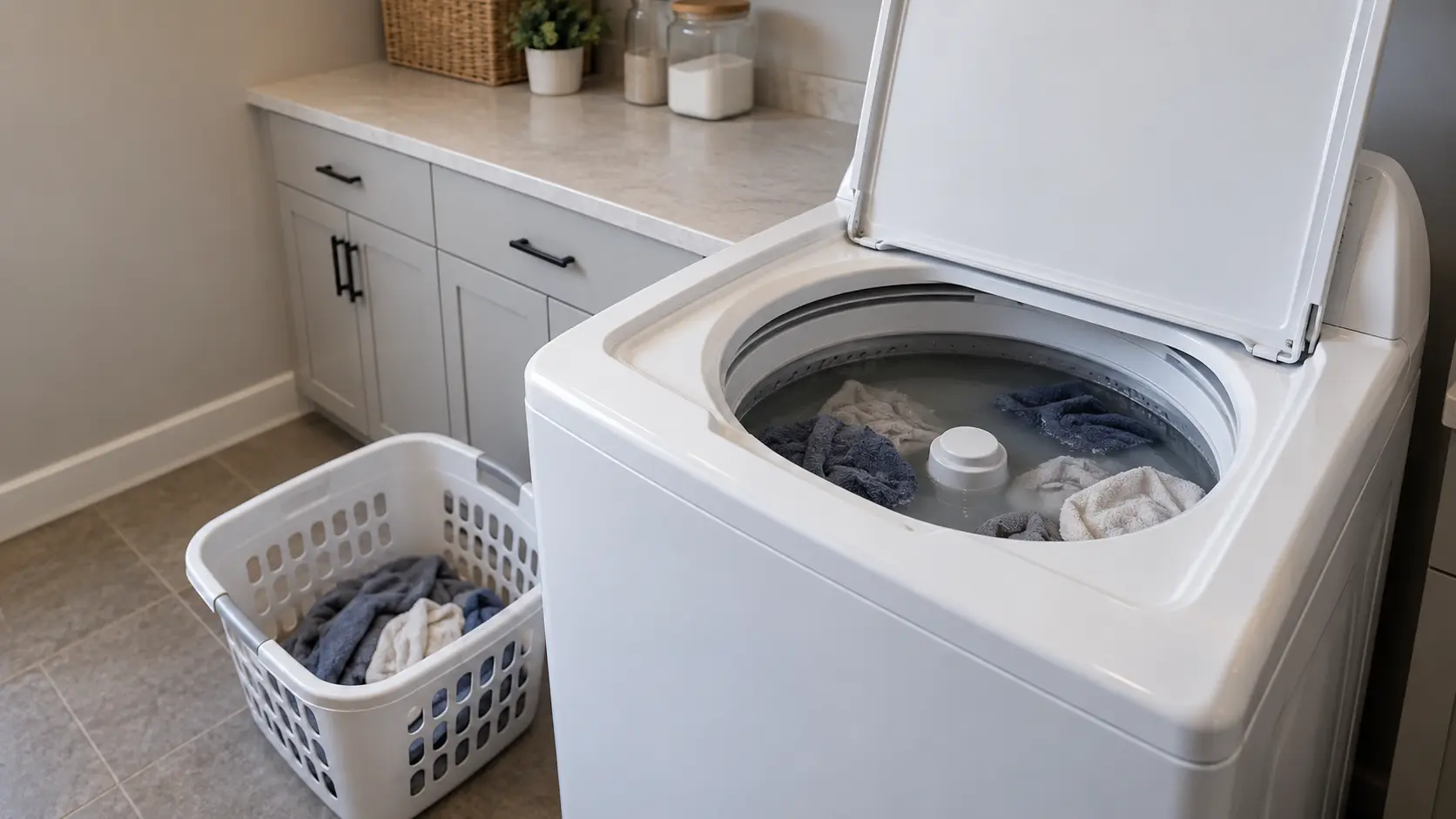
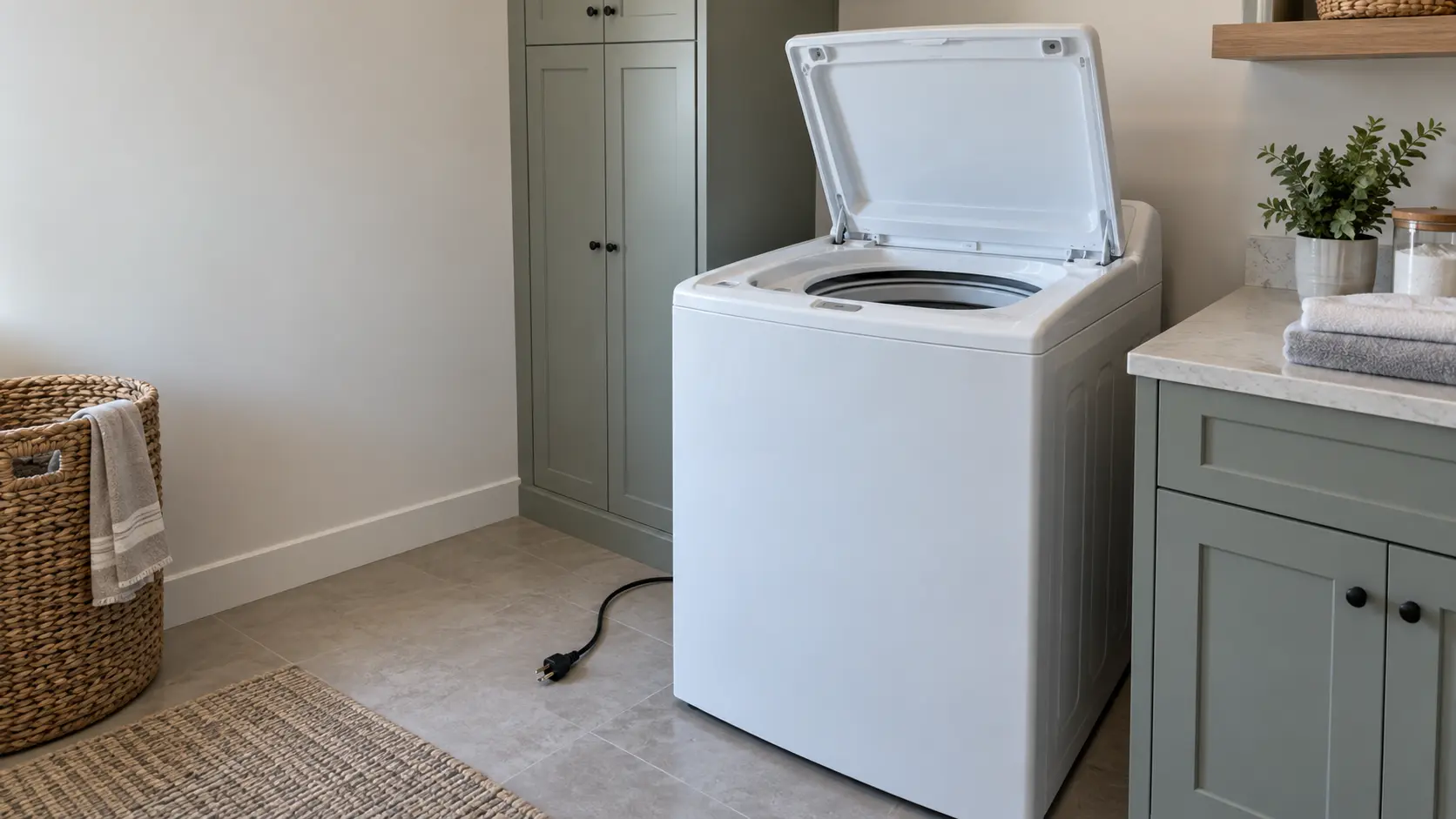
Cancel the cycle and pull the plug. If you see smoke or flame, or the smell is getting stronger with the washer off, leave the room, close the door behind you and call the fire department from outside. If there is no smoke, stay nearby for a few minutes with the washer unplugged and notice whether the smell fades, stays the same or seems to come from one spot.
Where the smell is strongest is the first clue. At the back near the floor points to the outlet, the cord or the drive motor. Around the top or the control panel points to electronics. Inside the drum points to something in the load or caught in the door boot.
When the plug or the outlet is hot
A plug that is warm to the touch after a cycle, brown marks on the outlet face or a plug that slides out too easily all mean the connection is heating. Leave the circuit switched off at the panel. The U.S. Fire Administration advises replacing wall outlets when plugs no longer fit snugly, and that repair belongs to an electrician.
Source: LG Electronics — Washer Owner's Manual (WM4080) — Unplug immediately for a strange sound, a chemical or burning smell, or smoke; some internal parts are not grounded and can shock during servicing; no extension cord or adapter
Which smell is it
Owners describe a washer burning smell in a handful of ways, and each description narrows the list of parts. None of these is a diagnosis on its own, but together with the moment in the cycle when it started they tell a technician a great deal.
- Hot rubber only while the washer fills, before anything turns: new inlet hoses.
- A varnish or electrical smell from a washer only weeks old: motor windings breaking in.
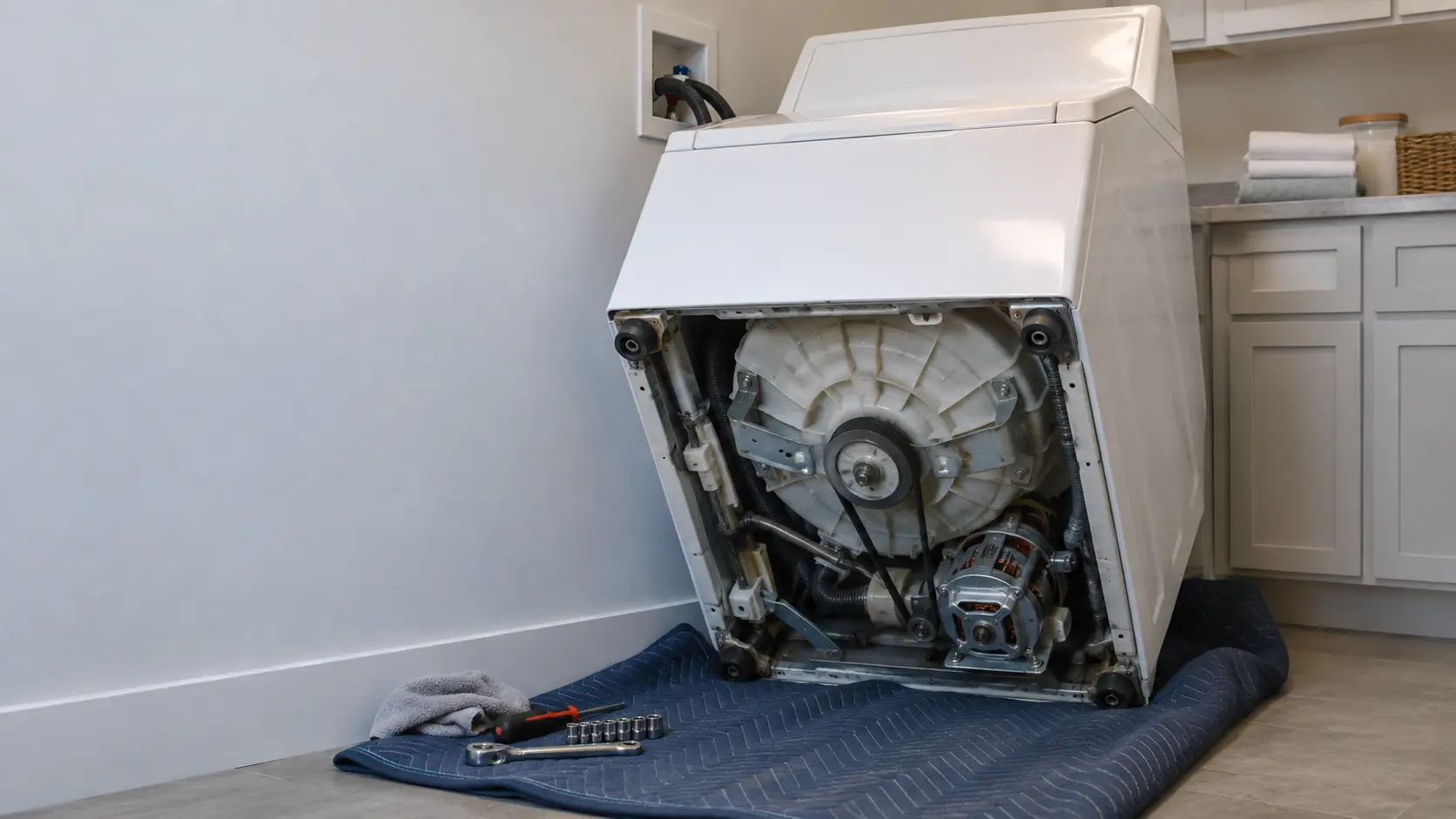
- Hot rubber while the drum turns on a belt-drive washer: a belt slipping on a pulley that is working too hard.
- Melting plastic, sharp and acrid: a wire, a connector or a component on a circuit board.
- Scorched fabric from inside the drum: something caught against a hot or moving part.
Break-in odor on a new washer
LG explains that a new washer's motor coils and the insulation around them heat up in the first weeks and can give off an electrical or burning-rubber smell that normally fades after 10 to 20 full cycles. GE describes a separate case: new inlet hoses can smell strongly of rubber. Starting a hot fill and stopping before agitation tells the two apart, since only the hoses are working at that point.
A belt or a motor under strain
On washers driven by a belt, an overloaded tub, a drum that cannot turn freely or a pulley that has seized makes the belt slip and heat. The smell usually comes with a slower spin or a drum that stops. A washer with a direct-drive motor has no belt, and a hot smell from it deserves a technician sooner.
Something caught in the drum or the boot
LG also names debris trapped in the door gasket, the pump filter or the tub, heated during hot or sanitizing cycles. A rubber-backed mat, a hair tie or a sock wedged under the drum lip can scorch. Anything soaked in cooking oil, gasoline or solvents is a different matter: Speed Queen warns that oil left in fabric can make it catch fire by itself.

The outlet, the cord and the circuit
A washer runs on an ordinary 120-volt outlet, but it draws a lot of current in bursts when the motor starts and when a heater is on. Speed Queen's instructions ask for a separate 15-amp circuit, a grounded three-slot outlet, no adapter and no extension cord. The U.S. Fire Administration says the same about every major appliance: plug it directly into the wall, because an extension cord can overheat and start a fire.
Whirlpool's help pages add that if a washer will not start, a tripped breaker or GFCI outlet is worth checking and resetting once, and that a problem that keeps returning is a job for an electrician. A trip that happens together with a hot smell is not a reset-and-try-again situation.
Source: Alliance Laundry Systems (Speed Queen) — Installation Instructions for Topload Washers, 204104 — Separate 15-amp branch circuit, grounded three-prong receptacle, no extension cord or adapter; U.S. Fire Administration — Appliance and electrical fire safety — Washers go straight into a wall outlet, never on an extension cord; a wall outlet that holds plugs loosely should be replaced; Whirlpool Product Help — Front load washer installation checklist — Check and reset a tripped breaker or GFCI; call an electrician if it keeps happening
What not to try
The instinct after a strange smell is to run the washer again and sniff. That is how a warm connection becomes a burned one.
- Do not run a test load to find the smell again.
- Do not take panels off with the washer plugged in. LG warns that some internal parts are intentionally not grounded and can shock during servicing.
- Do not spray water or cleaner into the control area or onto the motor.
- Do not plug the washer into a different outlet with an extension cord to see if the problem follows it.
- Do not wash rags that held oil, stain or solvent, even after they seem dry.
Source: LG Electronics — Washer Owner's Manual (WM4080) — Unplug immediately for a strange sound, a chemical or burning smell, or smoke; some internal parts are not grounded and can shock during servicing; no extension cord or adapter; Alliance Laundry Systems (Speed Queen) — User's Guide for Frontload Washers, 808187 — Oils left in fabric may make it catch fire by itself; do not wash items soaked in gasoline or solvents