What a pan catches, and what it does not
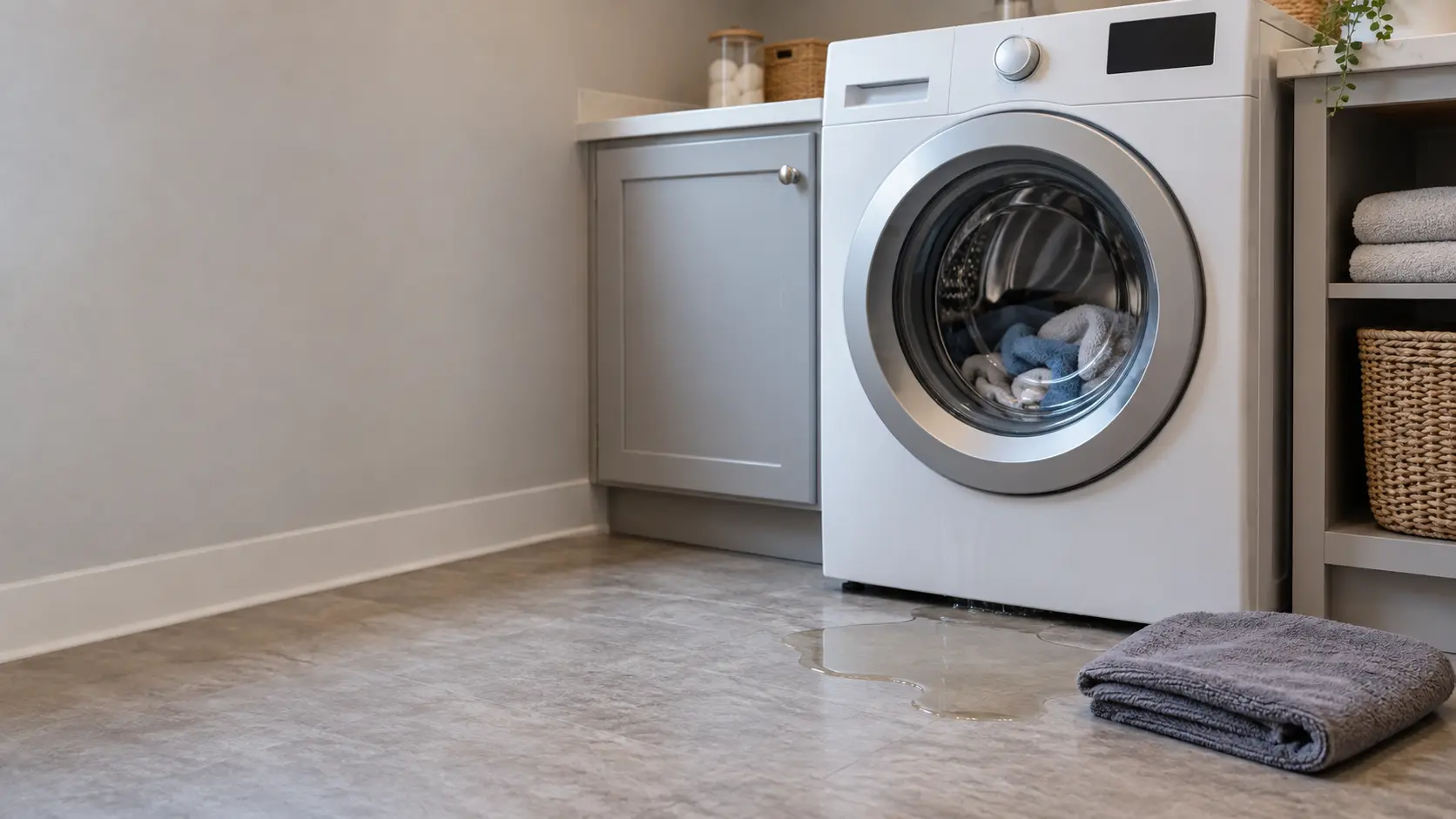
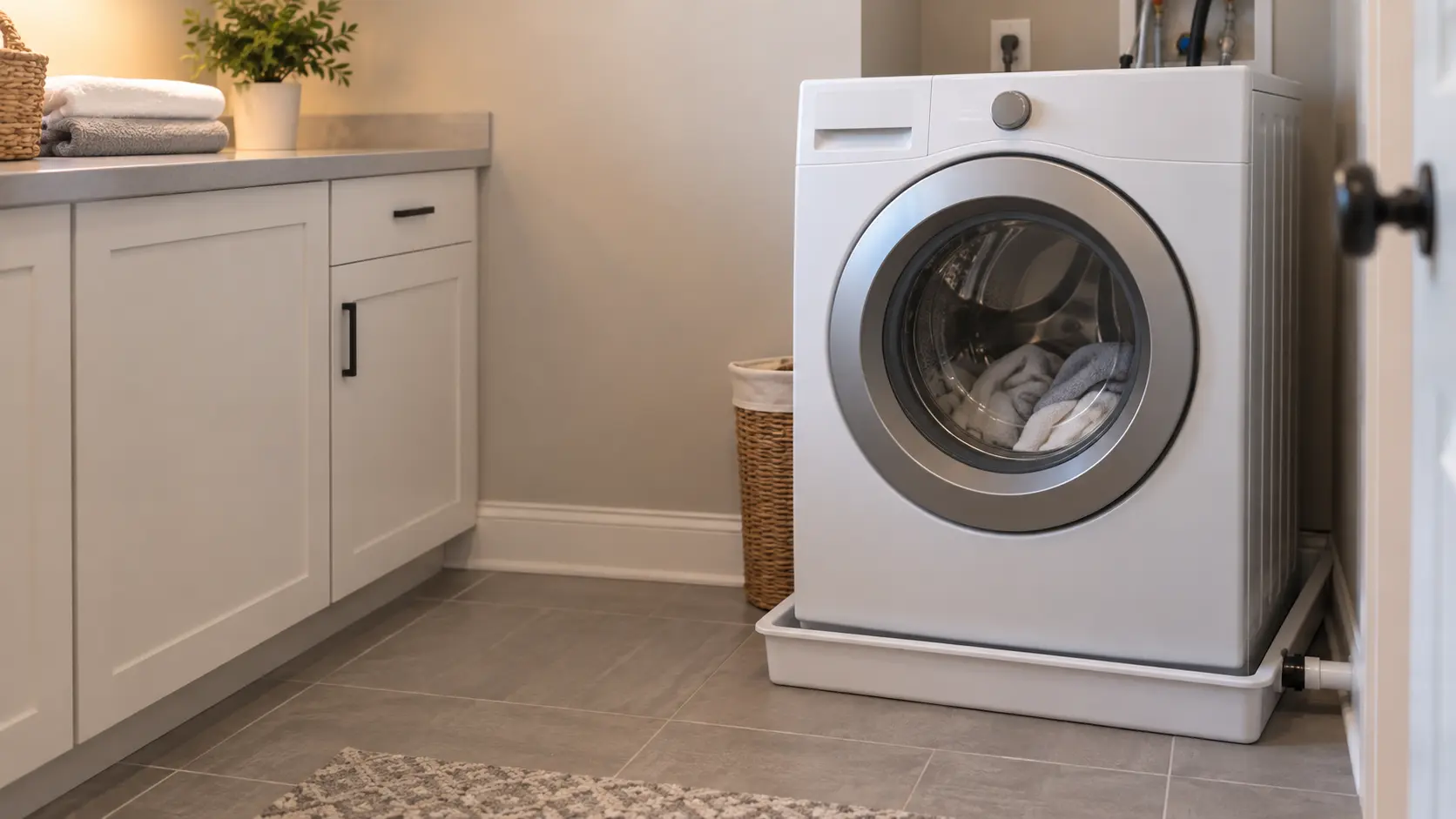
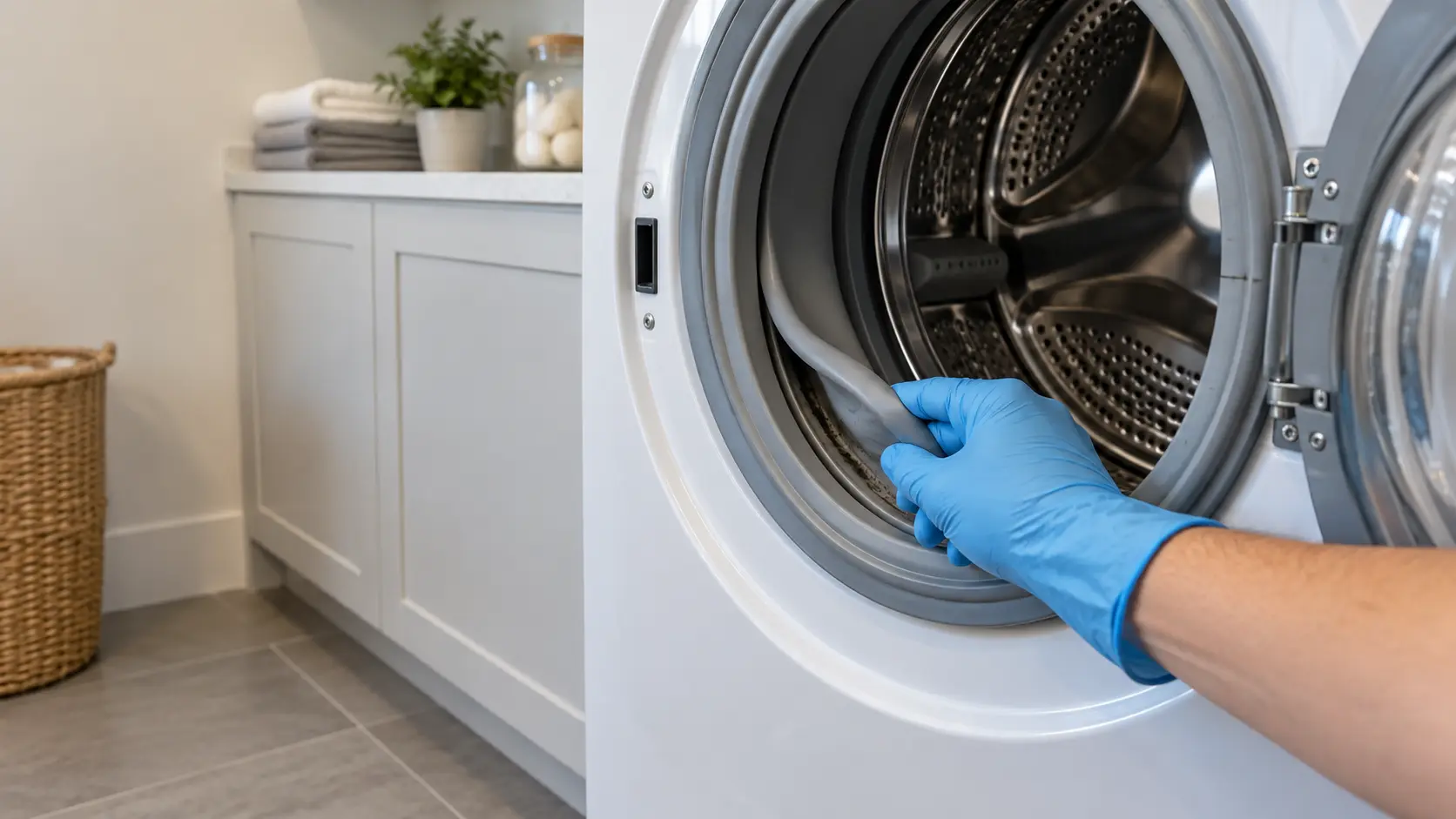
A washer drain pan is a tray an inch or two deep, in plastic or metal, a little larger than the washer's footprint. It is built for the slow leak nobody notices for a week: a coupling that weeps, a door boot that lets a spoonful out each spin, a pump seal starting to go. On an upper floor, that slow leak is the one that stains a ceiling below.
- Catches: drips from hose ends, a seeping door boot, a small pump or internal hose leak, condensation.
- Catches for a while: a steady trickle, but only as long as the pan has room or a drain line.
- Does not catch: a burst fill hose, which delivers water at full house pressure until someone closes a valve.
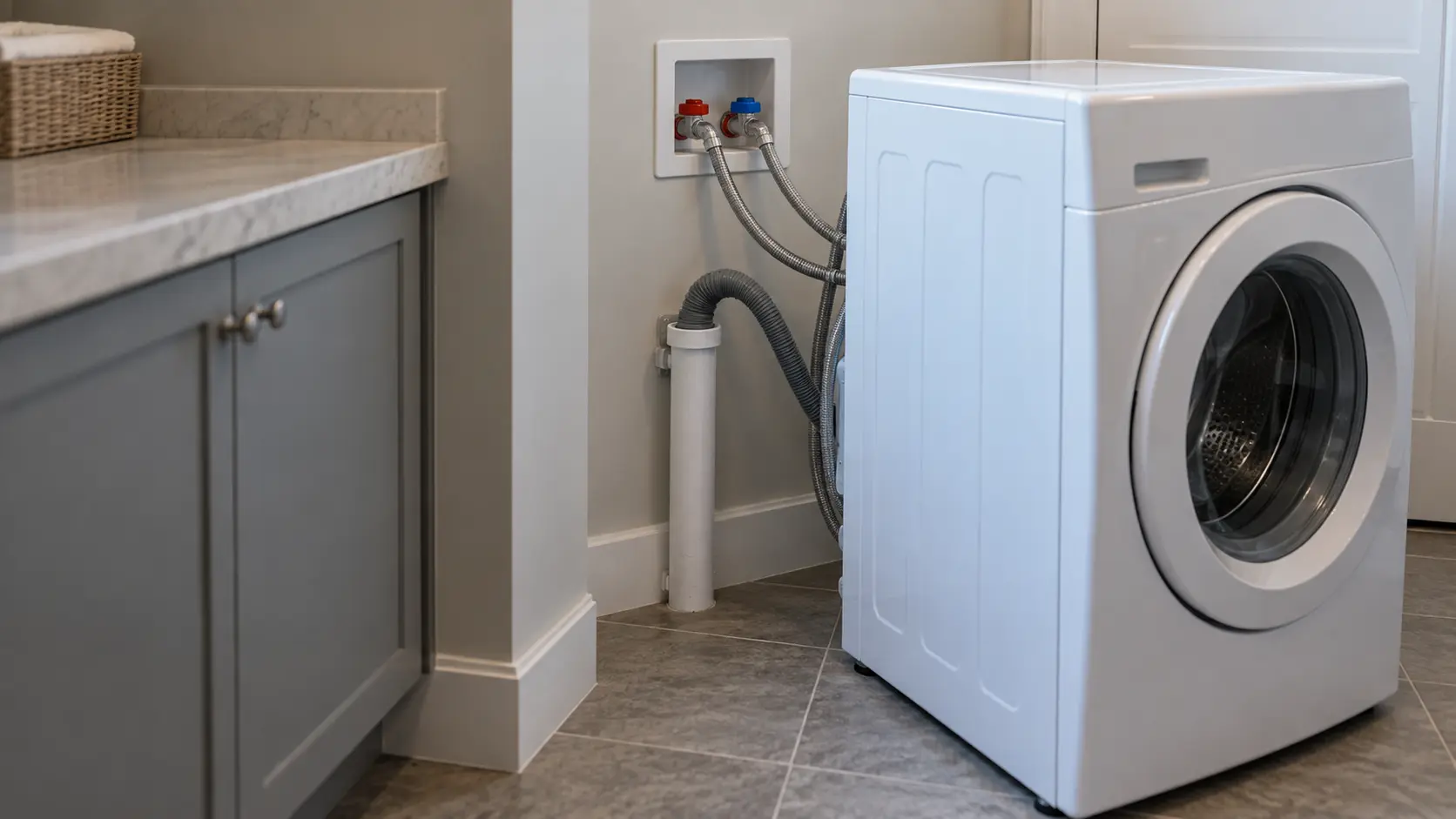
- Does not catch: a standpipe overflow running down the wall behind the pan's rim.
A pan with a drain line versus one without
Many pans have a fitting in one side for a drain line. Piped to a floor drain or another approved drain, the pan can carry away a steady leak indefinitely. Without a line, it is a shallow tub that holds a few gallons and then overflows like any other container. Connecting a pan drain to the house plumbing belongs to a plumber.
When a washer drain pan is worth it
Samsung's installation page is direct: a drip pan is required when the washer is not installed on the ground floor. Other makers leave the choice to the owner and local code. Whether a pan with a drain line is required where you live is decided by the local plumbing code, and the building department or a plumber can tell you.
Beyond any rule, a pan makes the most sense wherever water would reach something expensive before anyone saw it: over a finished ceiling, in a hallway closet with wood floors, in a condominium above a neighbor, or next to a finished basement wall.
Source: Samsung US Support — Install a Samsung washing machine in your home — A drip pan is required when the washer is not on the ground floor; low-profile pans for front-loaders; some models need a bulge under 5/8 inch

Choosing a pan that fits the washer
Measure the washer's width and depth, and the space between the walls, before buying. The pan must be large enough that the feet sit fully inside it, not on the rim, and small enough to fit the alcove with room for hoses behind it.
Front-loaders need a low profile
A front-loader's door sits close to the floor, and a tall pan rim can get in the way of the door and of the pump filter hatch at the bottom of the front panel. Samsung recommends low-profile pans for front-loaders and notes that some of its models need the pan's raised bulge to be under 5/8 inch.
Pedestals and stacked pairs
LG says not to use a drain pan with a pedestal or a pedestal washer: the pan can block the drawer and add vibration. A stacked washer and dryer sits in one pan together, which makes a pan with a drain line even more useful, since nobody sees the floor under a stack.
Leveling a washer that stands in a pan
The pan's floor is thinner and springier than the room's floor, and it is rarely perfectly flat. LG's instructions ask for extra care: the leveling feet must be adjusted for firm and even contact with the pan, because a pan combined with an unlevel washer increases vibration and noise.
Set the pan first, check that it sits flat without rocking, then walk the washer in with a helper. Level it in place, rock it corner to corner, and tighten the locknuts. Check that neither the fill hoses nor the drain hose are pinched over the pan's back rim.
Source: LG Electronics — Washer Owner's Manual (WM4080) — Feet in firm, even contact with the pan; pans and poor leveling add vibration and noise; no pan with a pedestal
Other protection for an upper-floor laundry
A pan is one layer. The rest is habit and a few simple parts, and together they cover the failures a pan cannot.
- A battery water sensor on the floor beside the pan, which sounds an alarm on the first drop.
- Closing the supply valves after each wash day, as Speed Queen's instructions ask, and before every trip.
- Replacing rubber fill hoses on schedule: Speed Queen says every five years.
- A floor stiff enough for the load: Whirlpool gives 315 pounds for washer, water and clothes on its model and suggests 3/4-inch plywood where a floor flexes.
- Valves you can reach without moving the washer, especially behind a stacked pair.
Source: Alliance Laundry Systems (Speed Queen) — User's Guide for Frontload Washers, 808187 — Close the shut-off valves at the end of each wash day; replace fill hoses every five years; Whirlpool Product Help — Electrical supply needed for a washer — The floor must support the washer's total weight with water and load, 315 pounds; Whirlpool Product Help — Leveling a front load washer — 3/4-inch plywood secured under the washer and dryer can reduce vibration on a flexing floor