
Washer
Transmission and Clutch Repair
A top-loader that fills and drains but barely moves the clothes, or spins slowly, repaired at the shift actuator, the clutch or the transmission.
Mon–Sat, 8am–8pm
- Moderate to highest cost band
- 4 steps on the visit
- 4 problems it answers
Book a visit
Three short steps, about a minute.
or call (844) 398-5711
Loading appointment form…
The appointment form couldn’t load. Please try again.
What the washer transmission and clutch repair
involves.
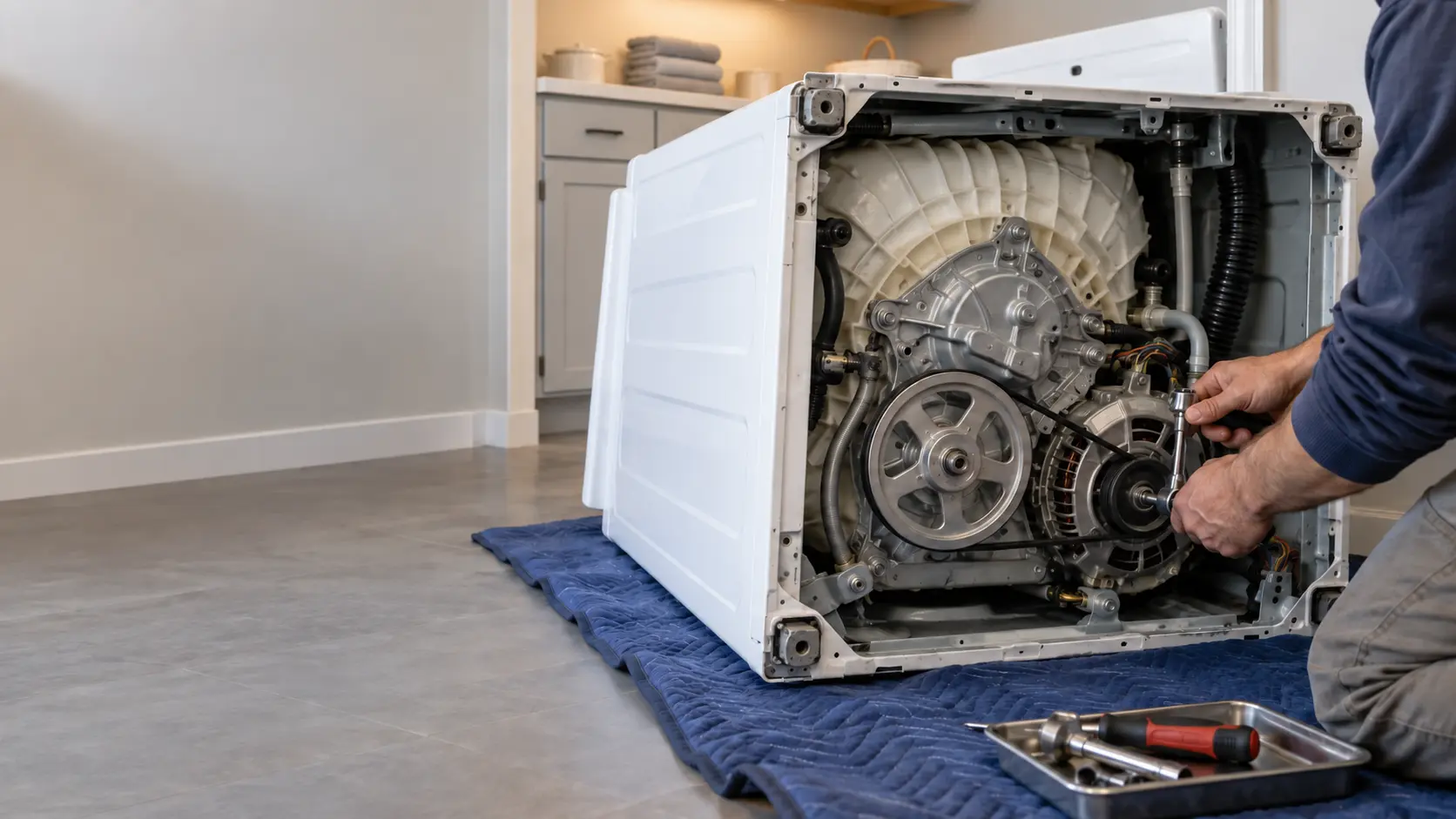
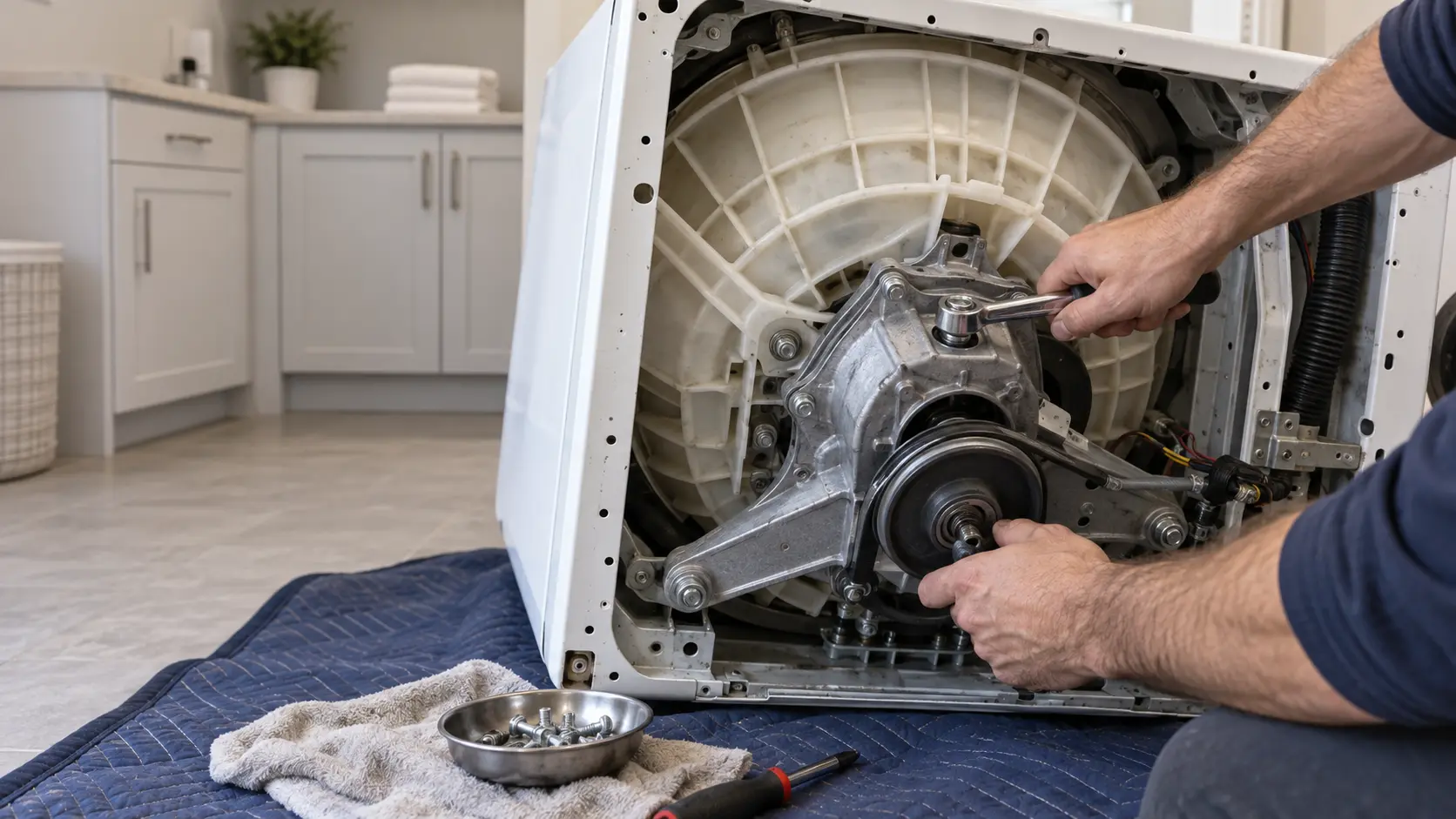
On a top-load washer the drive has to switch between two jobs: rocking the agitator or impeller back and forth to wash, and turning the whole basket fast to spin. Depending on the design, a washer transmission or gearcase, a clutch, a shift actuator or a mode shifter does that switching. A clutch that wears slips, so the basket never reaches full speed and clothes come out wet. A shift actuator that fails leaves the washer stuck in one mode. A transmission with stripped gears or a leaking seal may grind or stop moving the agitator altogether. The repair starts with the simplest part in the chain, because many problems that sound like a transmission are an actuator or a coupling.
How the visit goesWhat it usually costsModerate to highest · Clutch, shift actuator or transmission
A top-load repair. An actuator or clutch stays in the middle; a whole transmission or gearcase reaches toward the top.
Answers 4 problemsWasher Not Agitating
Washer Not Spinning · Clothes Still Dirty After Washing · Washer Loud Noise
Comes up most onTop-load washer
Stackable washer
Transmission and clutch repair,
step by step.
Replace the actuator, clutch or transmission that failed, then run a full cycle and check agitation and spin speed with a load.
Run agitate and spin in the service test and watch whether the basket and agitator move as they should in each mode.
Check the shift actuator or mode shifter and its wiring, and look for a worn clutch or a slipping belt below the tub.
Look for oil under the washer and listen for grinding, which point at the transmission or gearcase itself.
Replace the actuator, clutch or transmission that failed, then run a full cycle and check agitation and spin speed with a load.
The problems
it answers.
4 of them, from washer not agitating to washer loud noise.
All problems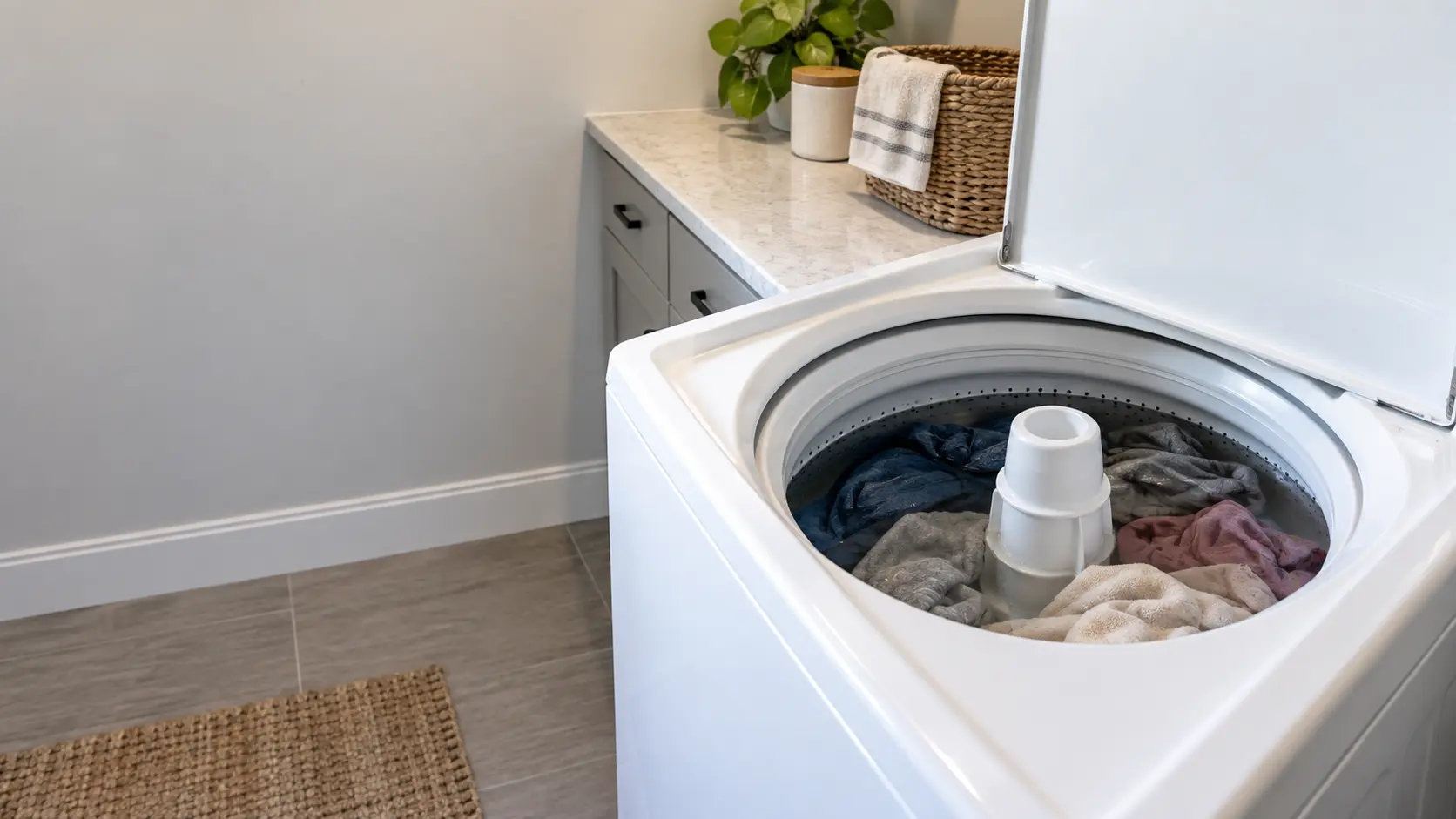
Washer Not Agitating
5 causes, cheapest first
Before you call
Tell us this when you book
- Whether the problem is in washing, spinning or both
- Whether you hear grinding or a knocking sound
- Whether there is oil or a dark stain under the washer
- Whether the washer has a tall agitator or a low wash plate
It also answers
Moderate to highest,
on the site's scale.
A top-load repair. An actuator or clutch stays in the middle; a whole transmission or gearcase reaches toward the top.
Read the full cost guide| Repair | Relative cost |
|---|---|
| Door boot, dispenser and odor cleanup | |
| Door lock, lid switch or striker | |
| Drain pump, filter or drain hose | |
| Water inlet valve and fill hoses | |
| Shocks, springs or suspension rods | |
| Drive belt, motor coupling or drive motor | |
| Control board, water level or temperature sensor | |
| Clutch, shift actuator or transmission | moderate to highest |
| Drum bearing and tub seal |
Where it
comes up most.
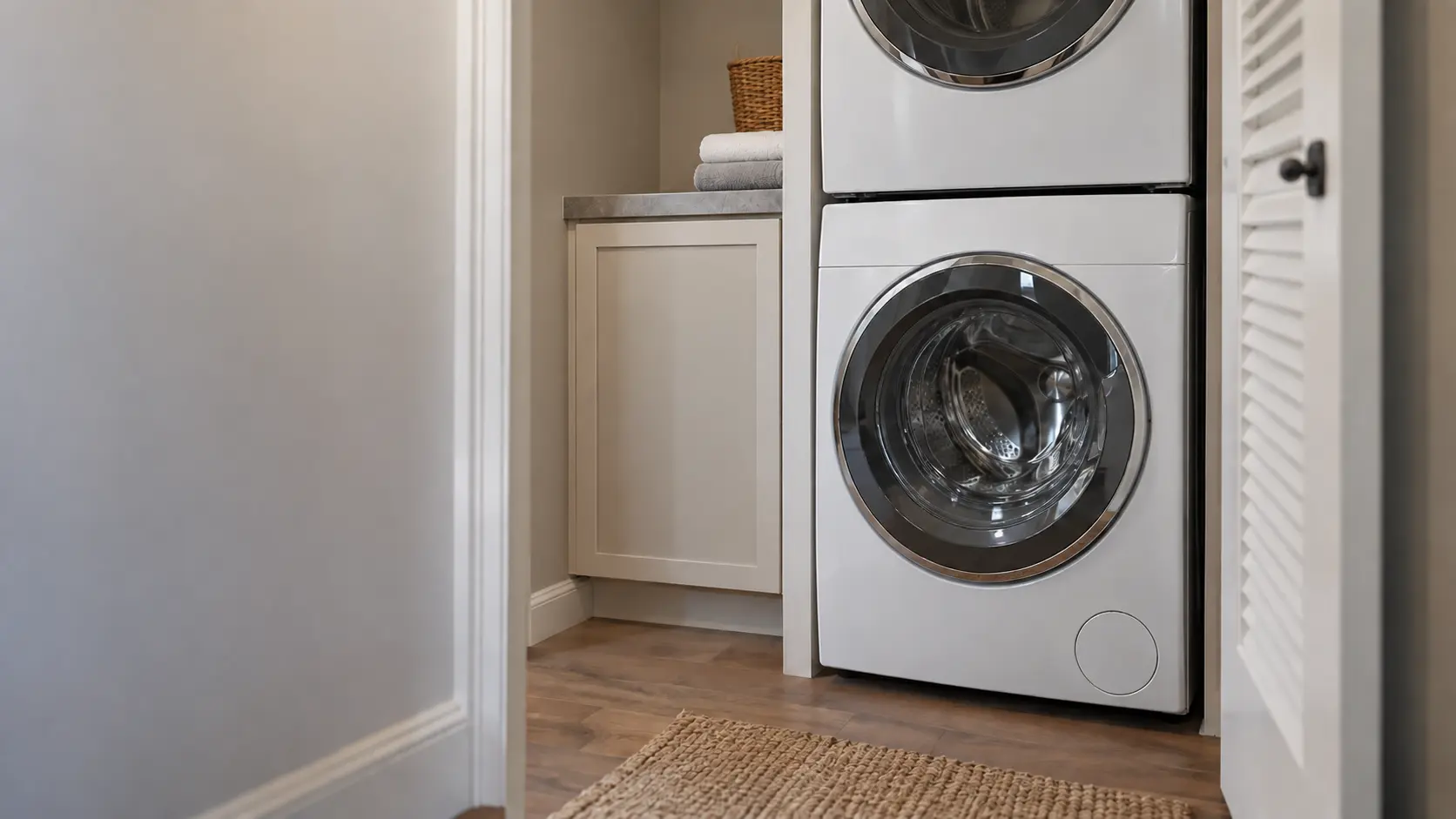
Most bookings: Top-load washer, Stackable washer.
All washer typesOften the same visit

The makes
we see it on.
14 makes on this site, and the washer transmission and clutch repair on any of them. Each mark opens that make's own page.
All 14 brandsTransmission and clutch repair,
where we come out.
The laundry room, the climate and the building all change how the washer transmission and clutch repair goes. These notes are about that, metro by metro.
All service areasTampa BayFL · 31 areas
Agitator top-loaders remain common in Tampa Bay's older houses, and a machine that fills and drains but will not agitate or spin often has a worn clutch, a stripped drive coupling or a gearcase that has started to leak oil.
OrlandoFL · 30 areas
Many Orlando rental homes keep sturdy top-loaders for their simplicity, and heavy use wears the clutch and shift mechanism; a washer that spins slowly or bangs as it shifts into spin is usually worn somewhere in there.
Miami / South FloridaFL · 47 areas
Top-load washers are less common than front-loaders and stacked pairs in Miami's condo closets, so transmission calls here come mostly from single-family houses where an older agitator machine has stopped agitating.
New York MetroNY · 75 areas
In New York the top-load washer is mostly a house appliance, found in basements in the outer boroughs and the suburbs, and a failed transmission there is weighed against the machine's age and the effort of carrying a new one down the stairs.
HoustonTX · 36 areas
Houston families who choose top-loaders for big loads put steady wear on the clutch and gearcase, and a drum that spins slowly with a full load or will not shift into spin is inspected at those parts first.
ChicagoIL · 50 areas
Chicagoland basement top-loaders often run for decades, and when one finally stops agitating or spinning the transmission or clutch is the usual cause; whether it is worth repairing depends on the condition of the rest of the machine.
Los AngelesCA · 95 areas
Garage top-loaders across Los Angeles, many of them older agitator machines, commonly fail at the clutch or the drive coupling, a smaller repair than the transmission that often returns the washer to full service.
San DiegoCA · 31 areas
In San Diego households that give a top-loader sandy and heavy loads, the shift mechanism and clutch wear quickly, and a washer that agitates but will not spin, or spins weakly, is examined there before the motor.
San Francisco Bay AreaCA · 74 areas
Top-load washers are fewer in Bay Area flats, but they remain in many houses and garage laundries, and a machine that has quit agitating is checked at the transmission, clutch and coupling before any control part.

Questions about
the washer transmission and clutch repair.
Does a front-load washer have a transmission?
My washer agitates but will not spin. Is the transmission gone?
Why is oil leaking under my top-load washer?
Is it worth replacing a transmission?
Back to your everyday
Ready to book the washer transmission and clutch repair?
Have these to hand: whether the problem is in washing, spinning or both, whether you hear grinding or a knocking sound, whether there is oil or a dark stain under the washer, whether the washer has a tall agitator or a low wash plate.