What the filter catches, and which washers have one
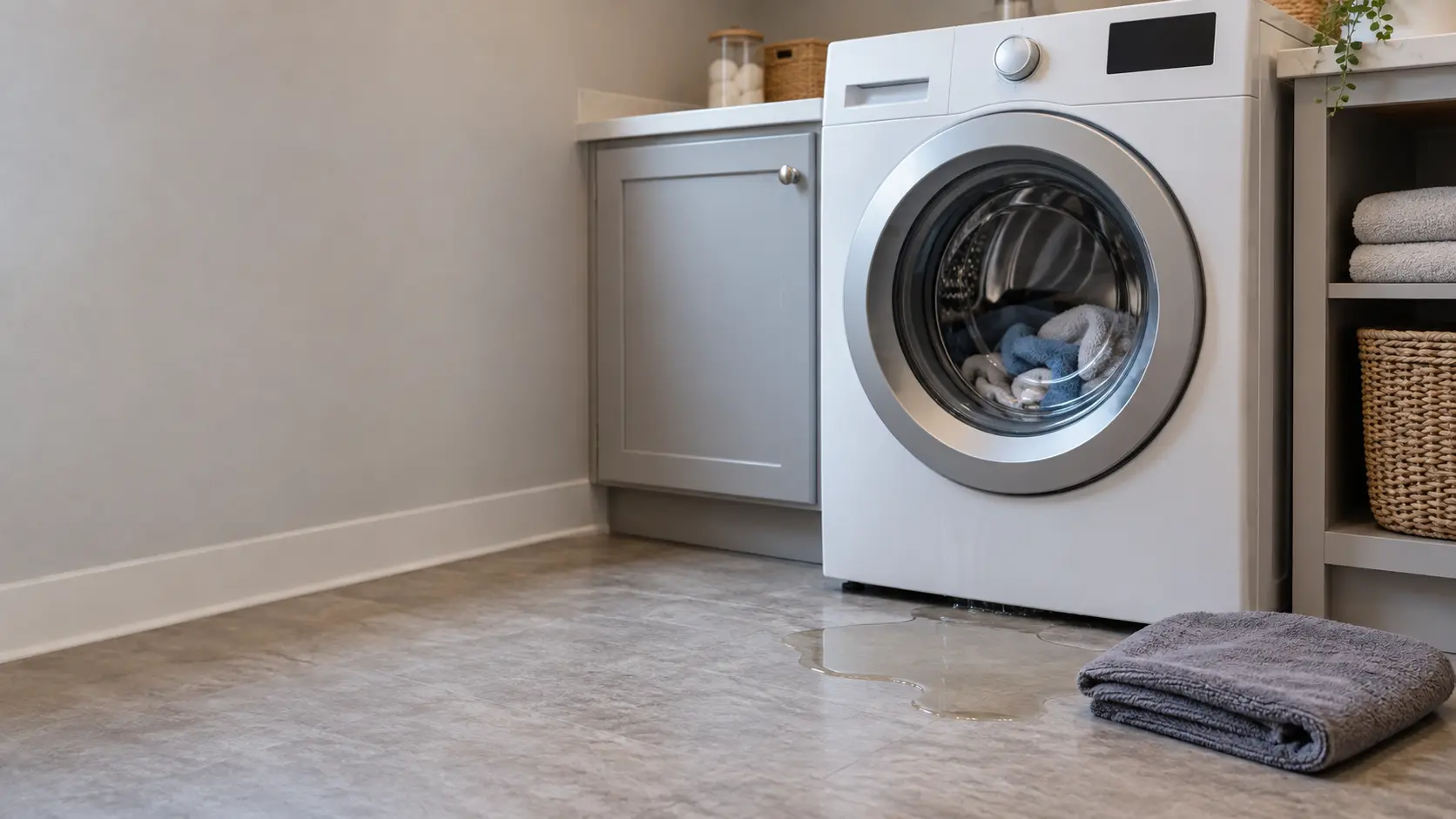
Every drop that leaves the tub passes the pump on its way to the drain hose. The washer drain pump filter is a screen or basket screwed into the pump housing in front of the impeller, so a coin or hair tie lodges in the filter instead of cracking the impeller. Most front-loaders have one, and so do many stacked pairs, compact washers and all-in-one washer-dryers.
Top-loaders are a mixed group. Samsung states that its top-load washers have no pump filter at all, and other brands vary from one model line to the next. The manual's care section says whether yours has an owner-cleanable filter; if it does not mention one, there is nothing to open.
Finding the access door
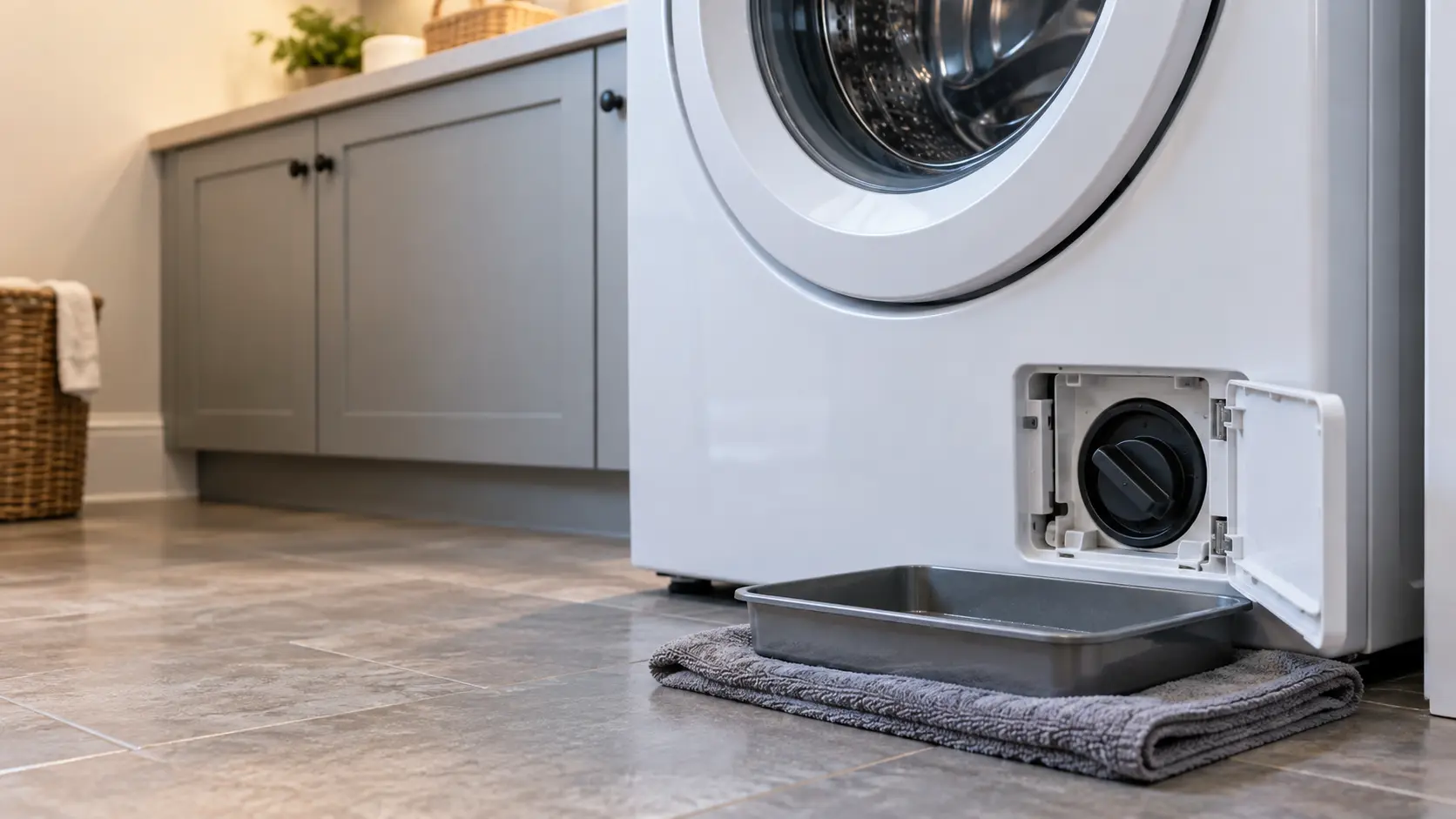
Look along the bottom of the front panel for a small square or round door, usually at the right or left corner, that opens with a press or with a coin in a slot. On some models a full-width kick plate snaps off instead. Whirlpool washers with a storage pedestal hide the filter behind the drawer, which has to come out on its rails first.
Source: Samsung — How to clean your Samsung washer — Top-load Samsung washers have no pump filter; clean the front-load filter at least monthly or every 40 washes; use a container like an oil drain pan; the drain-hose cap seals tightly; twist the filter counterclockwise, brush it, inspect the impeller, refit it vertical; after a hot cycle wait an hour for the water to cool
Before you open anything
Unplug the washer, or switch off its breaker if the plug is out of reach. After a hot, sanitize or self-clean cycle, wait for the water to cool; Samsung's instructions ask for an hour so the water cannot scald. Then gather more catching capacity than seems necessary, because the filter holds back whatever water the washer could not pump away.
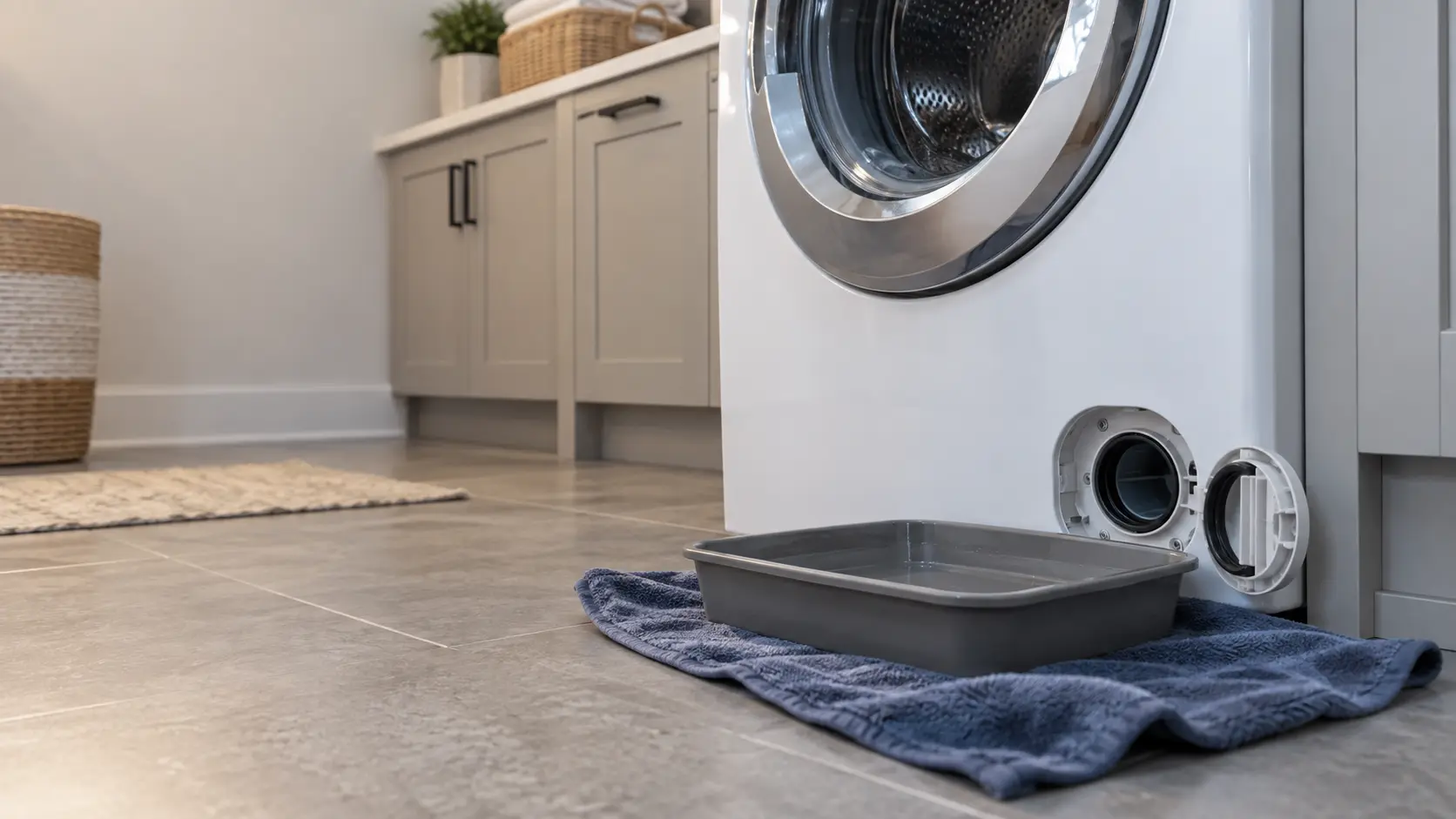
Samsung suggests a container as large as an oil drain pan, and Whirlpool describes a broad, flat container set beneath the filter. A deep bucket will not fit under the door, which is why a baking sheet with raised edges or a low storage tub works better.
- Two or three old bath towels
- A shallow pan, low tub or rimmed baking sheet
- A second container to empty the first into
- A flashlight and a soft brush, like an old toothbrush
- Rubber gloves, because what comes out is not pleasant
Source: Samsung — How to clean your Samsung washer — Top-load Samsung washers have no pump filter; clean the front-load filter at least monthly or every 40 washes; use a container like an oil drain pan; the drain-hose cap seals tightly; twist the filter counterclockwise, brush it, inspect the impeller, refit it vertical; after a hot cycle wait an hour for the water to cool; Whirlpool — Cleaning the drain pump filter, front-load washer — On pedestal models the filter is behind the drawer; broad flat container; filter out counterclockwise, lint by hand, rinse, back in clockwise with the handle vertical; clean occasionally

Letting the trapped water out
Next to the filter on most models is a short rubber tube clipped in place with a plug on the end. Unclip it, hold its end over the pan, and pull the plug. The water runs slowly; when the pan is nearly full, push the plug back in, empty the pan and repeat. Samsung notes that the cap seals tightly and may take some force to open.
Keep going until the flow stops completely. Even then, lay a towel directly under the filter, because some water always stays in the housing.
If there is no small drain tube
Some washers have only the filter itself. Loosen it a quarter turn at a time counterclockwise and let the water trickle into the pan, tightening it again whenever the pan fills. Never pull it straight out against a full drum.
Source: Samsung — How to clean your Samsung washer — Top-load Samsung washers have no pump filter; clean the front-load filter at least monthly or every 40 washes; use a container like an oil drain pan; the drain-hose cap seals tightly; twist the filter counterclockwise, brush it, inspect the impeller, refit it vertical; after a hot cycle wait an hour for the water to cool
Cleaning the filter and its housing
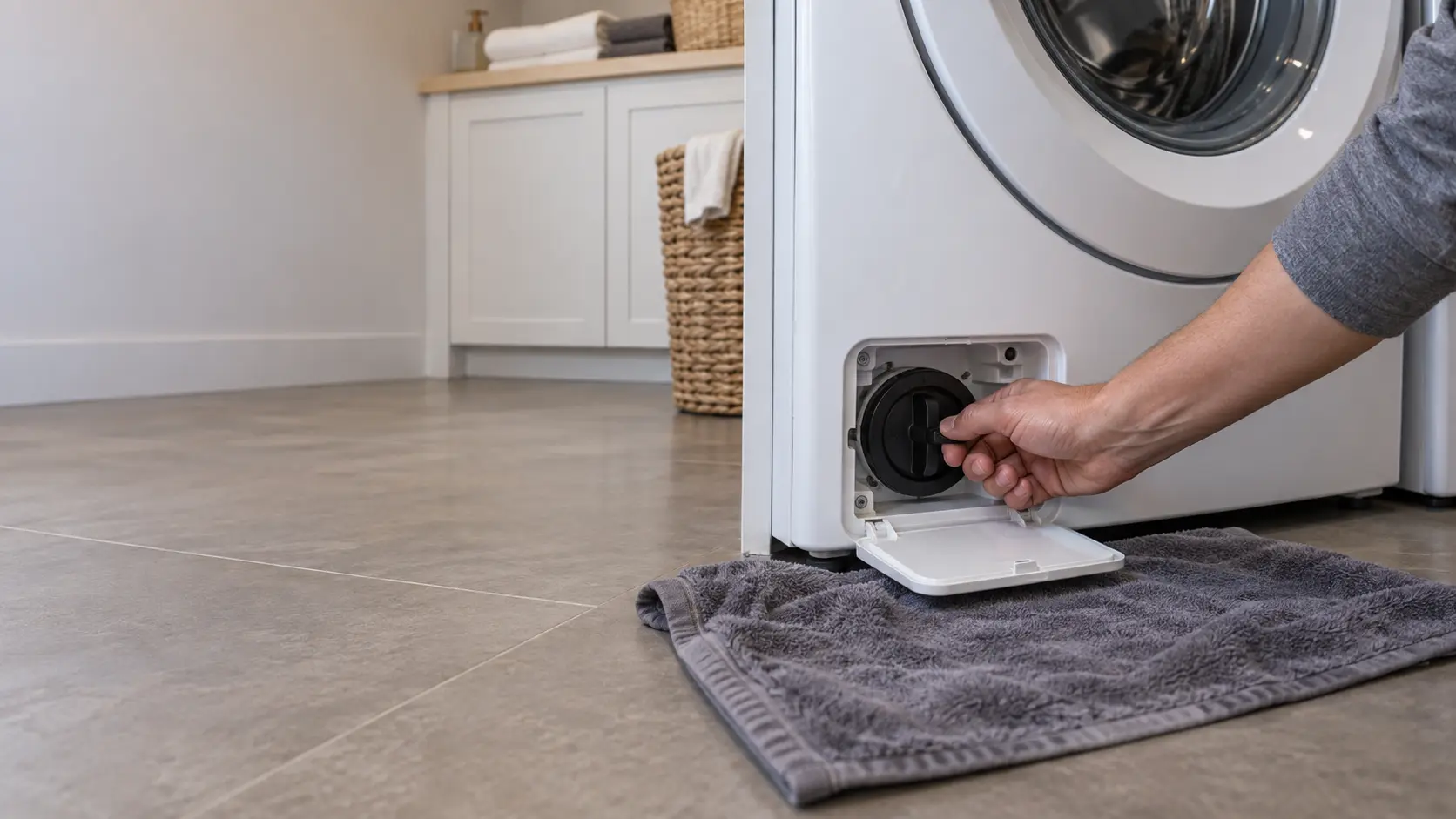
Unscrew the filter counterclockwise and draw it out. Pull the large clumps of lint and hair away by hand and put them in the trash, not down a sink. Rinse the filter under running water and brush the fine mesh or ribs clean.
Shine a flashlight into the empty housing. Samsung asks owners to inspect the pump impeller behind it and make sure nothing blocks it: a bra wire or coin may be sitting just past the filter. Reach in only with the washer unplugged.
When the filter will not turn
A filter that will not unscrew usually has a sock or a lump of lint wrapped behind it. Firm, steady pressure is fine, but pliers and levers crack the plastic housing, and a broken housing means a new pump. At that point it is safer to book.
Putting it back so it does not leak
Screw the filter in clockwise until it stops; Whirlpool and Samsung both describe the handle ending up upright. Plug and clip the drain tube, close the door, plug the washer back in and run a short rinse and spin while you watch the floor.
Source: Samsung — How to clean your Samsung washer — Top-load Samsung washers have no pump filter; clean the front-load filter at least monthly or every 40 washes; use a container like an oil drain pan; the drain-hose cap seals tightly; twist the filter counterclockwise, brush it, inspect the impeller, refit it vertical; after a hot cycle wait an hour for the water to cool; Whirlpool — Cleaning the drain pump filter, front-load washer — On pedestal models the filter is behind the drawer; broad flat container; filter out counterclockwise, lint by hand, rinse, back in clockwise with the handle vertical; clean occasionally
How often, and what changes the schedule
Samsung recommends cleaning its front-load pump filter at least once a month or about every 40 washes, whichever comes first, and says a clean filter helps prevent odors. Whirlpool's instruction is simply to do it occasionally, so the manual for your model has the final word.
Some households need it far more often than others. Pets, lots of towels, children's clothes with full pockets and heavy work clothes all send more debris to the pump. Whatever the calendar says, these are signs the filter is due now:
- Water left in the drum or the door boot after the spin
- A drain that sounds labored or takes longer than it used to
- A musty smell at the lower front of the cabinet
- A drain code on the display after a load of towels or pet bedding
Source: Samsung — How to clean your Samsung washer — Top-load Samsung washers have no pump filter; clean the front-load filter at least monthly or every 40 washes; use a container like an oil drain pan; the drain-hose cap seals tightly; twist the filter counterclockwise, brush it, inspect the impeller, refit it vertical; after a hot cycle wait an hour for the water to cool; Whirlpool — Cleaning the drain pump filter, front-load washer — On pedestal models the filter is behind the drawer; broad flat container; filter out counterclockwise, lint by hand, rinse, back in clockwise with the handle vertical; clean occasionally