

Washer
Leaking
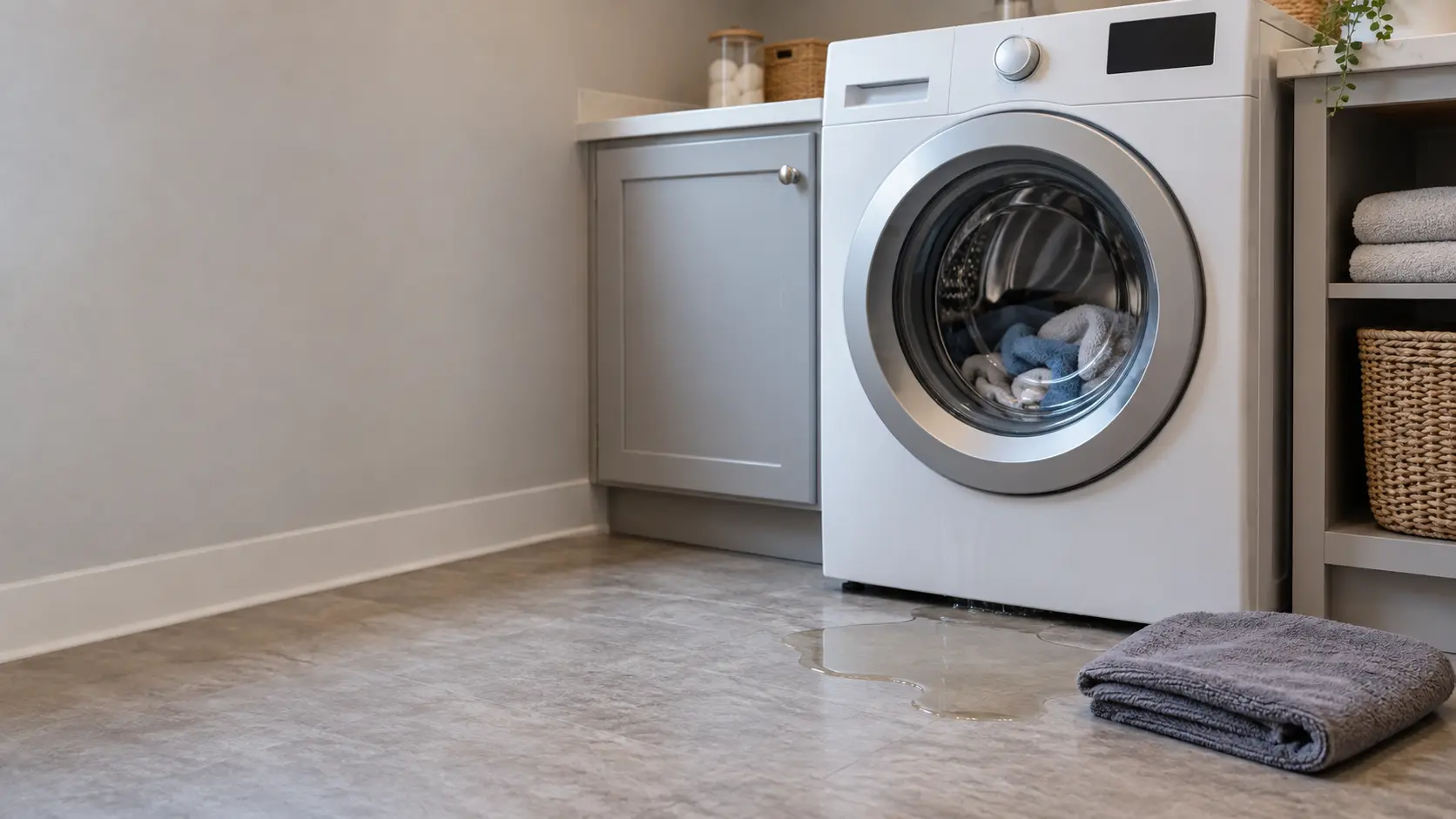
Water shows up on the laundry room floor under or beside the washer, during a fill, a wash or the spin.
Mon–Sat, 8am–8pm
- Water or electrical risk
- 5 questions that narrow it
- 5 causes, cheapest first
Book a visit
Three short steps, about a minute.
or call (844) 398-5711
Loading appointment form…
The appointment form couldn’t load. Please try again.
Stop the cycle and shut the water off
Treat an active leak as urgent. Stop the washer, close the hot and cold supply valves, and switch off the breaker if water is near the outlet. Keep the washer off until the source is found, and check the ceiling below if the laundry room is upstairs.
What it
usually means.
A washer holds and moves many gallons of water every load, and a puddle means some of it found a way out of the hoses, the tub or the drain path. Where the water collects and when it appears narrow the search quickly: a puddle at the back during filling points to the supply hoses or the inlet valve, a wet front on a front loader points to the door boot, and water that appears only while the machine pumps out points to the drain hose or the pump. Because water under a washer can soak a subfloor or reach the ceiling below a second-floor laundry, a leak is handled first and diagnosed second.
 The 5 causes, cheapest first
Answer these first
Does the water appear while the washer fills, while it washes, or while it drains and spins?
Is the puddle at the front under the door, at the back by the hoses, or under the middle of the cabinet?
Is the water clean, or soapy and gray like wash water?
Do you see drips on the rubber hoses or at the faucets behind the washer?
Has the washer used more detergent than usual, or been moved lately?
Check these
before you book.
Washer leaking: 5 checks, and none of them costs anything.
Stop the cycle and close both water supply valves behind the washer before anything else.
If water is near the outlet or the cord, switch off the washer's breaker before you step into the puddle.
Dry the floor, then watch where fresh drops form while someone runs a short rinse.
Also worth checking
- Feel along both fill hoses and the drain hose for wet spots, and look into the folds of the door boot.
- Note when the water appeared in the cycle and whether it was soapy; say both when you book.
The causes,
cheapest first.
5 things washer leaking turns out to be, from too much detergent to worn tub seal or cracked tub.
The cost guide-
01 no repair
Too much detergent
Regular detergent in a high-efficiency washer, or too much of any detergent, makes suds that climb out through the vent or the door. Using the right amount stops it.
-
02 low
Cracked or loose supply hose
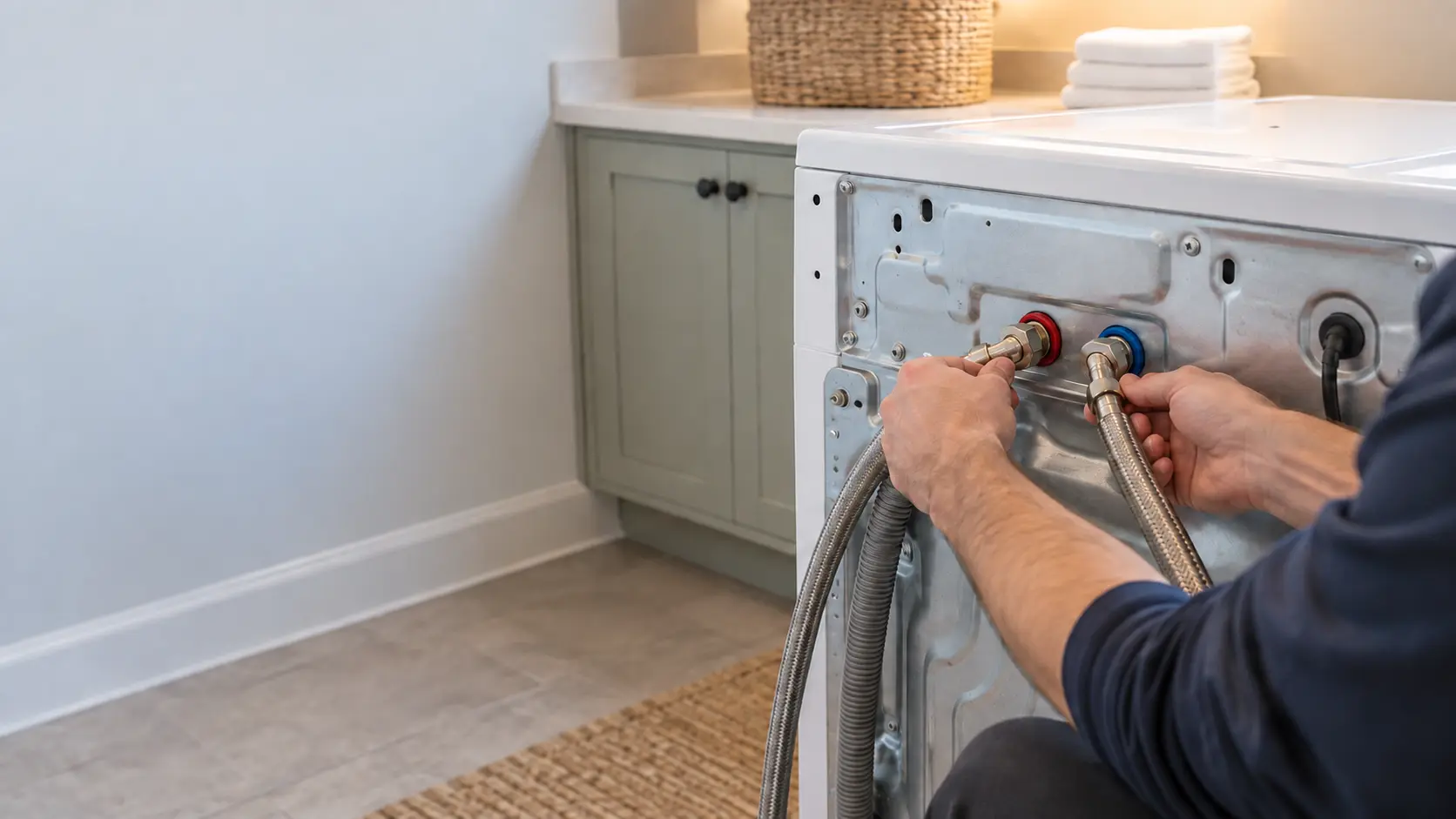
Rubber fill hoses harden and split with age, and a coupling that was never snugged can seep at the faucet or the valve. The leak shows during filling and often continues with the washer off.
-
03 low to moderate
Torn or dirty door boot
On a front loader the rubber boot seals the tub to the cabinet opening. A tear, or a coin or hairpin caught in its folds, lets wash water run out at the bottom of the door.
-
04 low to moderate
Leaking drain pump or drain hose
A cracked pump housing, a loose hose clamp or a drain hose that slipped from the standpipe leaks mostly while the machine pumps out.
-
05 moderate to highest
Worn tub seal or cracked tub
When the seal around the drum shaft wears, water drips from under the tub, often with a rumbling bearing. It is a larger repair, and the age of the washer weighs on it.
-
What it costs
Every repair on the site's cost scale, side by side
Open the cost guide
What else
it could be.
Most often confused with washer overflowing, then washer not draining.
All problems


The makes
it happens on.
14 makes on this site; washer leaking can show up on any of them. Each mark opens that make's own page.
All 14 brandsWasher Leaking,
where we come out.
9 metros, each with its own page.
All service areasTampa BayFL · 31 areas
Miami / South FloridaFL · 47 areas
New York MetroNY · 75 areas
HoustonTX · 36 areas
ChicagoIL · 50 areas
Los AngelesCA · 95 areas
San DiegoCA · 31 areas

Questions about
washer leaking.
The puddle is small. Can I keep using the washer until the visit?
Should rubber fill hoses be replaced even if they look fine?
Why does my front loader leak only at the door?
Could the leak be coming from the drain line and not the washer?
Back to your everyday
Still seeing washer leaking?
Book with what you checked above — 5 answers save the technician the first part of the visit.