What the leftover water is telling you
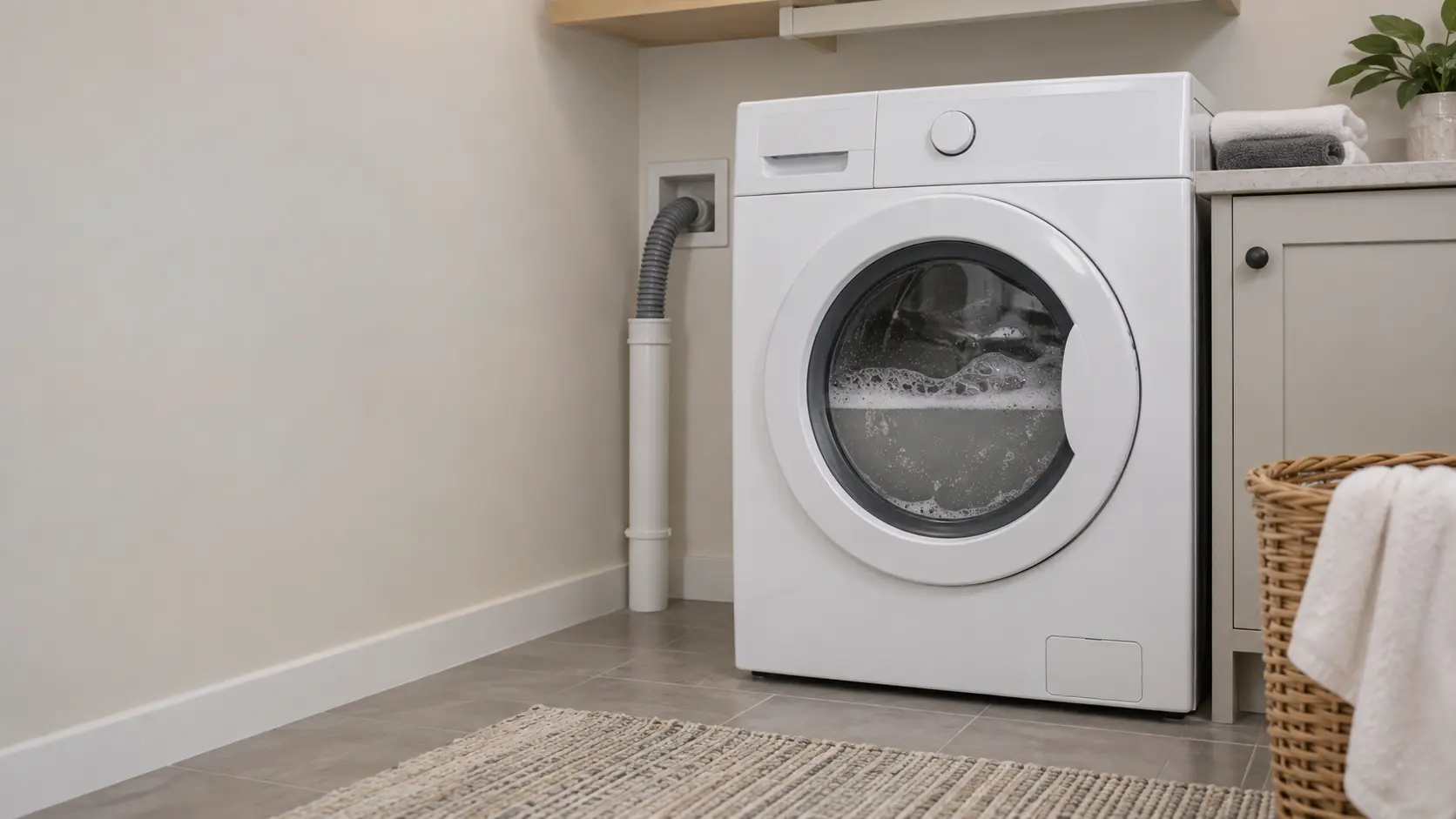
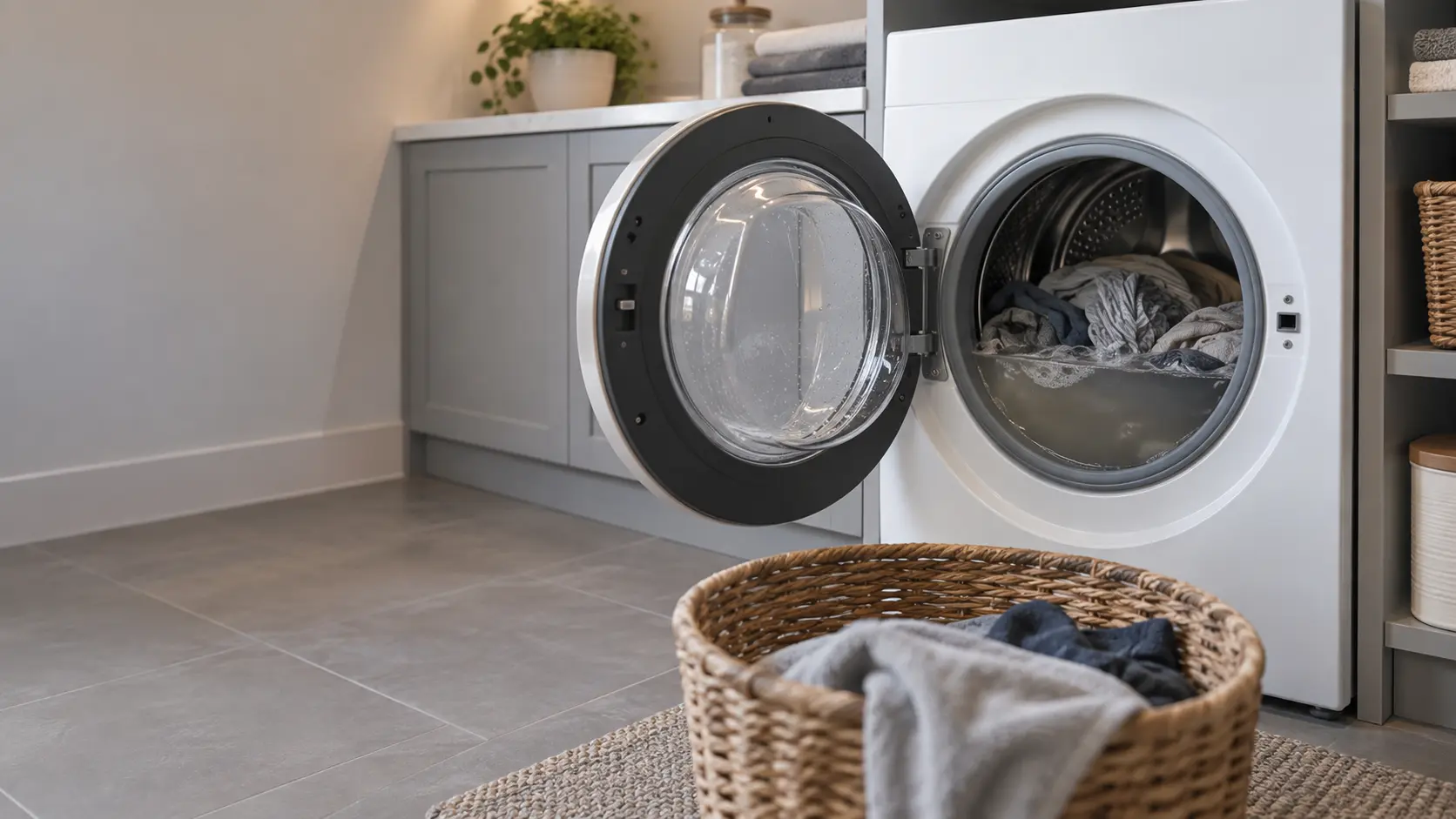
When a washer won't drain, look first at how much water is there and when the washer gave up. A drum sitting full of gray, soapy water halfway through the program is a different story from a shallow puddle found the next morning. The first means the washer tried to pump and could not move water; the second may be nothing more than rinse water that settled in a low spot.
Match what you see to the closest of these patterns:
- The cycle stopped with the drum well filled and a code or flashing light: the washer detected a slow or failed drain.
- The cycle finished, but an inch or two of water sits in the bottom: a partial blockage that lets water through too slowly.
- The drum is empty but the clothes are dripping: the drain worked and the spin did not, which is a separate guide.
- The water level drops by itself while the washer is still filling: the hose is siphoning, not the pump pumping.
On a front-loader
If water shows through the glass above the bottom of the door opening, do not try to force the door; it stays locked on purpose and releases once the water is out. A small amount caught in the lowest fold of the rubber door boot after a normal cycle is common and dries in an hour with the door open.
On a top-loader
Lift the lid after the lid lock releases and look straight down. Clear water swirling slowly around the bottom means the drain is running but losing the race. Water that never moves at all, even while the machine is trying to drain, means nothing is getting through the pump.
The drain hose and the pipe it empties into
The ribbed gray or black hose on the back of the washer is the easiest link to check and the one most often disturbed. Pushing the machine back after cleaning behind it can fold the hose flat against the wall. Pull the washer forward a few inches, run a hand along the whole hose, and straighten any sharp bend.
Then look at where the hose ends. Whirlpool's front-load help page says the hose should reach no more than 4.5 inches into the standpipe or laundry tub, and it must not be taped or sealed in place: an open gap around it lets air in and breaks the suction. The same page puts the top of the standpipe at least 30 inches above the floor for its front-loaders, and the top-load instructions give a range of 39 to 96 inches, because a pump cannot lift water higher than that.
When the washer drains while it is filling
A hose pushed deep into a low standpipe turns the tub into one end of a siphon. The washer keeps adding water, the water keeps sliding out, and the cycle either runs long or stops with a fill complaint. Pulling the hose back to the right depth and using the curved hose form that ships with the washer usually ends it on the next load.
When the standpipe itself overflows
If water comes up out of the standpipe or the laundry sink while the washer drains, the washer is doing its job and the house drain is not keeping up. Lint builds up in those pipes over the years. A slow sink or a gurgling floor drain nearby confirms it, and the house plumbing past the standpipe is work for a plumber, not a washer technician.
Source: Whirlpool — Not draining, front-load washer — Hose no more than 4.5 inches into the standpipe, not taped, air gap breaks the siphon; standpipe at least 30 inches high; Whirlpool — Not spinning, top-load washer — Standpipe height 39 inches minimum and 96 inches maximum; above that the pump cannot empty the washer; Whirlpool — Not draining, top-load washer — Excess suds from non-HE or too much detergent make the washer spin at reduced speed; keep the hose unkinked and untaped

A packed pump filter or a jammed pump
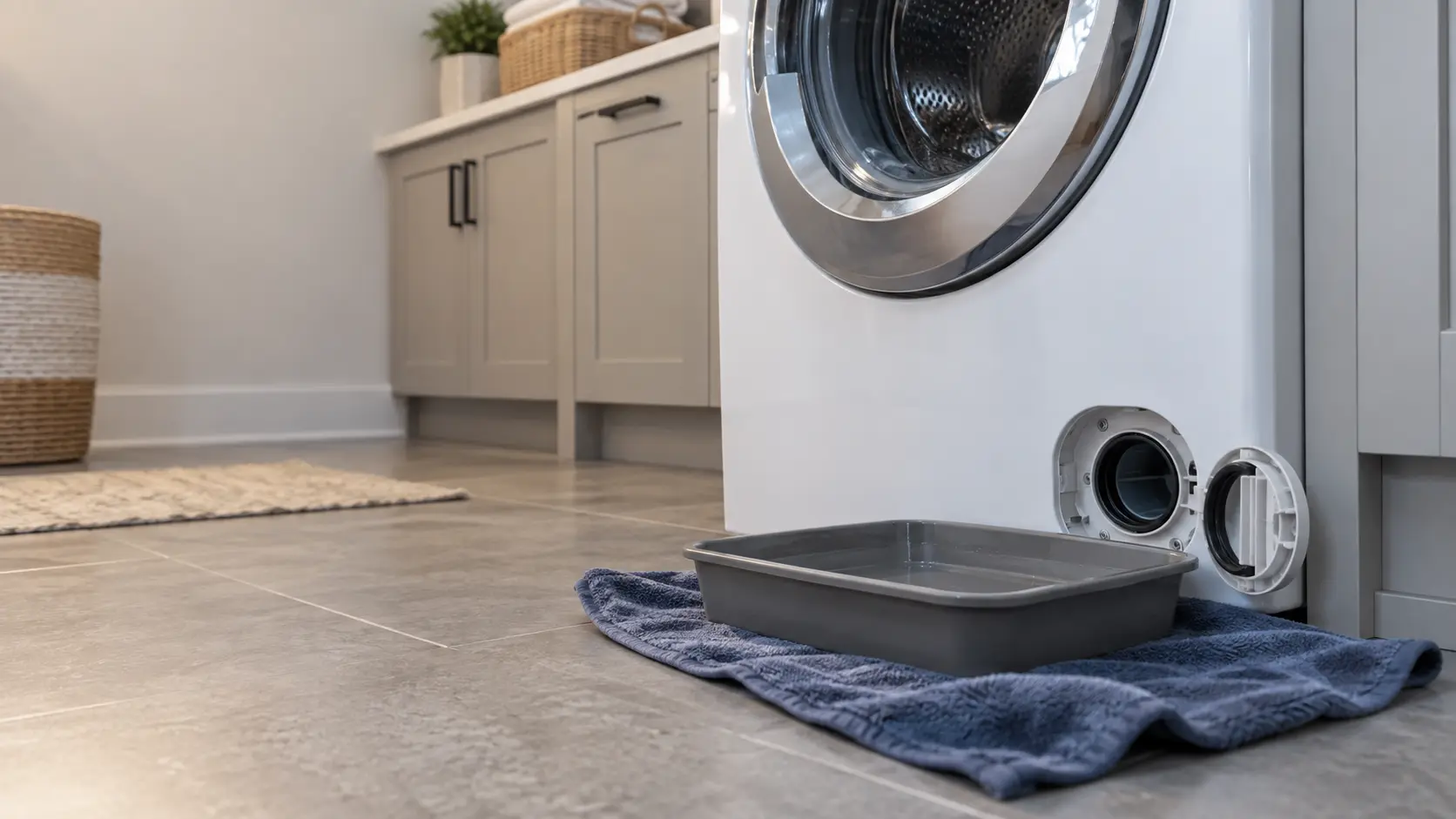
Most front-loaders, and a fair number of compact and stacked washers, put a round filter cap behind a small door at the lower front. Everything that leaves the tub passes through it, which is why it collects everything that should have stayed in a pocket. When it packs solid, the pump runs against a wall and the washer stops with water inside. Cleaning it takes a tray, towels and some patience, and our guide to the drain pump filter walks through it.
Many top-loaders have no filter the owner can open. Debris there tends to slip under the wash basket and reach the pump directly, where a single sock or a bra wire can stop the impeller. Getting to that pump means tipping the machine or removing the cabinet, which is a job for a technician.
- Coins, keys, hair ties and buttons
- Small socks and baby clothes that slipped past the door boot
- Underwire from bras washed without a mesh bag
- Pet hair and lint matted into a felt-like plug
Too many suds can look like a drain problem
High-efficiency washers use little water, so a regular detergent or a heavy hand with an HE one fills the tub with foam. Foam is hard to pump and harder to spin away; Whirlpool notes that excess suds make the washer spin at reduced speed and can cause draining trouble. You will often see foam in the door glass or piled in the dispenser drawer when this is the cause.
If the drum is full of suds, run a rinse and drain cycle with no detergent, and repeat it if foam is still there. Then measure by the line on the cap for the next few loads, and use less if your water is soft.
Source: Whirlpool — Removing odors, front-load washer — Non-HE detergent or too much detergent causes excess suds, leaks, draining concerns and poor rinsing; Whirlpool — Not draining, top-load washer — Excess suds from non-HE or too much detergent make the washer spin at reduced speed; keep the hose unkinked and untaped
When the pump or its control is the part at issue
With the filter clean, the hose straight and the standpipe clear, listen at the moment the washer should drain. A steady hum with no water moving points to an impeller that is jammed or broken. A clicking or no sound at all suggests the pump is not receiving power, which can be the pump motor, its wiring or the control board that switches it.
A lid lock or door lock that does not confirm it is latched can also stop a cycle before the drain, because many washers will not move on without it. That is why a code on the display is worth writing down: it narrows the list before anyone opens the cabinet.
Stacked pairs and compact washers
On a stacked pair the washer's filter door is still at the bottom front and easy to reach. Anything deeper, such as the pump, sits under a dryer that has to come down first, which is two people's work and not an owner's job. Compact and all-in-one washers use small pumps and small filters that clog sooner, so they reward a monthly look.


