What the standpipe does
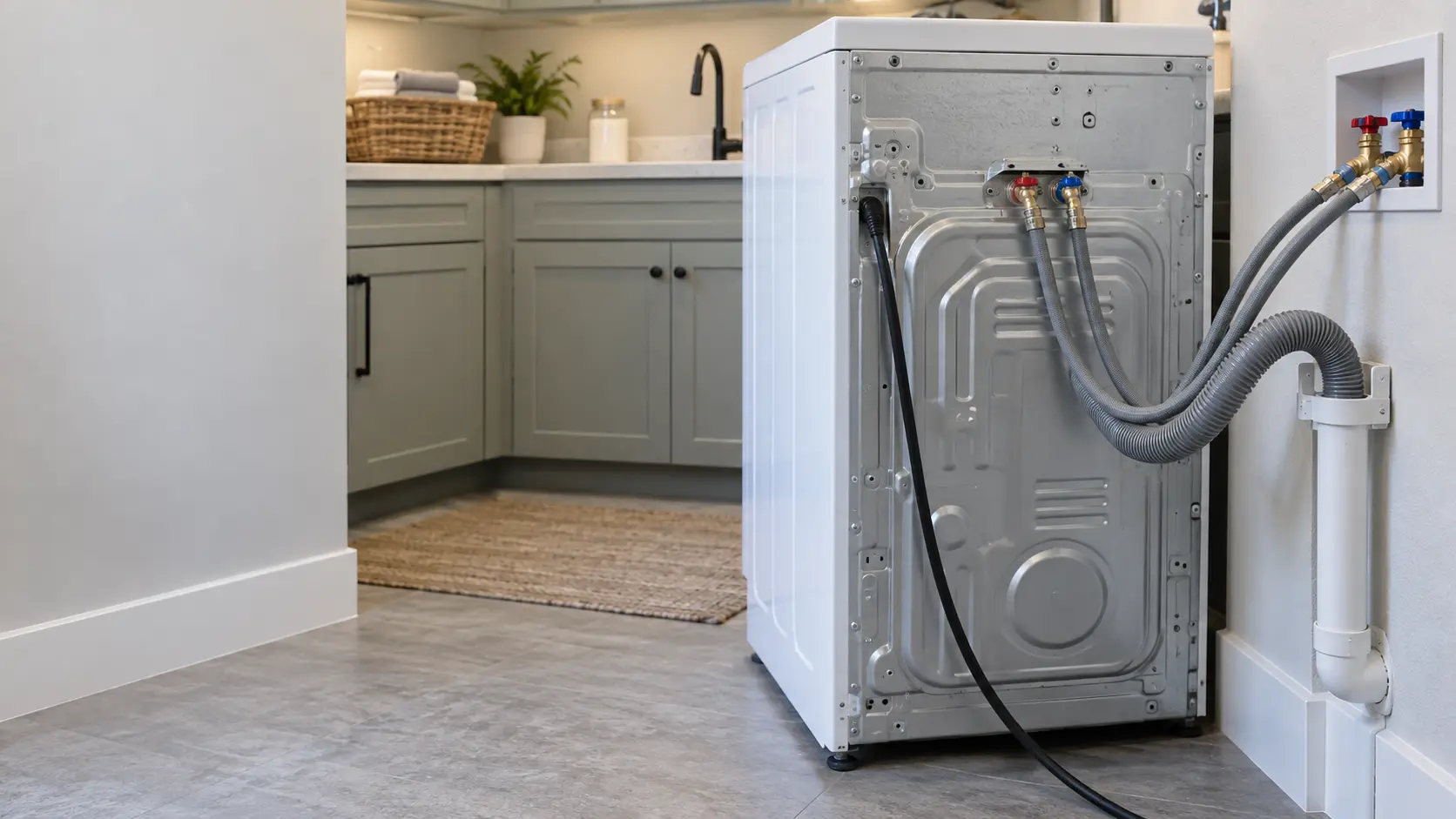
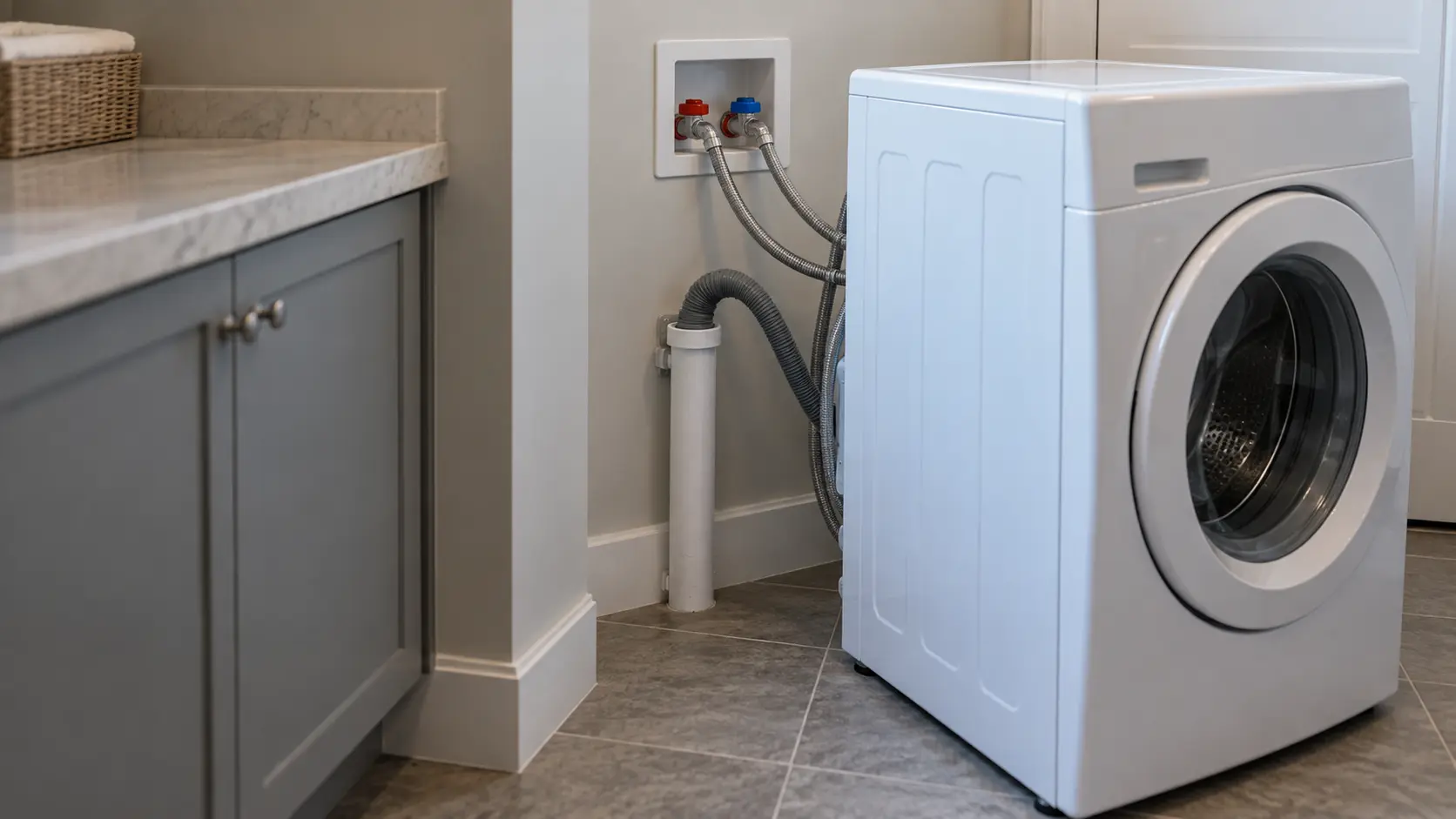
A standpipe is a vertical drain pipe, 1-1/2 or 2 inches across in Speed Queen's instructions, rising from a trap in the wall or floor behind the washer. The washer's pump pushes water up the drain hose and over the top of the pipe, and gravity takes it from there. The height of the opening is what keeps water in the tub between pump-outs.
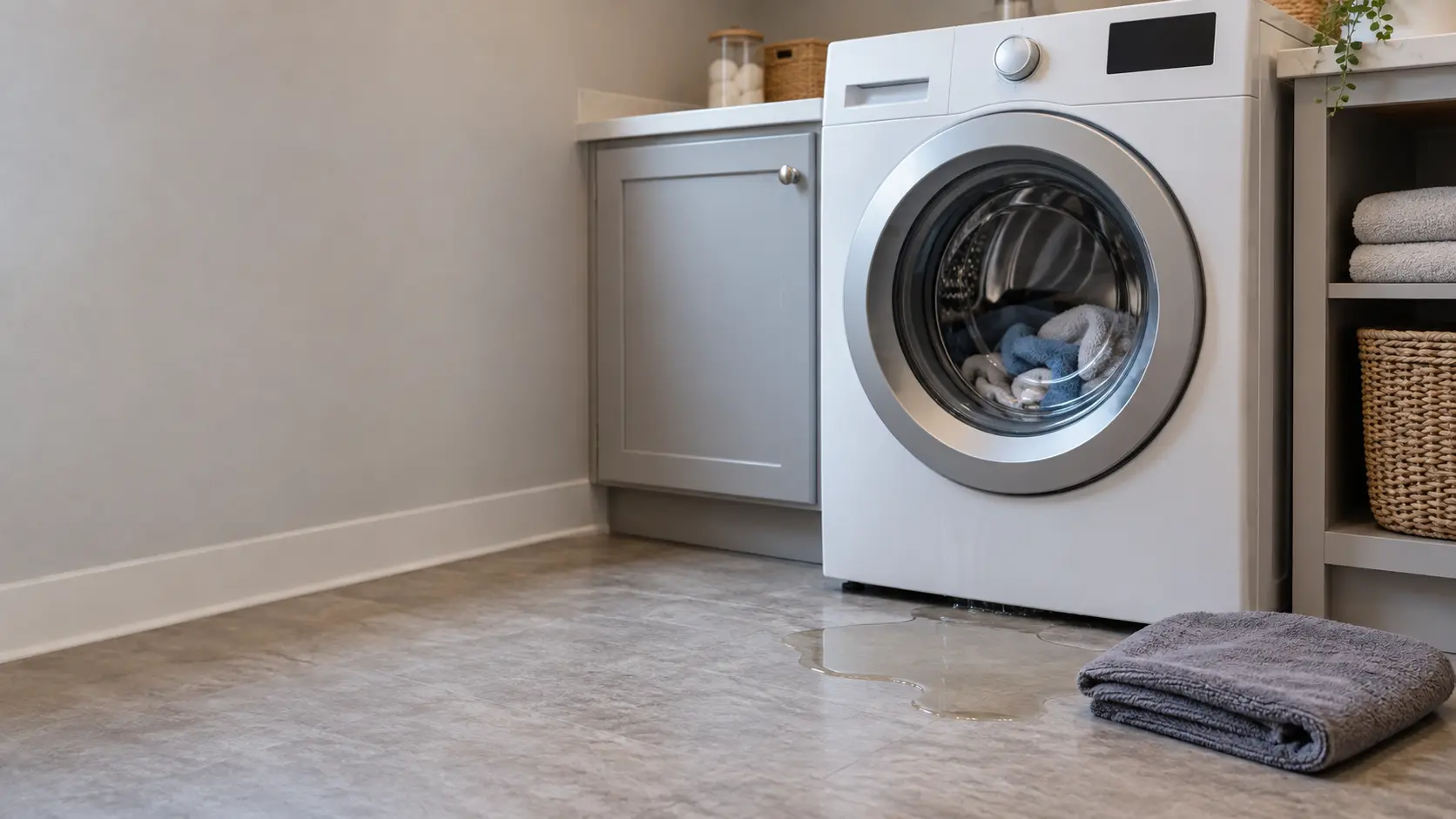
If the top of the pipe sits below the water level inside the washer, the tub drains by itself as soon as it fills, like a siphon. Whirlpool's help pages describe exactly this: below 39 inches, water starts to flow out of the machine by gravity. The result looks like a washer that keeps filling, runs long or leaves clothes poorly rinsed.
Source: Whirlpool Product Help — Front load washer installation checklist — Standpipe at least 39 inches from the floor or water flows out by gravity; hose no more than 4.5 inches into the pipe; never taped or sealed; Alliance Laundry Systems (Speed Queen) — Installation Instructions for Topload Washers, 204104 — 36-inch recommended standpipe, siphon break kit below it; slower above 4 feet, no drain above 8 feet; ribbed hose kept out of the pipe; hose fastened to a laundry tub
Washer drain standpipe height, manual by manual
The manufacturers agree on the idea and differ on the numbers, partly because a top-loader and a front-loader hold water at different heights. Use the numbers in your own washer's installation instructions; the table shows how far apart they can be.
| Lowest opening | Highest opening | Hose into the pipe | |
|---|---|---|---|
| Whirlpool front-load | 39 inches from the floor | Not stated on the checklist | No more than 4.5 inches |
| Samsung | 39 inches from the floor | 96 inches from the floor | 6 to 8 inches |
| LG front-load | 24 inches above the washer's base | 96 inches; best under 66 | Elbow bracket within 4 inches of the hose end |
| Speed Queen top-load | 36 inches recommended | 8 feet; slower above 4 feet | Ribbed part of the hose stays out |
Measured from the floor or from the washer
Most manuals measure from the floor, but LG measures from the bottom of the washer. On a pedestal the difference is the pedestal's height, so a standpipe that suits a washer on the floor can be too low once the same machine is raised.
When the pipe is too low
Speed Queen's top-load instructions require its siphon break kit when the standpipe is under 36 inches. It lets air into the hose so water cannot keep running out between pump-outs. Raising a standpipe that is simply too short, or lowering one that is too tall, means cutting into the drain line, and that is a plumber's job.
When the pipe is too high
Speed Queen notes that above 4 feet its top-loaders drain more slowly and cycles run longer, and that above 8 feet they will not drain at all. LG says drain performance falls off as the outlet rises past 66 inches. A pump pushing against that much lift also works harder and louder.
Source: Whirlpool Product Help — Front load washer installation checklist — Standpipe at least 39 inches from the floor or water flows out by gravity; hose no more than 4.5 inches into the pipe; never taped or sealed; Samsung US Support — Install a Samsung washing machine in your home — Laundry tub or standpipe 39 to 96 inches from the floor; hose 6 to 8 inches into the standpipe; LG Electronics — Washer Owner's Manual (WM4080) — Hose end 24 to 96 inches above the washer's base, best under 66; no airtight seal; secure the hose; elbow bracket within 4 inches of the hose end or mold can spread; Alliance Laundry Systems (Speed Queen) — Installation Instructions for Topload Washers, 204104 — 36-inch recommended standpipe, siphon break kit below it; slower above 4 feet, no drain above 8 feet; ribbed hose kept out of the pipe; hose fastened to a laundry tub
How the hose should sit
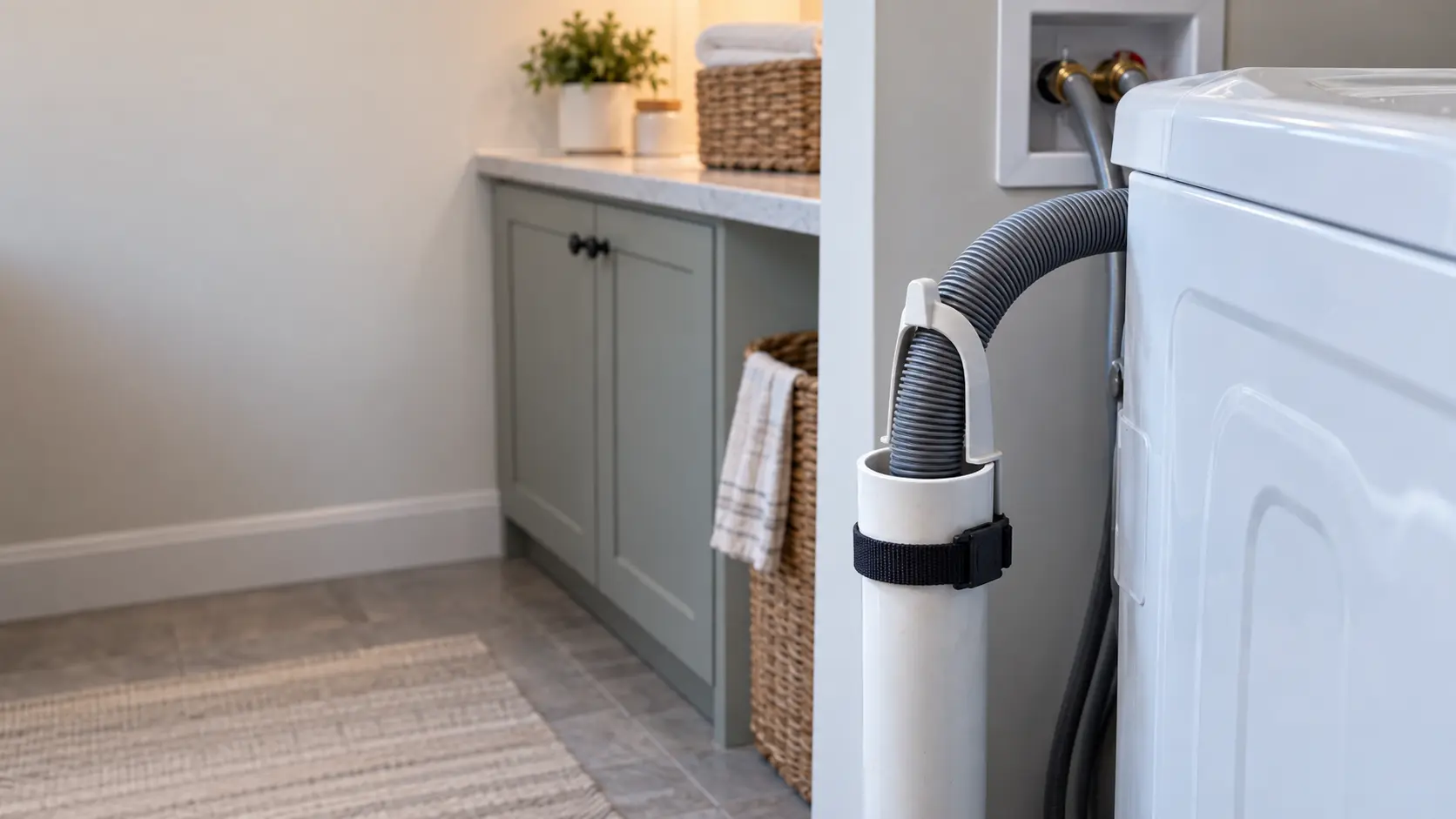
The drain hose should hang loose in the pipe, held so it cannot jump out when the pump surges, with open air around it. Most washers ship with a curved plastic form or an elbow bracket that sets both the bend and the depth.
- Do not tape the hose to the pipe or seal the opening; LG and Whirlpool both warn that an airtight joint lets water siphon from the drum.
- Do not push the hose far down the pipe. Whirlpool's limit is 4.5 inches and LG ties the depth to its elbow bracket.
- Do not put the ribbed section of the hose into the pipe, which Speed Queen says invites siphoning.
- Secure the hose with the supplied strap or tie; LG's warning is that an unsecured hose can flood the room.
- Keep the hose free of kinks where it leaves the washer and where the washer pushes against it.
A hose that hangs too far past its bracket
LG makes a point most owners never hear: if more than 4 inches of hose extends beyond the elbow bracket, dirty water sitting in that length can grow mold and microorganisms that find their way back into the washer. It is one cause of a sour smell that cleaning the drum does not cure.
Source: Whirlpool Product Help — Front load washer installation checklist — Standpipe at least 39 inches from the floor or water flows out by gravity; hose no more than 4.5 inches into the pipe; never taped or sealed; LG Electronics — Washer Owner's Manual (WM4080) — Hose end 24 to 96 inches above the washer's base, best under 66; no airtight seal; secure the hose; elbow bracket within 4 inches of the hose end or mold can spread; Alliance Laundry Systems (Speed Queen) — Installation Instructions for Topload Washers, 204104 — 36-inch recommended standpipe, siphon break kit below it; slower above 4 feet, no drain above 8 feet; ribbed hose kept out of the pipe; hose fastened to a laundry tub
Draining into a laundry sink
A laundry sink works as a drain as long as its rim is high enough and it empties quickly. Speed Queen and LG both require the hose to be fastened to the sink so it cannot whip out during a pump-out. The sink's own drain has to keep up too: a strainer clogged with lint turns a full pump-out into an overflow within seconds.
Source: LG Electronics — Washer Owner's Manual (WM4080) — Hose end 24 to 96 inches above the washer's base, best under 66; no airtight seal; secure the hose; elbow bracket within 4 inches of the hose end or mold can spread; Alliance Laundry Systems (Speed Queen) — Installation Instructions for Topload Washers, 204104 — 36-inch recommended standpipe, siphon break kit below it; slower above 4 feet, no drain above 8 feet; ribbed hose kept out of the pipe; hose fastened to a laundry tub
When the standpipe overflows
Water spilling out of the top of the pipe is almost always a drain line problem, not a washer problem. Whirlpool asks for a drain that can take at least 17 gallons a minute, and a partial clog in the trap or the line beyond it cannot. Lint from the washer, soap residue and debris build up in that line over the years.
Clearing the trap and the line beyond the standpipe, or changing the pipe's height or diameter, is plumbing work. Before calling a plumber, rule out the washer side:
- The hose is seated no deeper than the manual allows and is not pressed against the bottom of a trap.
- Suds are not climbing out with the water, which points to detergent rather than the drain.
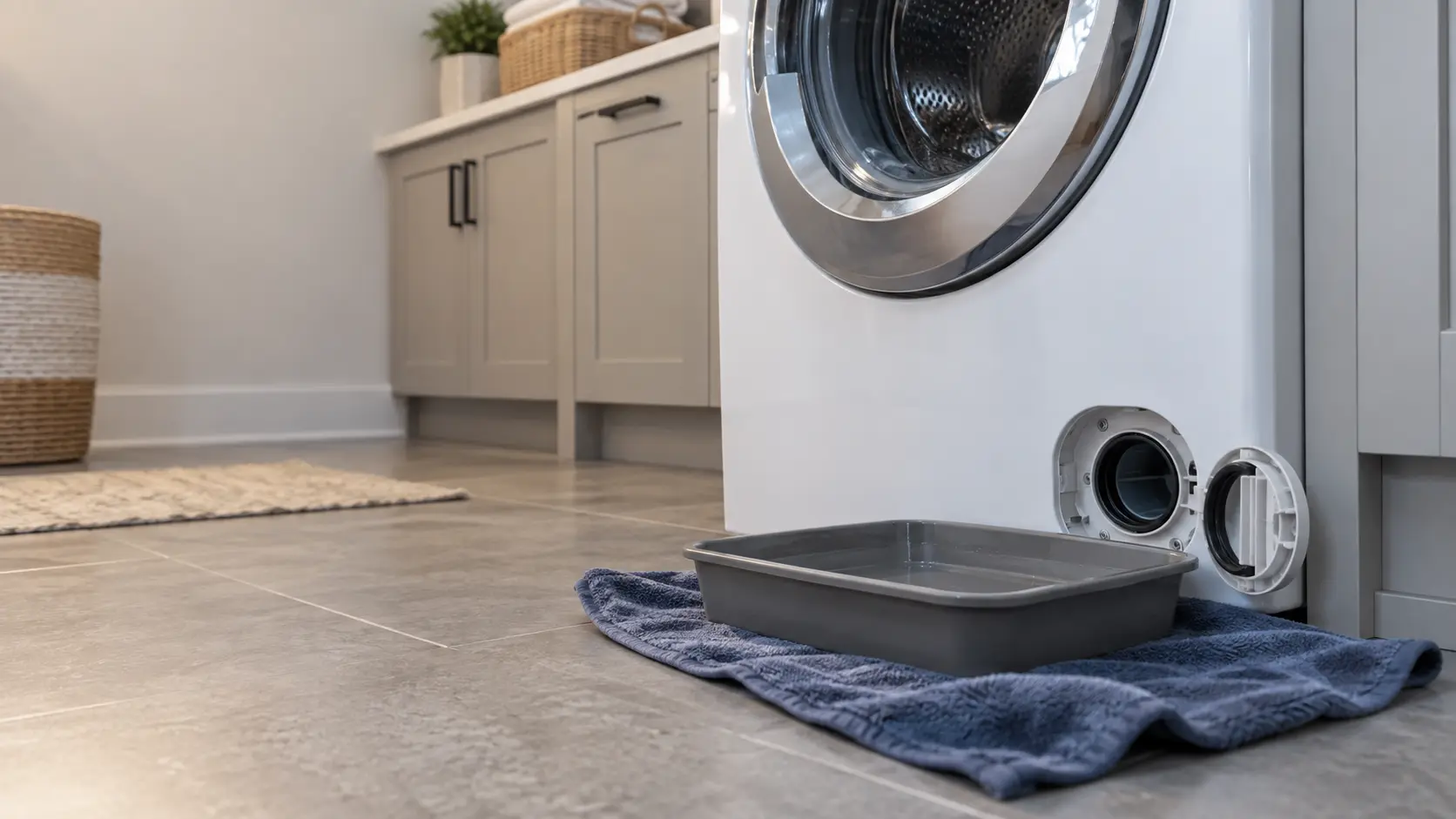
- The pump filter on a front-loader is clean, so the washer is not the part that is struggling.
- The overflow happens with every load, not only with one bulky item or one oversized load.
Source: Whirlpool Product Help — Leaking from underneath or bottom, front load washer — The drainpipe or sink must carry away at least 17 gallons a minute