

Why a washer needs cleaning at all
Modern washers use far less water than older machines, and that is good for the bill, but less water means less flushing. Undissolved detergent, fabric softener and the oils washed out of clothing cling to the outside of the inner basket, the underside of the tub and the folds of a front-loader's boot. In a warm, closed cabinet that film feeds mildew.
The result shows up gradually: a sour smell when the door opens, dark specks on light towels, a slimy dispenser drawer. None of it means the washer is broken. It means the washer has been missing a routine, and the steps below restore it in most cases.
After every load
The daily part of the routine takes seconds and prevents most odor calls we see. Whirlpool's guidance is simple: take clothes out as soon as the cycle ends, because wet laundry left in the basket can grow mildew in the garments and in the washer.
- Unload promptly, or rerun a quick rinse if a load sat overnight.
- Leave the door or lid open until the drum is dry, if children and pets cannot reach it.
- On a front-loader, leave the dispenser drawer slightly open so it dries too.
- Run a towel around the bottom fold of the door boot if water pools there.
Source: Whirlpool Product Help — Removing odors or smells from a front-load washer — Remove clothing promptly; wet clothing left in the basket can lead to mildew and odor in the garment and the washer; Whirlpool Product Help — Cleaning the dispenser drawer of a front-load washer — Remove and clean the drawer regularly with mild soap and water, not in a dishwasher; leave it slightly open after use to dry
Once a month
The monthly step is a cleaning cycle. Whirlpool recommends running Clean Washer every month, using a washer cleaner tablet or liquid chlorine bleach, and says the cycle uses more water than a normal wash to reach the whole tub. A washer with a Clean Washer light will also remind you when it is due.
If the washer has no cleaning cycle
Whirlpool's advice for machines without a dedicated cycle is to choose the setting with the highest water level and the hottest water. Start with the drum empty, and do not open the door or lid mid-cycle, which can interrupt the soak. Running the hot tap at the nearest sink first puts hot water in the line so the cycle starts hot.
The front-load door boot
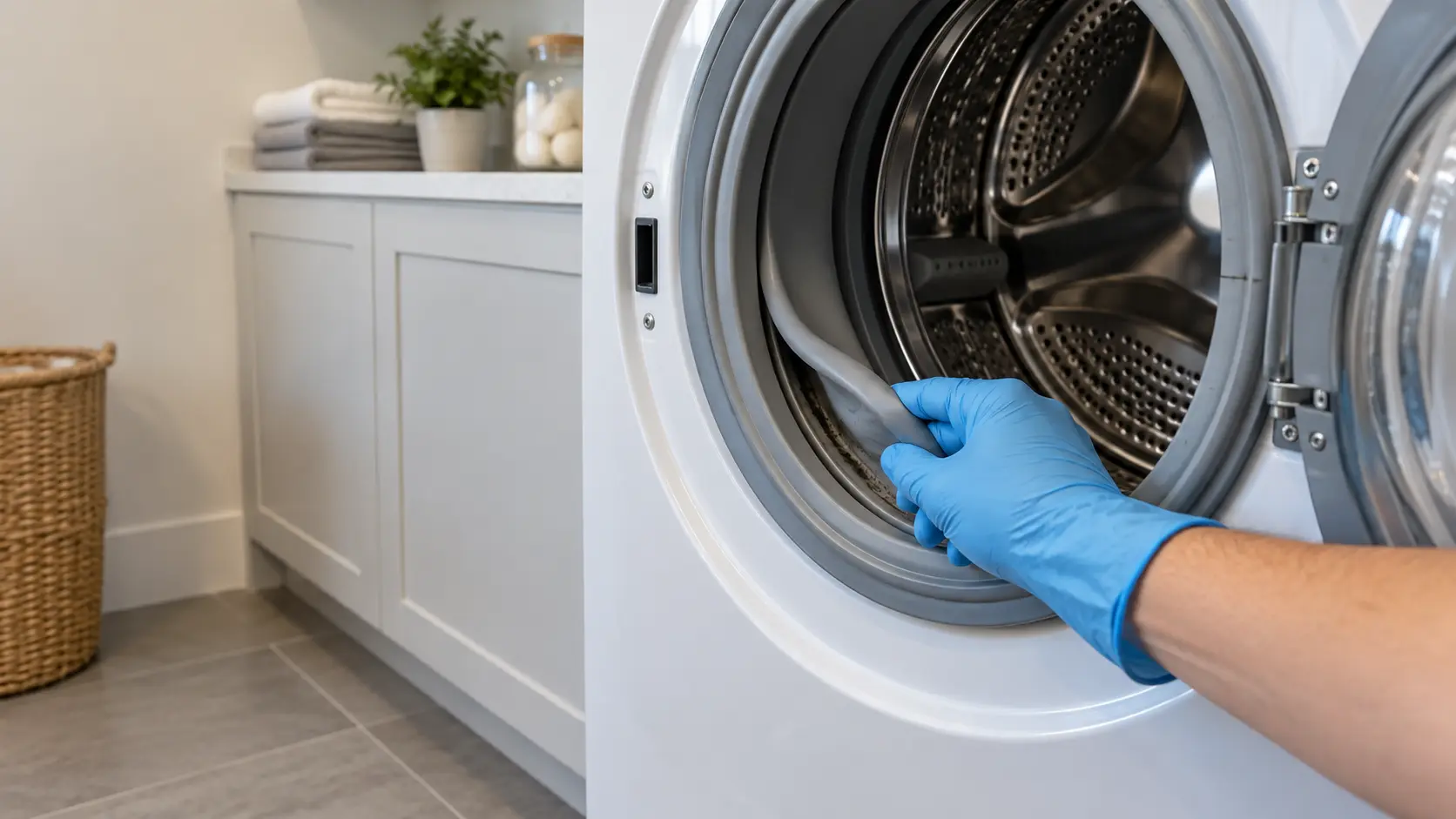
Pull back the fold of the rubber seal all the way around and look for hair, coins, lint and black spots. Whirlpool's method for stained areas is a solution of 3/4 cup of liquid chlorine bleach in a gallon of warm water, wiped on with a damp cloth, left for five minutes, then dried with a clean cloth. Wear rubber gloves, follow the bleach label, and use the bleach solution on its own without mixing in other cleaners.
Top-load rim and lid
On a top-loader, residue collects under the rim of the tub, on the underside of the lid and around the agitator or impeller. Wipe these with a damp cloth before the cleaning cycle, so the cycle rinses away what you loosened.
Source: Whirlpool Product Help — Cleaning washers with affresh — Clean the washer monthly; without a Clean Washer cycle use the highest water level and hottest temperature; do not open the door or lid during the cycle; Whirlpool Product Help — Removing odor or smell from a top-load washer — Run the Clean Washer cycle every month; it uses higher water volumes with a washer cleaner or liquid chlorine bleach
Every few months
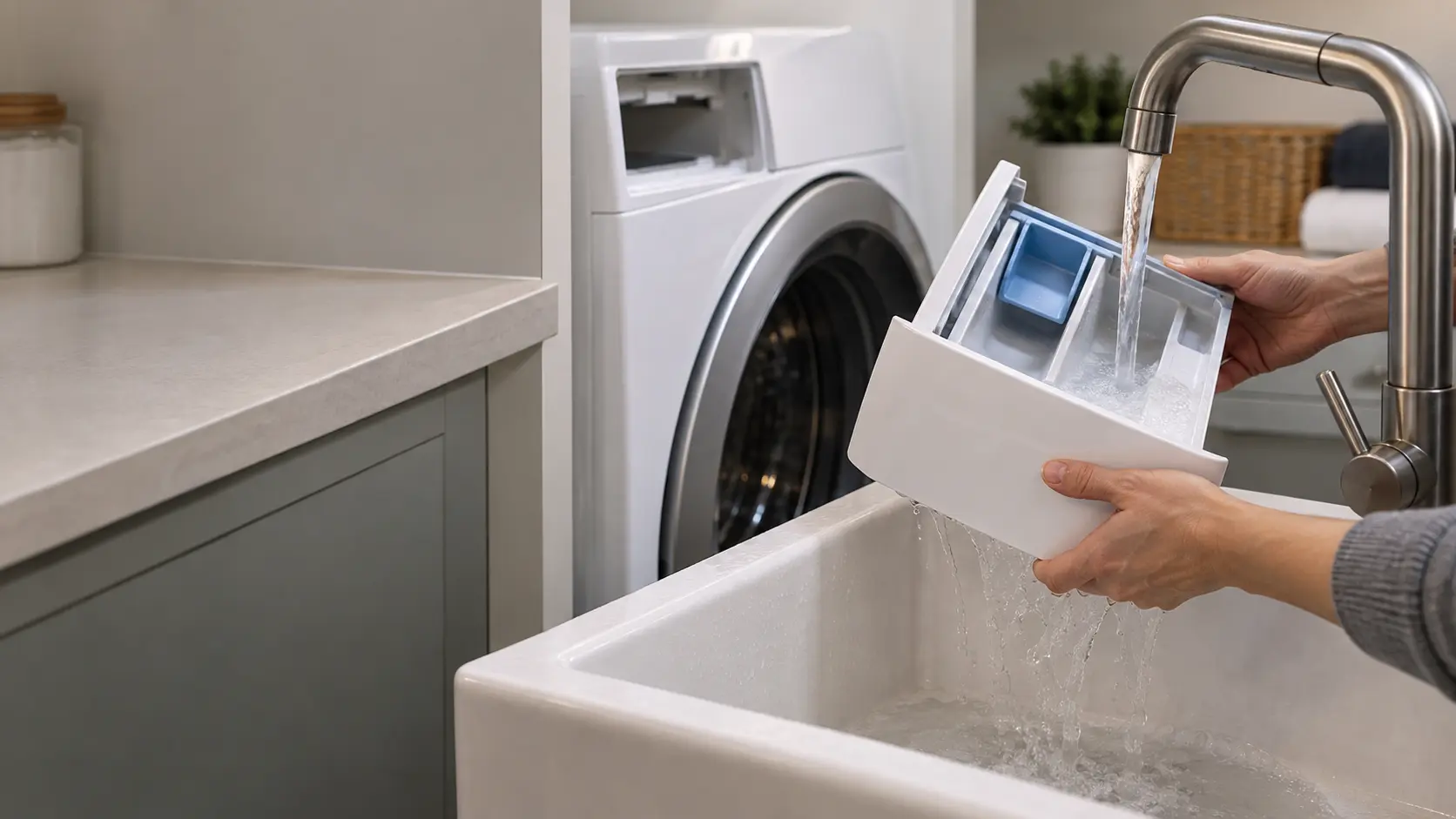
The slower jobs catch what collects out of sight. Whirlpool says the dispenser drawer should come out and be cleaned regularly, washed under running water with mild soap and a soft brush, and never put in a dishwasher. A slimy drawer housing is a common source of the smell owners blame on the drum.
On most front-loaders, the drain pump filter sits behind a small door at the bottom front. Draining and clearing it every few months, over a shallow tray with a towel down, removes the hair, lint and small objects that would otherwise slow the drain. Our separate guide to the drain pump filter walks through that job in detail. Top-loaders rarely have an owner filter, and their pump is a job for a technician.
Once or twice a year, close the supply valves, take off the fill hoses and look at the small screens inside the washer's inlet ports. In hard-water areas they collect grit and scale that slows the fill. Our guide to the fill hoses covers that job and the inspection of the hoses themselves, which is worth doing on the same day.
Source: Whirlpool Product Help — Cleaning the dispenser drawer of a front-load washer — Remove and clean the drawer regularly with mild soap and water, not in a dishwasher; leave it slightly open after use to dry
Habits that make cleaning harder
Some everyday choices speed up buildup. Changing them cuts how often the deeper cleaning is needed.
- Using more detergent than the label calls for, or a non-HE detergent in an HE machine.
- Washing only in cold water for months; an occasional warm or hot load helps dissolve residue.
- Pouring liquid softener in heavily, which leaves a waxy layer on the tub and in the dispenser.
- Closing the door tight right after every wash, which traps moisture inside.
- Leaving pockets unchecked, so tissues, coins and hair ties reach the pump filter.


