
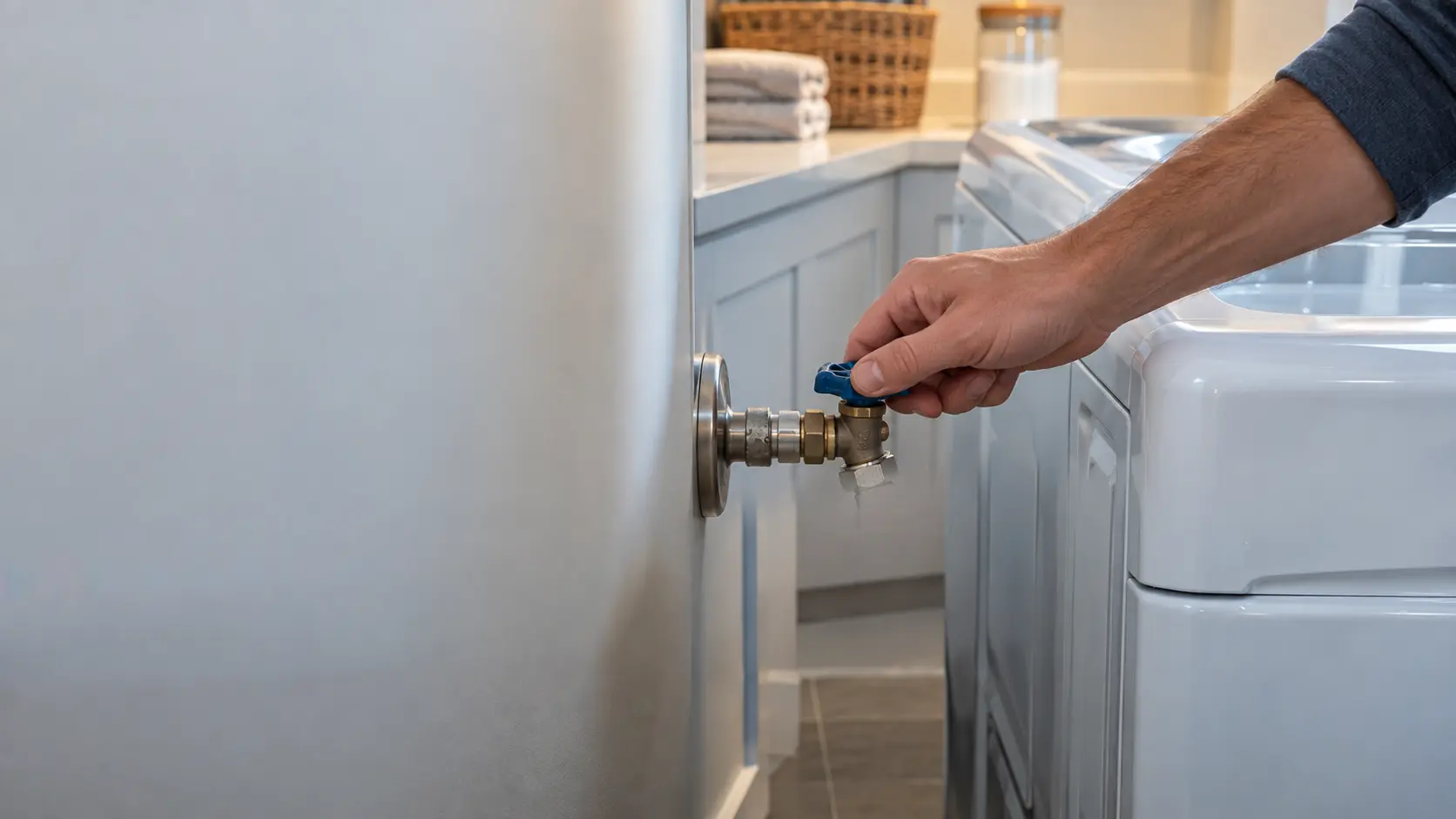

Is it safe to keep running
Water and electrical safety
guides.
What to do when water reaches the floor, why a burning smell or a tripping breaker means stop, and how to shut a washer down safely.
Mon–Sat, 8am–8pm
- Three guides
- Read before you book
- Says where to stop
Book a visit
Three short steps, about a minute.
or call (844) 398-5711
Loading appointment form…
The appointment form couldn’t load. Please try again.
Water and electrical safety,
guide by guide.
A washer is the one appliance in most homes that holds a pressurized water line and a live electrical cord in the same cabinet, often on a floor with a finished room below it. Most of the time the two never meet. When they do, the order of your first moves matters more than anything a technician does afterward.
All 18 guides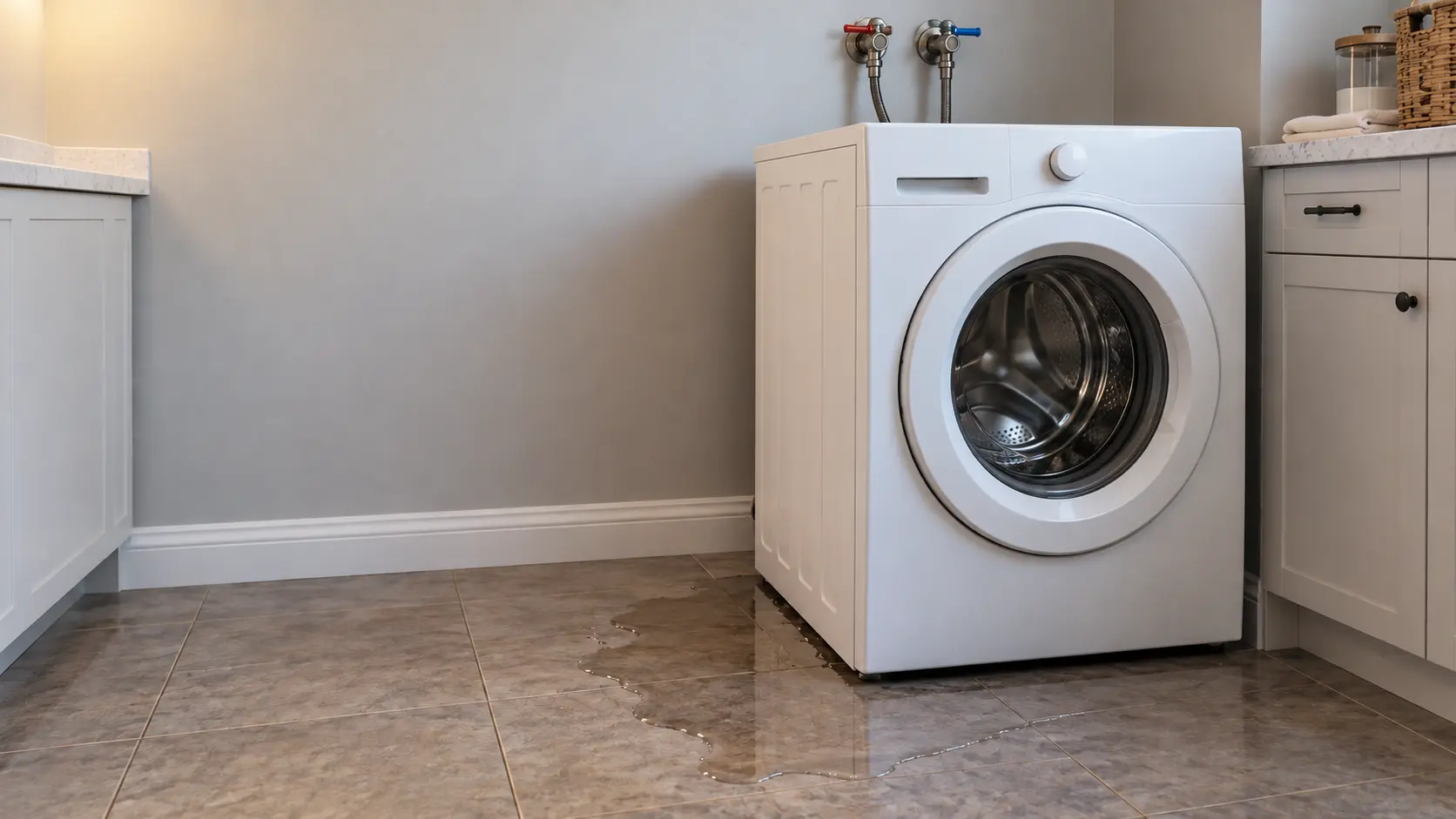
Washer Leaking: What to Do First
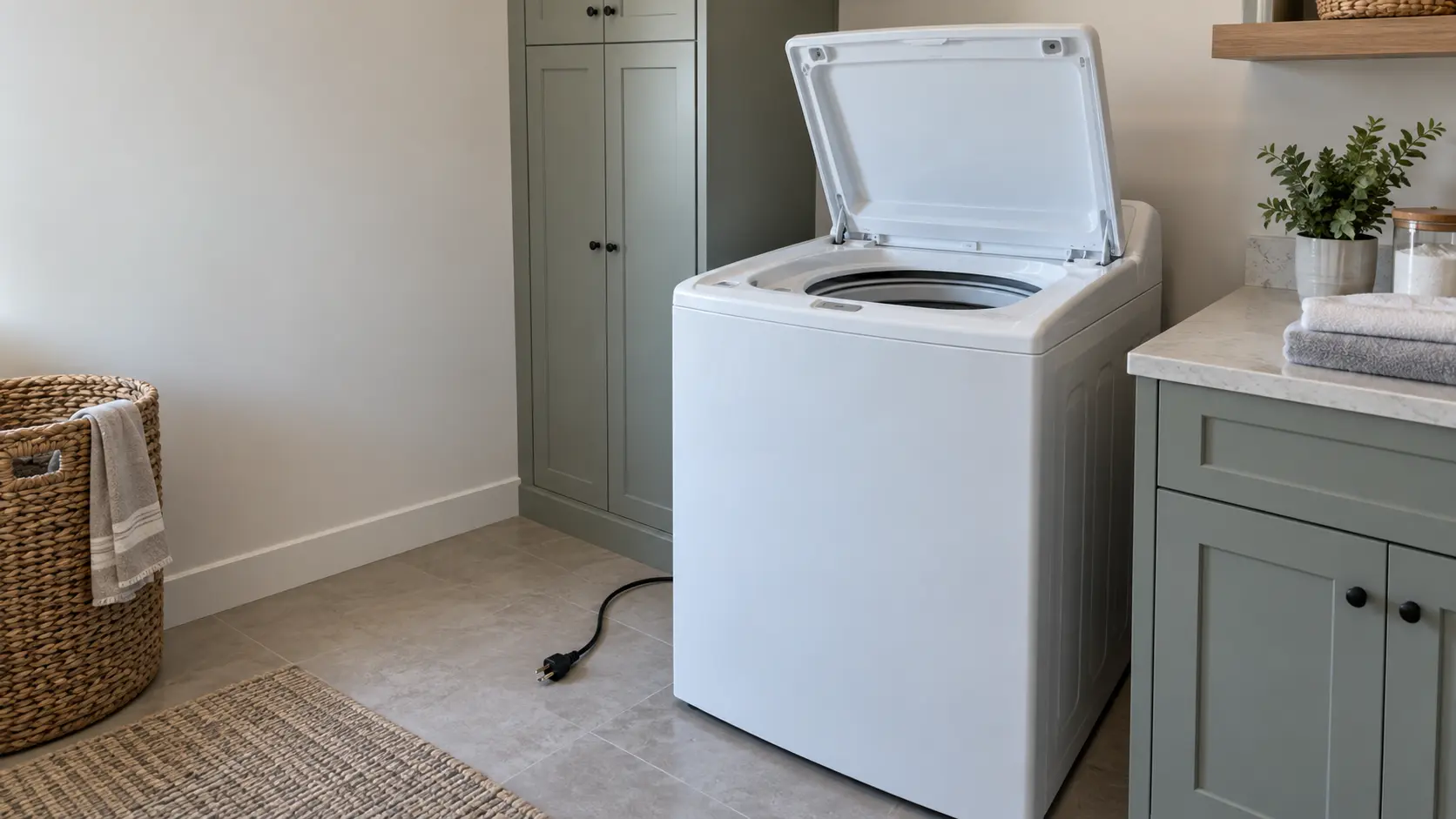
Burning Smell From the Washer: What to Do
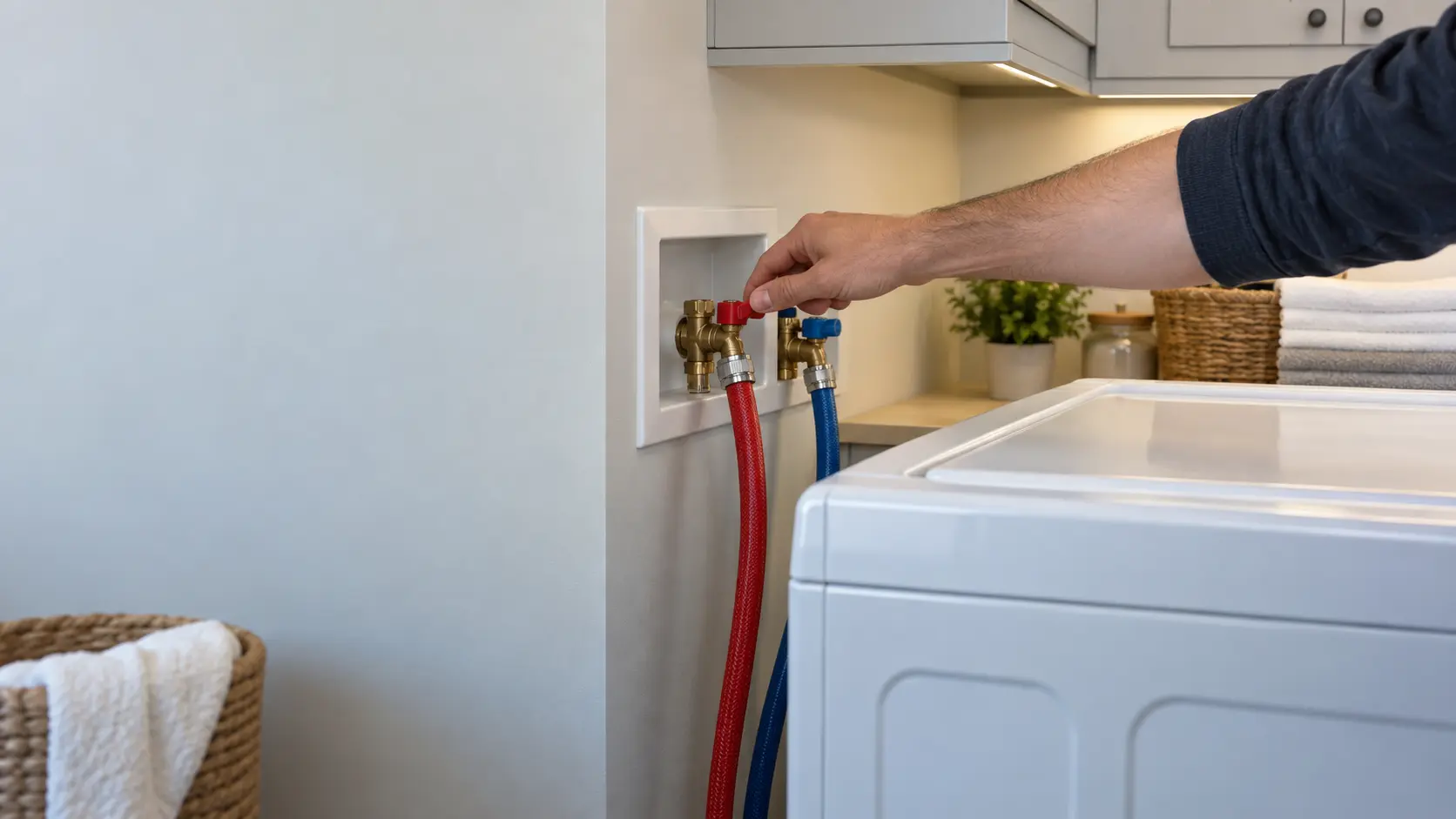
Washer Supply Valves and How to Shut Off the Water
Is it safe to keep running.
These guides cover the three situations owners ask about most: water on the floor, a hot or burning smell, and finding and closing the supply valves before either happens. Each one starts with what to do right now, then explains how to tell a minor cause from a serious one, drawing on the manufacturers' own manuals and the U.S. Fire Administration's appliance advice.
Read them once before you need them, ideally standing in your laundry room, so you know where the valves are and which breaker feeds the washer. Each guide also draws a clear line: hoses and the standpipe are yours to check, the plumbing behind the wall belongs to a plumber, and anything behind a panel with the power connected is not for an owner to open.
Not sure where to start?The short answerWasher Leaking: What to Do First
With a washer leaking water on the floor, stop the cycle, keep clear of any water that has reached the outlet or cord and switch that circuit off at the panel, then close the hot and cold supply valves.
The short answerBurning Smell From the Washer: What to Do
A washer burning smell means stop the cycle and unplug the machine; LG's manual says to unplug immediately for any burning smell or smoke.
The short answerWasher Supply Valves and How to Shut Off the Water
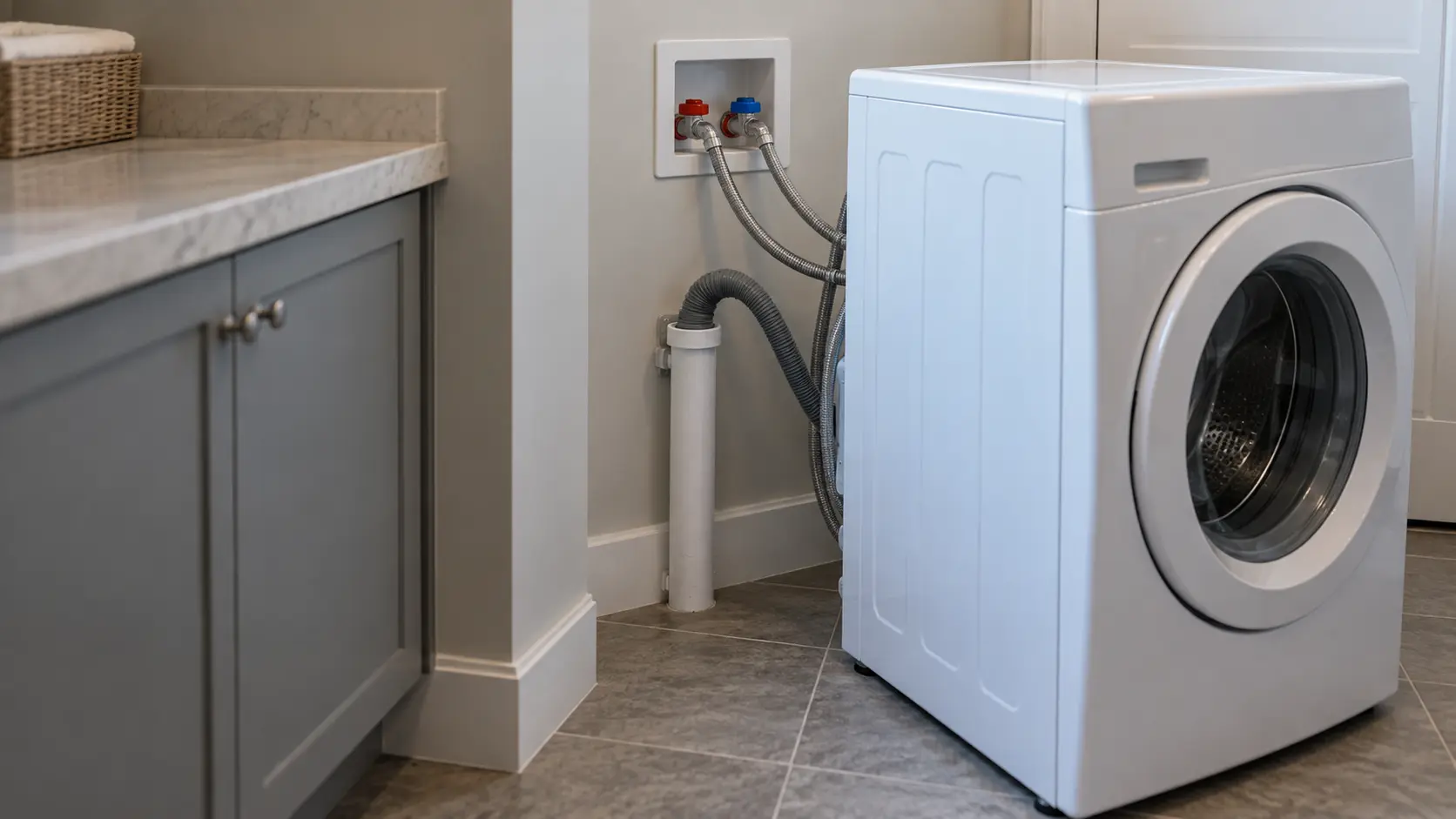
The washer shutoff valves are the hot and cold valves where the fill hoses meet the house plumbing.
When reading
is not enough.
If the checks in these guides did not settle it, the visit picks up from there, stop by stop.
What repairs cost- 01Watch it run first
- 02You hear the cost first
- 03Parts on the van
- 04Fixed, then run
The problems
these answer.
Each has a page of its own, with the causes in the order worth checking.
All 17 problems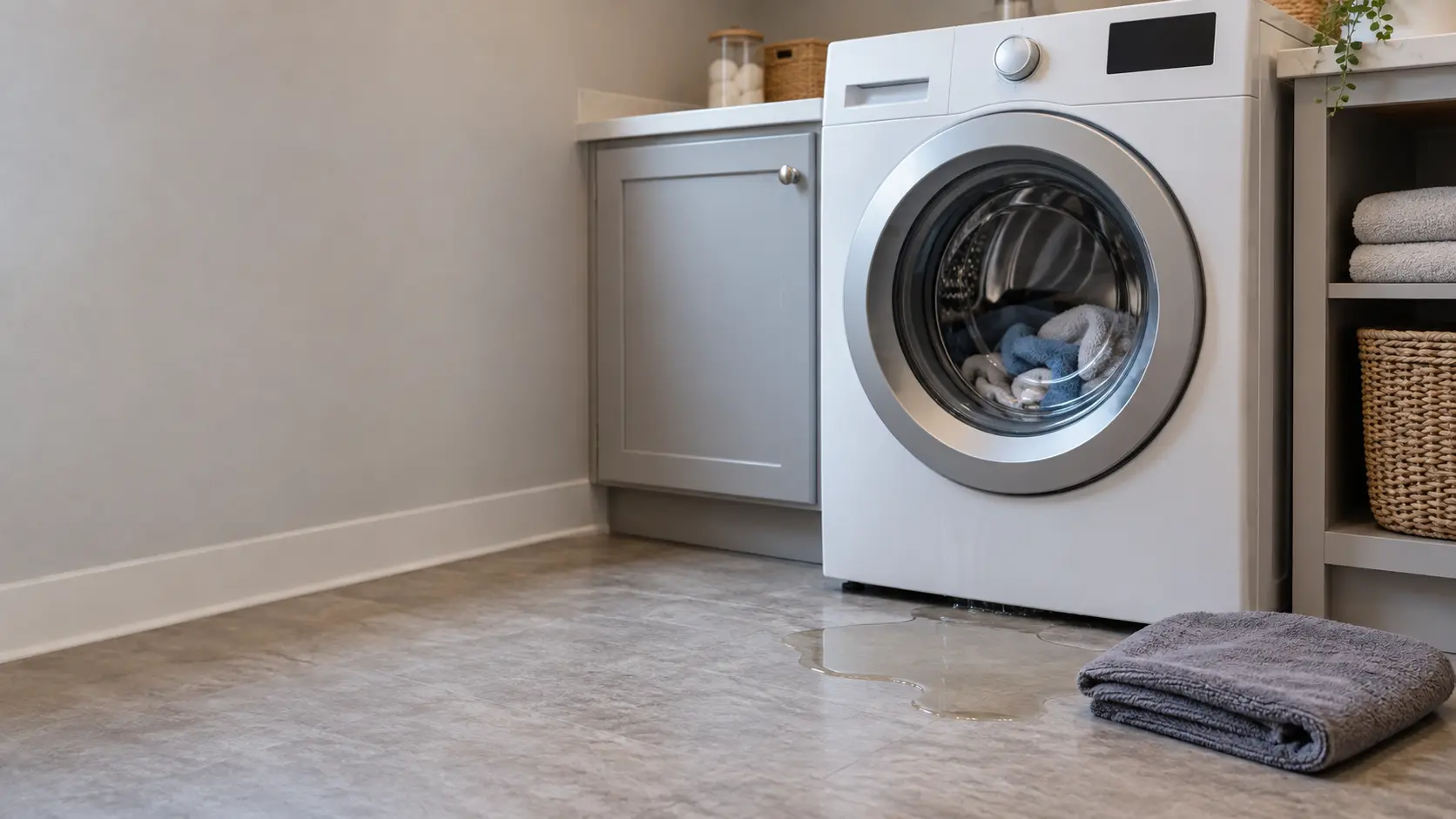


Questions about
water and electrical safety.
Water is coming out of the washer. What comes first?
Is a burning smell from a brand-new washer normal?
Should the washer's water be off whenever I leave the house?
The other
sections.
Split by what you are trying to find out rather than by which part of the appliance it concerns.
All guides


Back to your everyday
Let’s get your washer working again.
Three short steps online, or one call. Tell us what you are seeing and pick a window that works.