
Power first, then the water
Most washers plug into an outlet low on the wall behind the cabinet, which is exactly where spreading water collects. If the puddle has reached the outlet, the cord or a power strip, do not reach behind the machine or stand in the water to unplug it. Go to the breaker panel and switch off the circuit that feeds the laundry room, then come back.
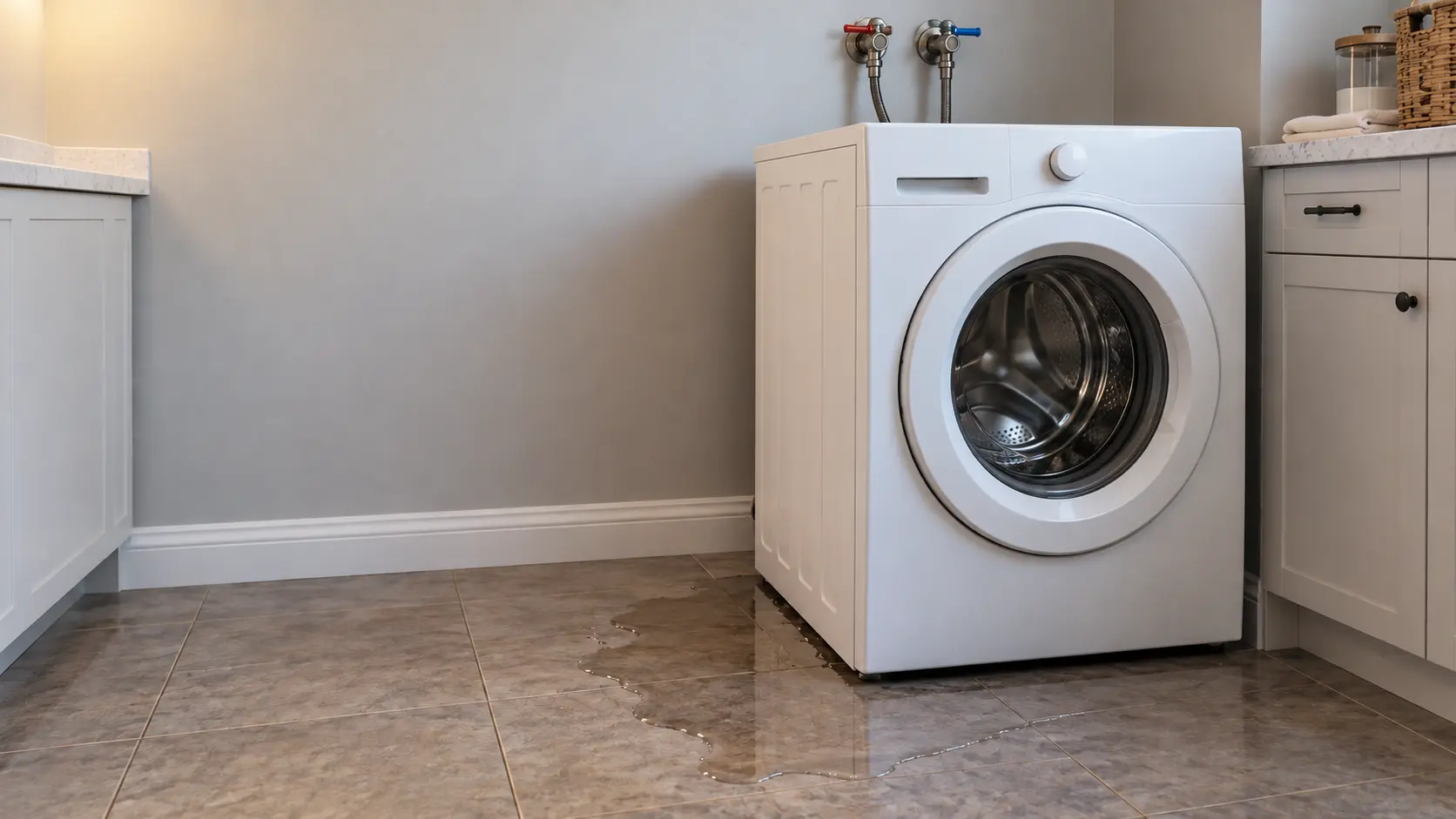
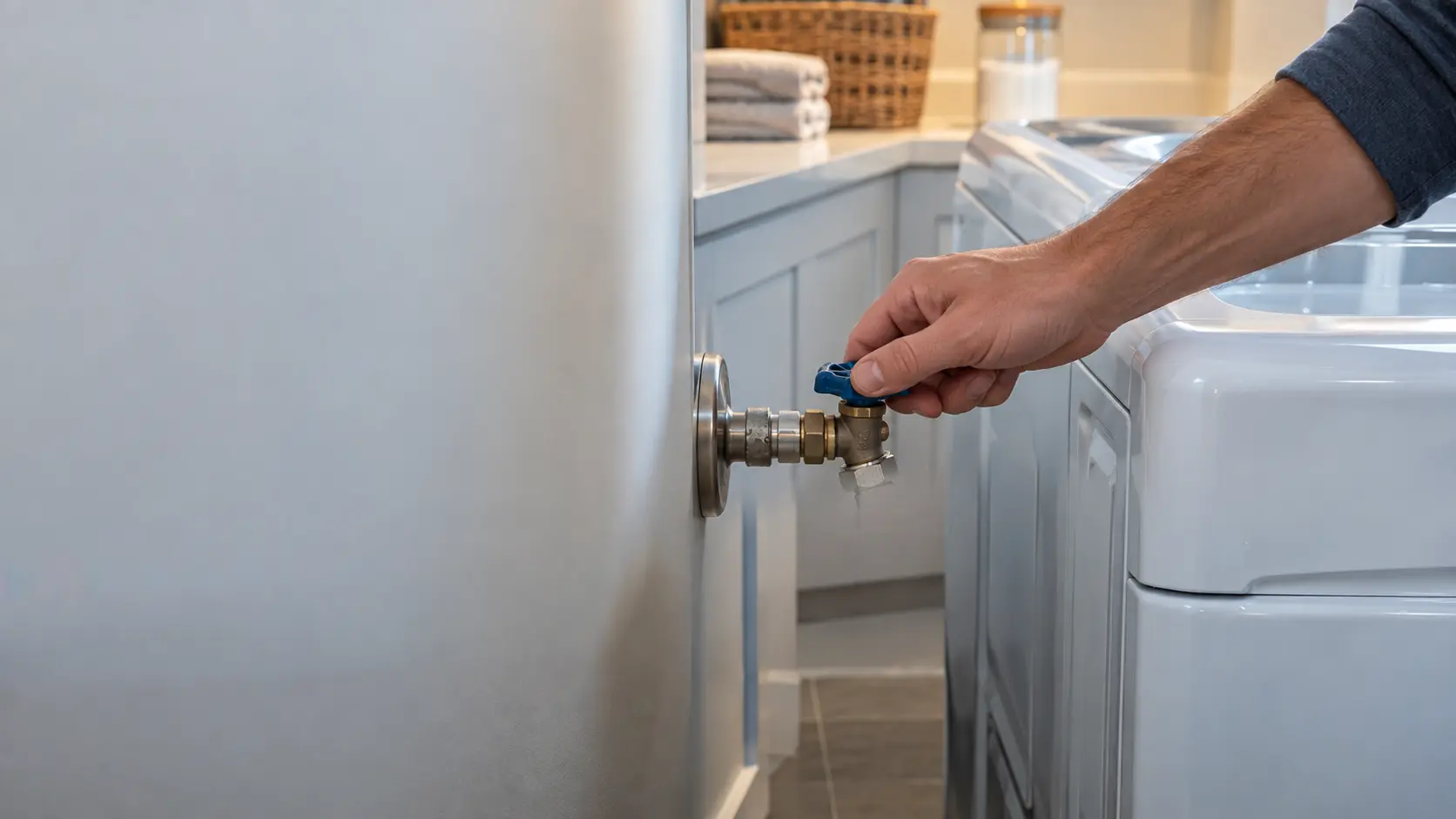
If the floor around the outlet is dry, press pause or cancel, wait for the drum to stop and pull the plug by its body rather than the cord. Only then close the supply valves, the pair of handles where the hoses leave the wall. A leak that stops the moment the valves close came from the supply side; one that keeps dribbling came from water already inside the tub or the drain.
If water is still pouring out
A split fill hose releases water at full household pressure until something closes it, and it does not stop when the washer does. If the valves behind the machine cannot be reached, will not turn or are themselves leaking, close the main shutoff for the house, usually near the water meter or where the supply enters a basement or garage wall.
If the washer stopped with the tub full
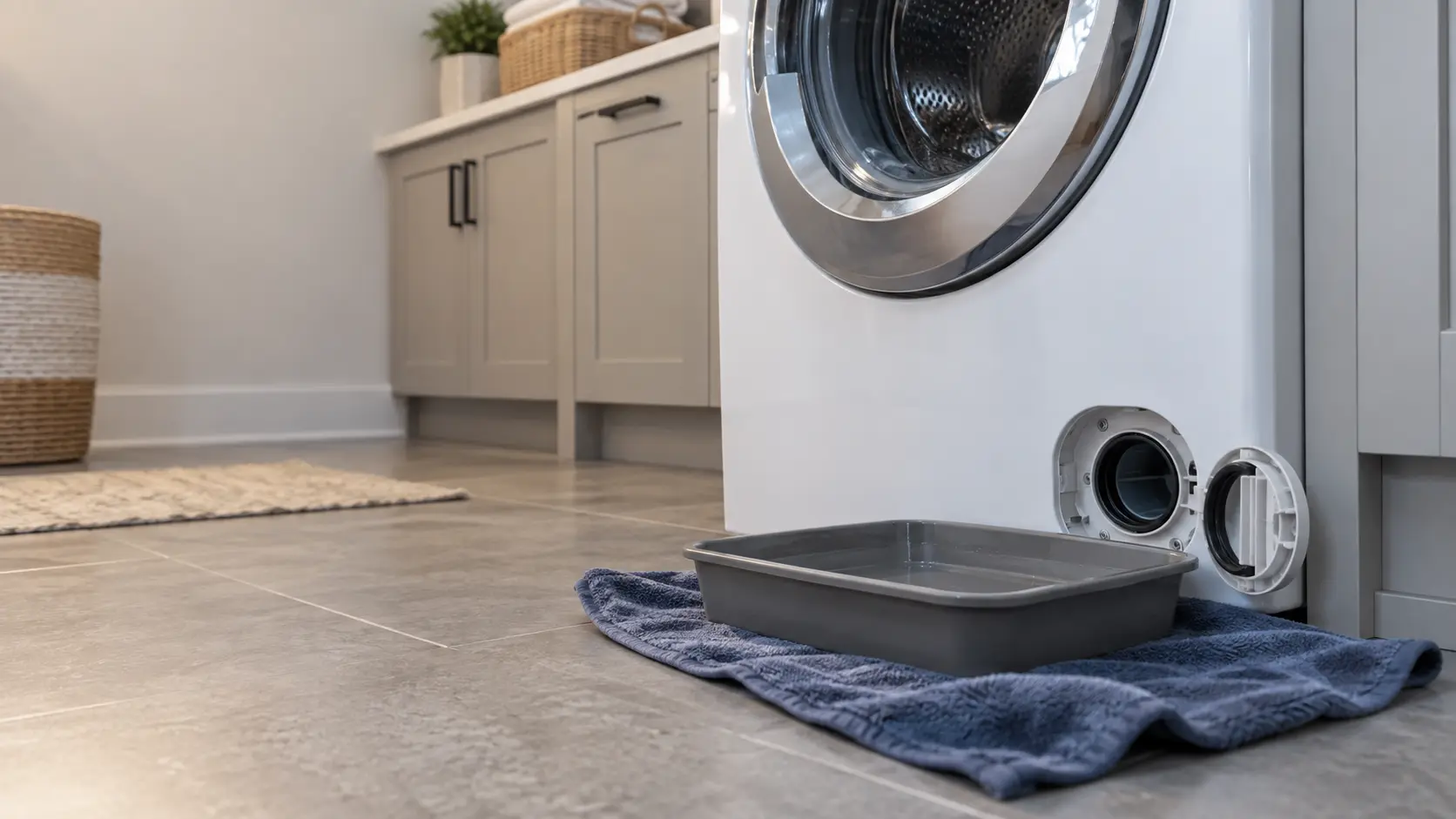
A front-loader that stops mid-cycle keeps its door locked and its water behind the glass. Leave it there for now. Draining it through the pump filter puts more water on a floor you are trying to dry, and it can wait until towels, a shallow tray and a dry place to kneel are ready.
Where the water is tells you where it came from
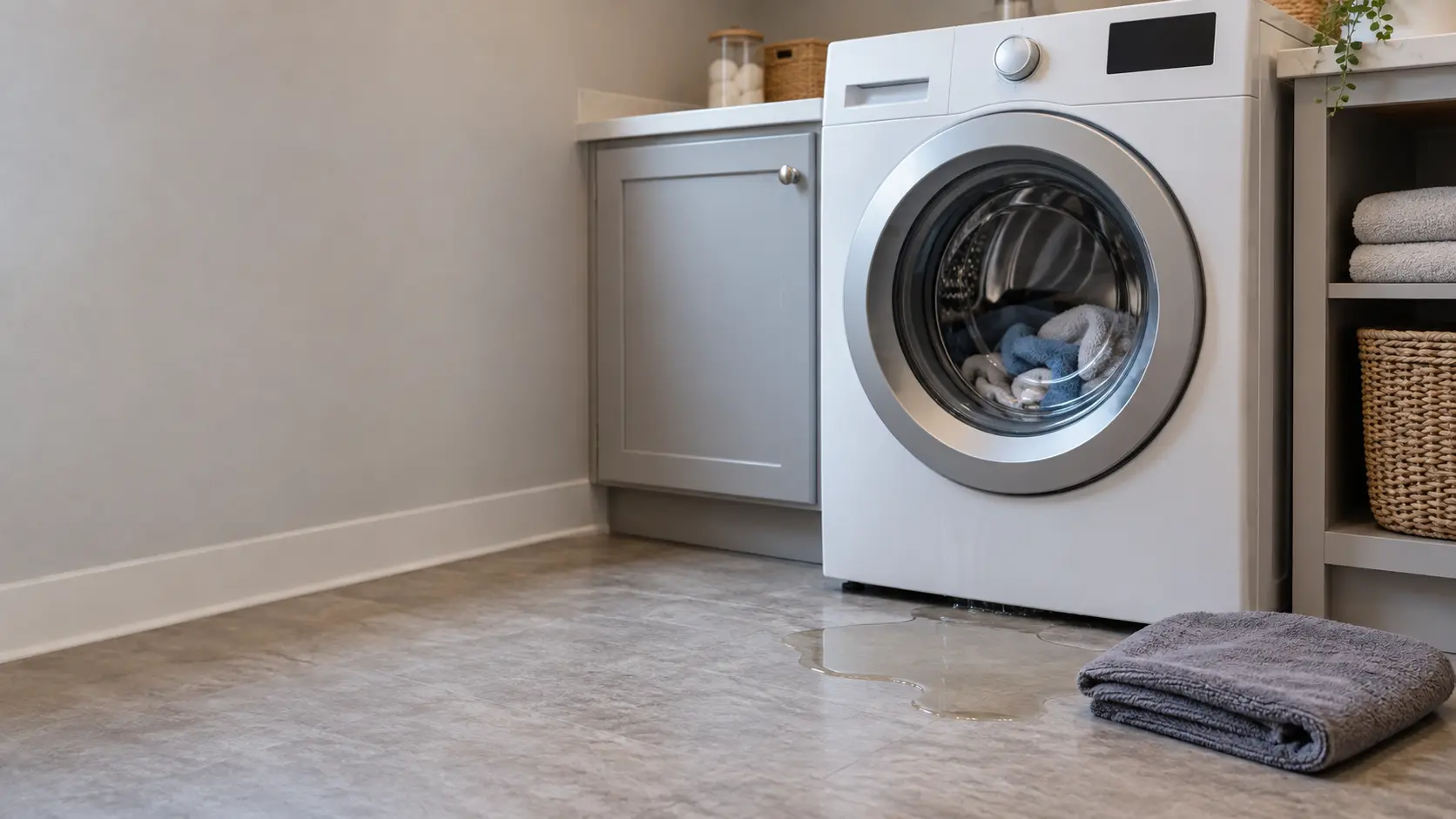
With a washer leaking water on the floor, look at the shape of the wet area and where it is deepest before you mop. Water runs toward the low side of a floor, so the source is usually on the high edge of the puddle, not in its middle.
- Behind the washer, below the valves: a hose coupling, a missing rubber washer or a cracked hose.
- Running down the wall under the standpipe: the house drain is backing up or the drain hose popped out.
- In front, under the door of a front-loader: the door boot, a dirty glass edge or too many suds.
- Out from under the middle of the cabinet: something inside, such as the pump, an internal hose or the tub seal.
- Near a laundry sink: the sink drain, its faucet or the hose hooked over its rim.
When in the cycle it happens
Water that appears while the washer fills points to the supply side: hoses, couplings or the inlet valve. Water that appears during the pump-out, in bursts, points to the drain hose, the standpipe or the pump. A leak only during a fast spin on a front-loader often comes from the door boot or from suds forced past it.
The fill hoses and their couplings
Each fill hose has a flat rubber washer inside both ends, and a coupling without one weeps no matter how hard it is tightened. Overtightening or cross-threading does the opposite kind of damage, cracking a plastic valve port or deforming the seal. Speed Queen's instructions call for couplings screwed on finger-tight and then turned about a quarter turn more with pliers.
Rubber hoses age from the inside, under constant pressure and hot water. Speed Queen asks owners to look at them every month for cracks, blisters or worn spots, to replace any hose that shows one right away, and to replace all fill hoses every five years regardless. LG tells buyers to install new inlet hoses with a new washer rather than reuse the old pair.
Why automatic flood-stop hoses are not the easy fix
Hoses with a built-in shutoff are meant to close when the flow jumps, as it would after a burst. LG and Speed Queen both advise against them, because a modern washer's fast fill can trip the device and leave the machine unable to fill. A floor sensor beside the washer, or closing the valves when you are away, protects the room without that side effect.
Source: Alliance Laundry Systems (Speed Queen) — User's Guide for Frontload Washers, 808187 — Check fill hoses monthly and replace every five years; flood-safe hoses are not recommended; leaks from oversudsing, overloading, the door gasket and the door glass edge; Alliance Laundry Systems (Speed Queen) — Installation Instructions for Topload Washers, 204104 — Couplings finger-tight plus about a quarter turn; cross-threading or overtightening causes leaks; Whirlpool Product Help — Leaking from underneath or bottom, front load washer — The drain must carry at least 17 gallons a minute; hose washers at both ends; no-splash bleach and non-HE detergent cause suds and leaks; LG Electronics — Washer Owner's Manual (WM4080) — Install new inlet hoses with the washer; do not use flood-preventing hoses with auto shutoff; do not touch a washer that has been in standing water
When the drain overflows instead
A washer pumps out faster than many people expect. Whirlpool's help pages say the standpipe or laundry sink must carry away at least 17 gallons of water a minute; a partly clogged drain line cannot keep up, and the water rises out of the top of the pipe. It looks like the washer is leaking, but the machine is doing its job and the house drain is not.
Clearing a clog in the house line beyond the standpipe is plumbing work, not appliance work. These signs point to the drain rather than the washer:
- Water marks running down the wall under the standpipe.
- A gurgle from a nearby sink or floor drain while the washer pumps out.
- A laundry sink that empties slowly even when the washer is off.
- Water that appears only in bursts, at the moments the pump runs.
Source: Whirlpool Product Help — Leaking from underneath or bottom, front load washer — The drain must carry at least 17 gallons a minute; hose washers at both ends; no-splash bleach and non-HE detergent cause suds and leaks
Suds, overloading and the door boot
Too much detergent, or regular detergent in a high-efficiency washer, makes foam that climbs past the door seal or out through the drain. Speed Queen's leak checklist names oversudsing and oversized loads alongside the hoses, and Whirlpool adds thickened no-splash chlorine bleach, which can foam up in the same way.
On a front-loader, also check the folded rubber boot around the door opening for tears or holes, and wipe the outer edge of the door glass where the seal presses against it. A hair, a thread of lint or a film of detergent there is enough to let water creep out during the spin.
Source: Alliance Laundry Systems (Speed Queen) — User's Guide for Frontload Washers, 808187 — Check fill hoses monthly and replace every five years; flood-safe hoses are not recommended; leaks from oversudsing, overloading, the door gasket and the door glass edge; Whirlpool Product Help — Leaking from underneath or bottom, front load washer — The drain must carry at least 17 gallons a minute; hose washers at both ends; no-splash bleach and non-HE detergent cause suds and leaks