

Washer
Loud Noise
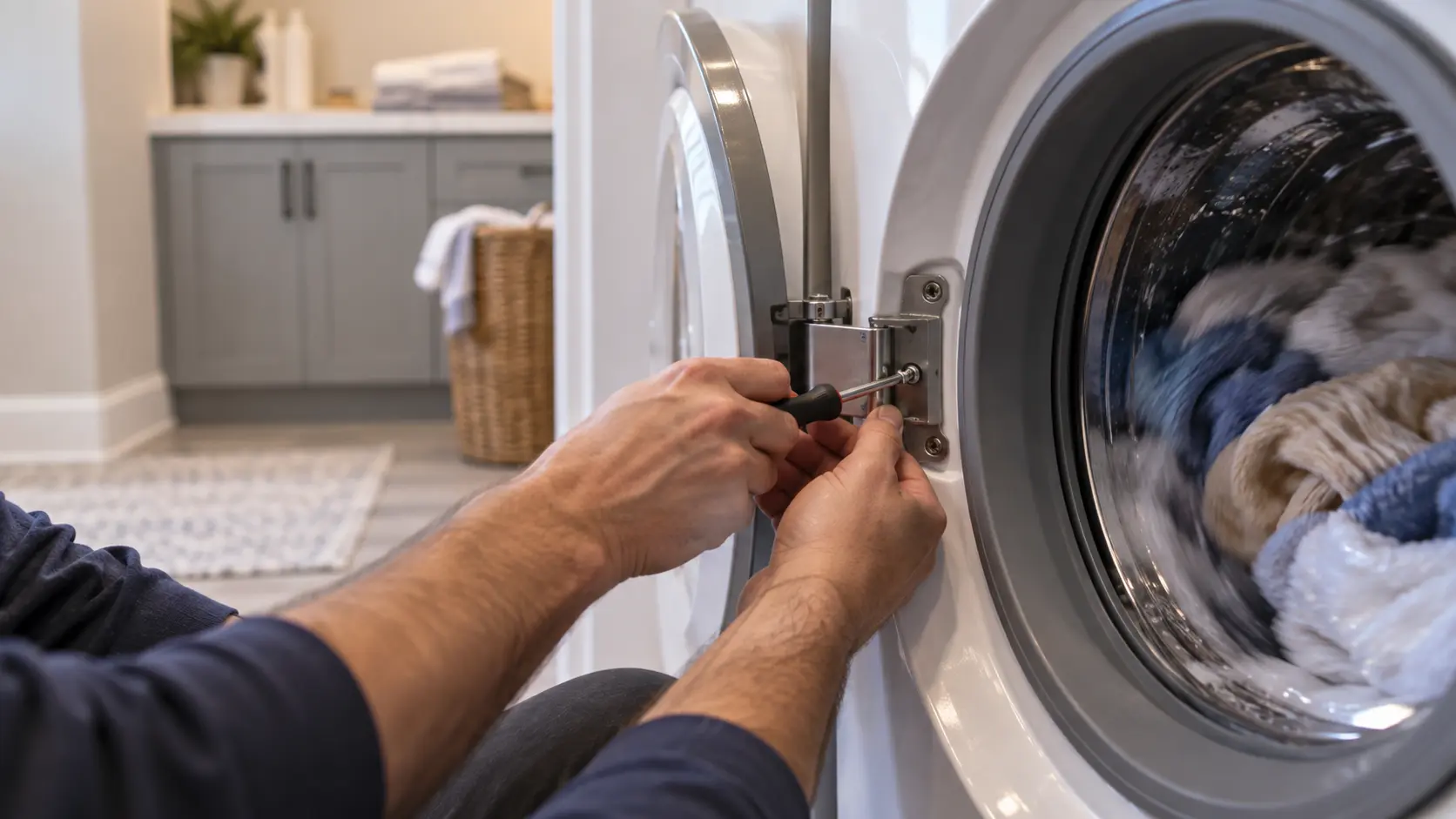
The washer grinds, roars, squeals, knocks or rattles more loudly than it used to.
Mon–Sat, 8am–8pm
- 5 checks before you book
- 5 questions that narrow it
- 5 causes, cheapest first
Book a visit
Three short steps, about a minute.
or call (844) 398-5711
Loading appointment form…
The appointment form couldn’t load. Please try again.
What it
usually means.
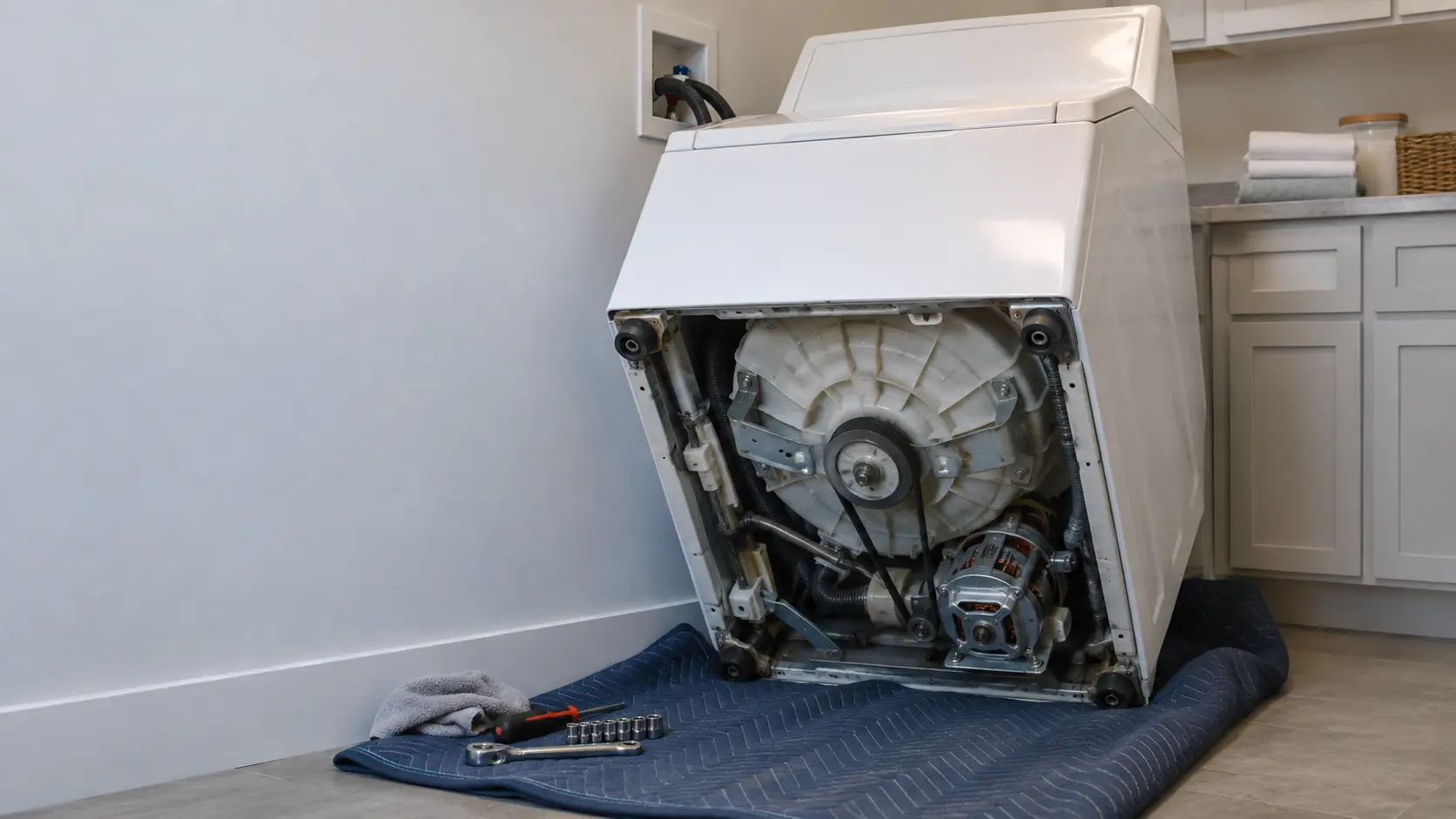
A washer makes its own normal sounds: the hum of the pump, the click of the lock, the whine of a spin speeding up. A new noise is worth describing carefully, because each kind points to a different part. A roar that grows with spin speed is the classic sign of worn drum bearings. A rattle is often a coin or a button between the drum and the tub or in the pump. A squeal points to the belt, a thump to the suspension or the load, and a grinding during the wash to the transmission or the agitator on a top loader.
 The 5 causes, cheapest first
Answer these first
Is the sound a roar, a grind, a squeal, a thump or a rattle?
Does it happen during the wash, the drain or the spin?
Does the sound get louder as the spin speeds up?
With the washer unplugged, does the drum feel rough or gritty when you turn it by hand?
Did the noise start after a load with coins, keys or a bra with wires?
Check these
before you book.
Washer loud noise: 5 checks, and none of them costs anything.
Stop the washer and turn the drum slowly by hand with the power off, feeling for roughness or scraping.
Check the drum holes and the door boot folds for a coin, a pin or a wire.
Open the pump filter door, if your washer has one, and clear anything caught in it.
Also worth checking
- Listen to one full cycle and note when the noise starts and whether it rises with the spin.
- Record a short video of the sound on your phone; it helps a technician a great deal.
How soon does it need a visit?
Usually not urgent. A roar that grows each week means bearings are wearing and a leak may follow; a loud bang can mean the tub is hitting the cabinet. Stop using the washer if the noise is sudden and severe.
The causes,
cheapest first.
5 things washer loud noise turns out to be, from object caught in the drum or pump to worn transmission or agitator parts.
The cost guide-
01 low
Object caught in the drum or pump
Coins, buttons and underwire slip between the drum and the tub or into the pump and rattle or scrape every time the washer runs.
-
02 low
Worn belt or pulley
A belt that slips squeals, especially at the start of the spin. A worn motor pulley makes the same sound.
-
03 low to moderate
Worn shocks, dampers or suspension
Knocking or banging at the start of the spin usually means the tub is swinging and hitting the cabinet.
-
04 moderate to highest
Worn drum bearings
Bearings behind the drum roar during the spin, louder as speed rises. Water leaking past a worn seal is usually what wore them.
-
05 moderate
Worn transmission or agitator parts
On top loaders, grinding during agitation points to worn agitator dogs or the transmission.
-
What it costs
Every repair on the site's cost scale, side by side
Open the cost guide
What else
it could be.
Most often confused with washer shaking and walking, then washer not spinning.
All problems

The makes
it happens on.
14 makes on this site; washer loud noise can show up on any of them. Each mark opens that make's own page.
All 14 brandsWasher Loud Noise,
where we come out.
9 metros, each with its own page.
All service areasTampa BayFL · 31 areas
Miami / South FloridaFL · 47 areas
New York MetroNY · 75 areas
HoustonTX · 36 areas
ChicagoIL · 50 areas
Los AngelesCA · 95 areas
San DiegoCA · 31 areas

Questions about
washer loud noise.
My washer sounds like a jet engine on the spin. What is it?
Is a bearing repair worth it?
What is the clicking sound when the washer starts?
Can I keep using a noisy washer until the visit?
Back to your everyday
Still seeing washer loud noise?
Book with what you checked above — 5 answers save the technician the first part of the visit.